


 POLICY
POLICY
POLICY
POLICY

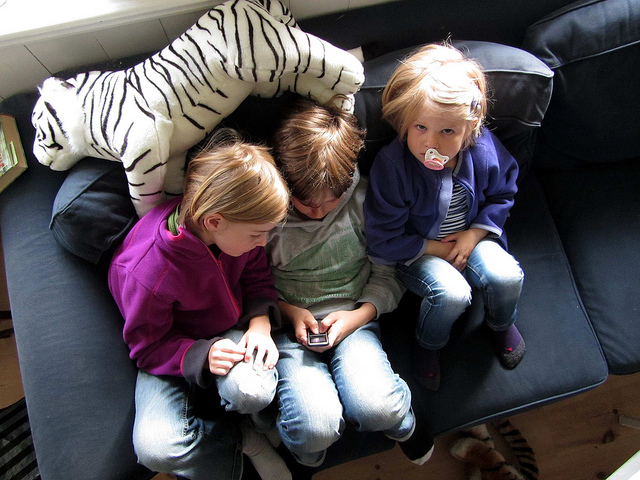
A lot of time spent looking at smartphone screens might not be too bad for kids if they have healthy lifestyles already, according to some leading British children’s doctors.
The Royal College of Pediatrics and Child Health, an organization that trains people working in child medicine, produced a guidance report for under-18s last week that said screen time might not be all that harmful for kids as long as it doesn’t interrupt exercise, time spent with family and sleep.
The report said the screens aren’t the issue if parents can ensure that their children are using them in the right manner. The issue isn’t about how much time kids are glued to screens, but what they are looking at. Parents should ask themselves these questions, the RCPCH said:
Max Davie of RCPCH said that phones were a “great way to explore the world” but recently they have been somewhat demonized, causing unnecessary panic for parents.
“We want to cut through that and say ‘actually if you’re doing OK and you’ve answered these questions of yourselves and you’re happy, get on and live your life and stop worrying,’” said Davie. “But if there are problems and you’re having difficulties, screen time can be a contributing factor.”
The college said boundaries need to be set and children should be taught to spend time on their devices not only playing but also for educational purposes. College President and Professor Russell Viner said we have to realize that screens are all part of modernity, just as learning to read was in the past.
“Five hundred years ago we thought it was bad for women’s brains to teach them to read,” he told The Guardian. “Reading and pamphlets have radicalized a lot more young people than screens have ever done. Yet we somehow worry about screens being different.”
The college also provided a mnemonic for parents: TEAM. T is for talking to your child about online safety, E is for exploring this online world with your child, A is for agreeing what’s good and bad content and M is for management of privacy settings and controls.
Overall, the report puts the ball in the parents’ court, saying phones can be extremely useful for children in their education, but only if parents guide them well. This is the reason, said RCPCH, the guidance report was created.
Support our mission to keep content open and free by engaging with theCUBE community. Join theCUBE’s Alumni Trust Network, where technology leaders connect, share intelligence and create opportunities.
Founded by tech visionaries John Furrier and Dave Vellante, SiliconANGLE Media has built a dynamic ecosystem of industry-leading digital media brands that reach 15+ million elite tech professionals. Our new proprietary theCUBE AI Video Cloud is breaking ground in audience interaction, leveraging theCUBEai.com neural network to help technology companies make data-driven decisions and stay at the forefront of industry conversations.