



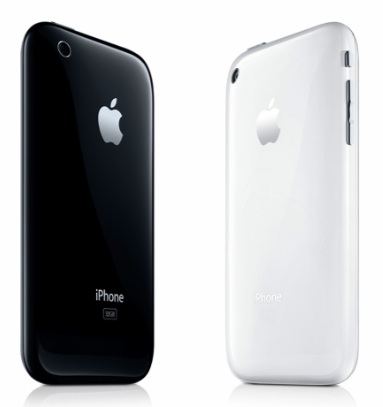
 The mobile world is once again rattled by lawsuits. The ongoing legal battles are indicative of a maturing mobile market that’s in the middle of determining its long-term leaders, with Apple, Samsung, Google, Microsoft and even Oracle warring over an expansive ecosystem that’s reveling at the junction of hardware and software.
Apple vs. Samsung, Again
Apple and Samsung have been battling in court since April of last year when Apple filed a case against Samsung claiming that the latter blatantly copied their technology. After that, court battles between the two spread like wildfire across the globe. In some cases, Apple had the upper hand and in others, Samsung came out the winner. As with any case, if one company thought that the ruling was not right, they would appeal the case or think of another case to pin the opponent down.
Earlier this week, Apple filed another case against Samsung in a German court which involves 10 Samsung smartphones and five Samsung tablets which the company believes are equipped with their technology.
Today, Samsung was pretty unhappy with the ruling of a court in the German city of Mannheim which ruled against one out of the three mobile technology patents which Samsung claims Apple infringed.
“We are disappointed that the court did not share our views regarding the infringement by Apple of this specific patent in Germany,” Samsung said in a statement.
Ruling for the two remaining patents will happen on January 27 and March 2.
Companies choose to sue each other in German courts because they are inexpensive, fast, allows for a ruling within a year, and the result in a German court will secure a commercial advantage compared to other courts in other European countries.
“If you want to conquer the European market and you’re being stopped in Germany, most of the time that’s enough to throw in the towel,” Peter-Michael Weisse, attorney at intellectual-property litigation firm Wildanger in Dusseldorf, said. “Many companies say if they cannot sell in Germany, it’s no use to go ahead with a product somewhere else.”
Foxconn
 Foxconn’s facing some woes of its own. Earlier this month, Foxconn employees threatened to commit mass suicide by attempting to jump off the roof deck of a building at Foxconn Park because of unfavorable working conditions as well as the company refusing to increase the employees’ wage. The tragedy was averted and most of the employees went back to work, though others chose to resign, after negotiations involving the mayor of Wuhan, Foxconn’s representatives and the employees took place.
You’d think that Foxconn would be doing their best to keep the spotlight off of them but no, Terry Gou, chairman of Foxconn parent Hon Hai Precision Industry, thought it was okay to pertain to his employees as animals.
During Foxconn’s annual review meeting, Gou stated, “Hon Hai has a workforce of over one million worldwide and as human beings are also animals, to manage one million animals gives me a headache.”
According to reports, Gou was only entertaining Taipei Zoo director Chin Shih-chien, so he asked the zoo director how to manage animals and asked Hon Hai executives to take note of what the director says.
Seriously? After workers attempted to commit mass suicide because of health-threatening work conditions, Gou had the audacity to joke around and compare his employees to animals. Talk about insensitivity.
Foxconn already issued an apology for anyone who was offended by what he said, clarifying that he never meant anything negative by it, and it was directed “at all humans and not at any specific group.”
Still, the comment was really insensitive and it’s a bit surprising that TechCrunch’s John Biggs defended Gou’s comment, saying was just “taken out of context and do not accurately reflect the full scope of that conversation.” Anyone in their right mind would be offended if they were compared to being managed like animals. But it seems like, for some people, the products produced by employees working under questionable conditions are more important than how these workers are being treated. Dude, if you love your gadgets so much, at least think about the people who work hard for them, they deserve respect and be treated like human beings.
Support our mission to keep content open and free by engaging with theCUBE community. Join theCUBE’s Alumni Trust Network, where technology leaders connect, share intelligence and create opportunities.
Founded by tech visionaries John Furrier and Dave Vellante, SiliconANGLE Media has built a dynamic ecosystem of industry-leading digital media brands that reach 15+ million elite tech professionals. Our new proprietary theCUBE AI Video Cloud is breaking ground in audience interaction, leveraging theCUBEai.com neural network to help technology companies make data-driven decisions and stay at the forefront of industry conversations.