



 NEWS
NEWS
NEWS
NEWS
NEWS


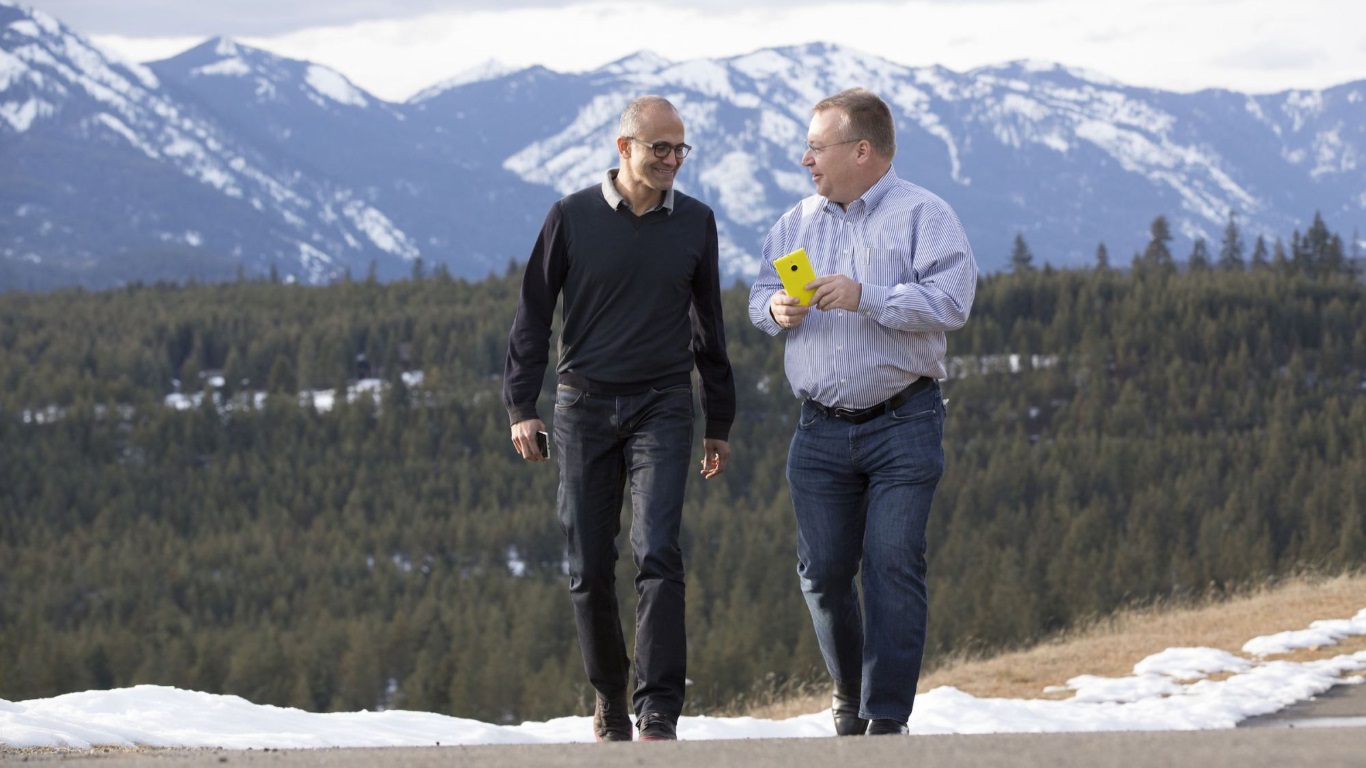
Microsoft’s Nadella and Elop Saying Bye Bye To The Lumia Brand
Just accept the fact that come November 11, 2014, Lumia phones will no longer carry the Nokia brand, but instead will carry the Microsoft logo.
So what can we expect from the newly branded Lumia device, rumored to hit the market as soon as next week? Will it be able to compete with the Galaxy devices offered by Samsung Electronics Co. Ltd. or the iPhones offered by Apple Inc.? Or will this new Lumia be just another low-cost phone?
Fueling the rumor mill, a leaked image of the Microsoft RM-1090 appeared this week. Could this be the new Lumia device expected to launch on Tuesday?
The RM-1090 could feature a 5” display with 1280×720 resolution, 1.2GHz CPU, 1GB RAM, 8GB phone memory which could be upgraded with up to 64GB external memory, a 1900mAh battery, a 5MP rear camera, 1MP front camera. The handset will likely runs Windows Phone 8.1, and could be available in a range of colors including orange, black, white, gray, blue and green.
The specs of the leaked Microsoft Lumia are unimpressive compared to competitors’ flagship smartphones, decked out with fingerprint sensors/scanners, heart rate sensors and Touch ID security capabilities. If Microsoft wants to stand out in the mobile market, it needs to move away from producing cheap mobile devices. Here’s some ideas on how Microsoft could deliver a productivity-centric device for today’s busy mobile user.
Better display
Smartphones are used for work, entertainment and everything in between. Users need to clearly see what’s on their small screens, like emails, photos, videos, games and so on. The competition is high even amidst rumored phones, as the Project Zero from Samsung is said to have a Quad HD display for crisper images.
.
Better camera
Five megapixels for the rear camera is subpar for a market that comes to expect higher megapixel support for standard devices. When part of Nokia, Lumia devices were known for their superior cameras. It would be a shame to let that selling point fall to the wayside.
.
Fitness features
With the dawn of fitness and health trackers, smartphone makers are also installing complementary sensors and features to work with wearables technologies as people strive to live healthier lives. Smartphones now have better sensors to help us keep track of our daily activities, fitness and health apps are available for free or with a minimal fee, while fitness bands seamlessly connect with smartphones. From the leaked specs of the Microsoft Lumia, it doesn’t seem like it has any sensors for fitness or health tracking, which may be another disappointment for some consumers.
As Microsoft ramps up efforts in the hardware business, it may still be determining to whom it wants to cater: first-time smartphone buyers who are unwilling to spend too much on a device, competing with the Samsung crowd? Or those who want premium smartphones, as is the case with most iPhone users? Another target could be business users, where Microsoft has an existing base of Windows users. Finding the right balance will be an important consideration for the software maker as it looks to put its Nokia acquisition to good use.
Support our mission to keep content open and free by engaging with theCUBE community. Join theCUBE’s Alumni Trust Network, where technology leaders connect, share intelligence and create opportunities.
Founded by tech visionaries John Furrier and Dave Vellante, SiliconANGLE Media has built a dynamic ecosystem of industry-leading digital media brands that reach 15+ million elite tech professionals. Our new proprietary theCUBE AI Video Cloud is breaking ground in audience interaction, leveraging theCUBEai.com neural network to help technology companies make data-driven decisions and stay at the forefront of industry conversations.