 NEWS
NEWS
NEWS
NEWS
NEWS

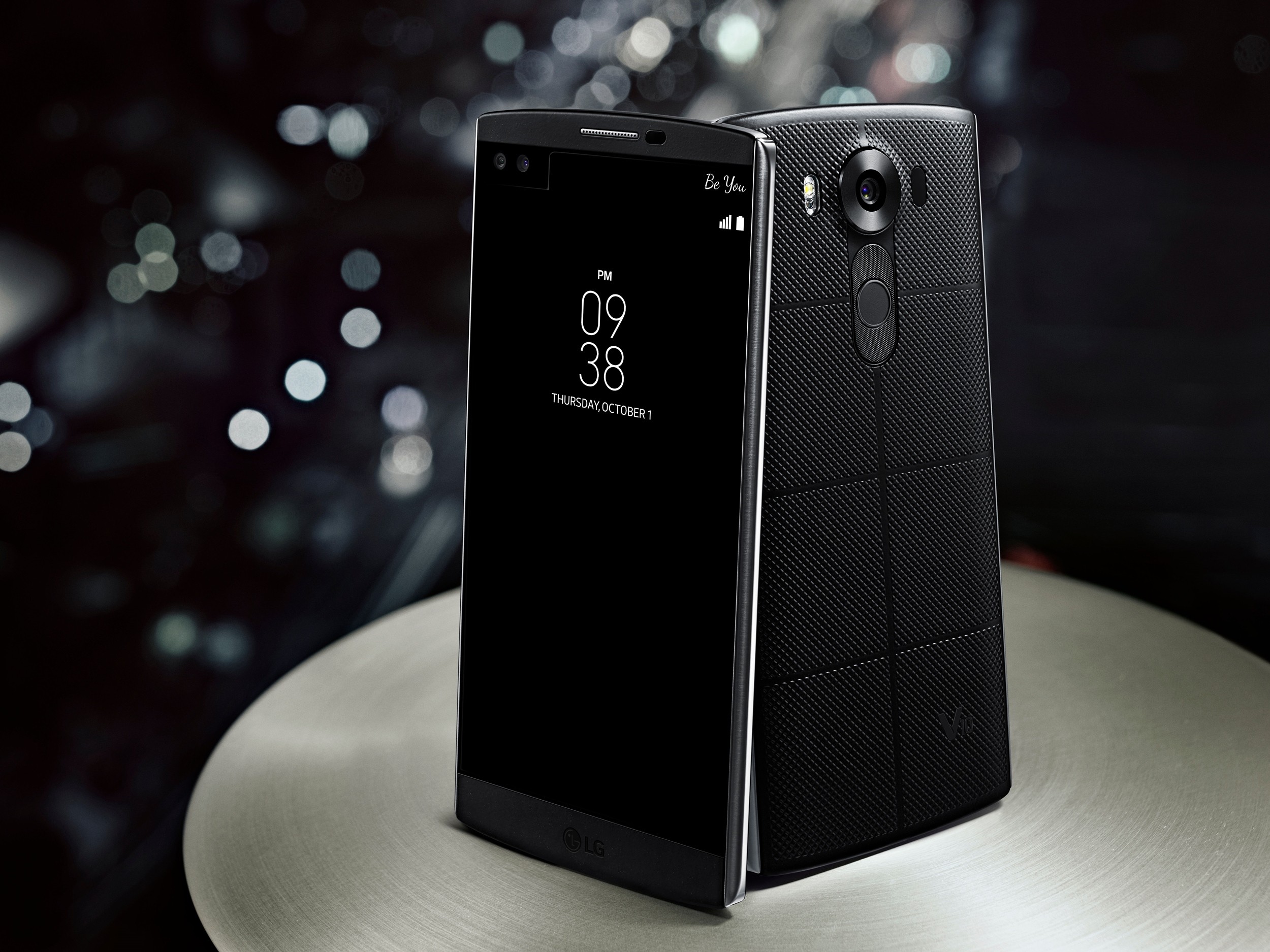
Shortly after high-res images of the upcoming LG V10 were leaked by former phone leaker Evan Blass (@evleaks), LG Electronics Inc. officially announced the V10 via a press release.
Due to be officially shown off at an event in New York City today, the LG V10 features a second screen, dual front cameras, and a manual video mode.
The LG V10 combines high-grade stainless steel and a durable silicone skin and comes in five color options: Space Black; Luxe White; Modern Beige; Ocean Blue and Opal Blue. (See image gallery and video below.)
The 5.7-inch, Android-based LG V10 is the latest in a slew of recently launched phablet-sized Android smartphones competing for consumer’s attention, including the Google Nexus 6P, launched yesterday, and the Samsung Galaxy S6 edge+, launched in late-August.
Before we take a closer look at how the standout features on these Android phablets compare, let’s take a look at how the raw technical specs stack up.
|
LG V10 |
Nexus 6P |
Galaxy S6 edge+ |
|
| Screen size |
Main: 5.7-inches Secondary: 2.1-inches |
5.7-inches |
5.7-inches |
| Screen resolution |
Main: 2560 x 1440 (513 ppi) Secondary: 160 x 1040 (513 ppi) |
2560 x 1440 (518 ppi) |
2560 x 1440 (518 ppi) |
| Screen type |
Main: QHD IPS Quantum Display Secondary: IPS Quantum Display |
WQHD AMOLED, Gorilla Glass 4 |
Quad HD Super AMOLED |
| Dimensions and weight |
159.6 x 79.3 x 8.6mm, 192g |
159.3 x 77.8 x 7.3mm, 178g |
154.4 x 75.8 x 6.9mm, 153g |
| Processor |
Qualcomm Snapdragon 808 (2 GHz dual-core ARM® Cortex™ A57, quad-core Cortex A53) with Adreno 418 GPU |
2GHz Octa-core Qualcomm Snapdragon 810 v2.1 With Adreno 430 GPU |
Exynos 7422 64-bit Octa core chip (2.1GHz Quad + 1.5GHz Quad) with ARM Mali-T760 MP8 GPU |
| RAM |
4GB |
3GB |
4GB |
| Storage |
64GB, expandable up to 2TB via microsSD |
32 / 64 / 128GB, not expandable |
32 / 64GB, not expandable |
| Battery |
3,000mAh (removable) |
3450mAh |
3000mAh |
| Rear camera |
16MP with F1.8 Aperture / OIS 2.0 |
12.3MP, f/2.0, 1.55µm pixel size |
16MP, f/1.9, LED flash |
| Front camera |
5MP Dual Lens (80-degree Standard Angle / 120-degree Wide Angle) |
8MP, f/2.4, 1.4µm pixel size |
5.0MP, f/1.9 |
| Optical image stabilization |
Yes |
No |
Yes |
| Video capture |
4K |
4K |
4K at 30fps |
| Connectivity |
Bluetooth 4.1, Wi-Fi 802.11 a, b, g, n, ac, USB 2.0 |
Bluetooth v4.2, Dual band, 802.11a/b/g/n/ac Wi-Fi |
Bluetooth v4.1 LE, Dual band, 802.11a/b/g/n/ac Wi-Fi |
| NFC |
Yes |
Yes |
Yes |
| Operating system |
Android 5.1.1 Lollipop |
Android 6.0 Marshmallow |
Android 5.1 Lollipop |
| Special features |
Second Screen, Dual Front Cameras, Manual Video Mode |
Nexus Imprint, USB Type-C, Android Pay |
Dual-edge screen, Apps Edge, Live Broadcast, Samsung Pay, wireless charging, fingerprint sensor |
| Price |
N/A |
$499 for 32GB, $549 for 64GB, $649 for 128Gb |
64GB at $859.99, 32GB at $779.99 from T-Mobile with no contract. |
Apart from a slightly lower pixel density – 513 ppi vs. 518 ppi – the 5.7-inch LG V10’s main screen is near identical to those on the Nexus 6P and galaxy S6 edge+.
What sets it apart from the competition is the addition of a secondary display inline with the dual front-facing cameras above the main QHD display. This 2.1-inch IPS Quantum display with 160 x 1040 resolution can be used in “always on” mode when the main display is off, or as a “dedicated launching area” for a handful of apps when the main display is in use. This second display’s usefulness also extends to functions inside specific apps, for example, in the camera app some of the controls are relocated to the secondary display to free up space while the main display acts as a viewfinder.
Additionally, notifications will show on the secondary screen if a user is using a full-screen app (like watching a video) to avoid interruptions.
LG has put a lot of focus on selfies and groufies with the inclusion of 5-megapixel dual front cameras capable of shooting 120-degree wide-angle selfies and groufies or the usual 80-degree selfie.
For the 16-megapixel rear camera, LG has included manual video capture to allow users to set ISO, aperture, and other variables traditionally only found in still cameras.
The V10 also has a new “multi-view recording” feature that uses all three cameras simultaneously allowing the user to pick the best footage.
As for the competition, DxOMark, a popular mobile camera review website, has rated the new Nexus 6P’s imaging capabilities and placed it third-best, after the Galaxy S6 edge in second spot and the Sony Xperia Z5 in first place. The Galaxy S6 edge+ in this comparison has the same spec camera as the standard Galaxy S6 edge.
We will have to wait and see how the LG V10 scores on DxOMark’s test once they get around to testing its camera.
Unlike the Nexus 6P and Galaxy S6 edge+, the LG V10 is only available with 64GB of onboard flash storage; however, it has the competition beat with the inclusion of a microSD card slot that supports storage expansion up to 2 terabytes. That is a lot of extra storage and handy for when you’re shooting space-hungry 4K video.
LG has not revealed pricing of availability for the V10, but we expect to learn more at today’s event.
Update: An earlier version of this post put the Nexus 6P in second place on DxOMark’s mobile camera rating. This has been corrected.
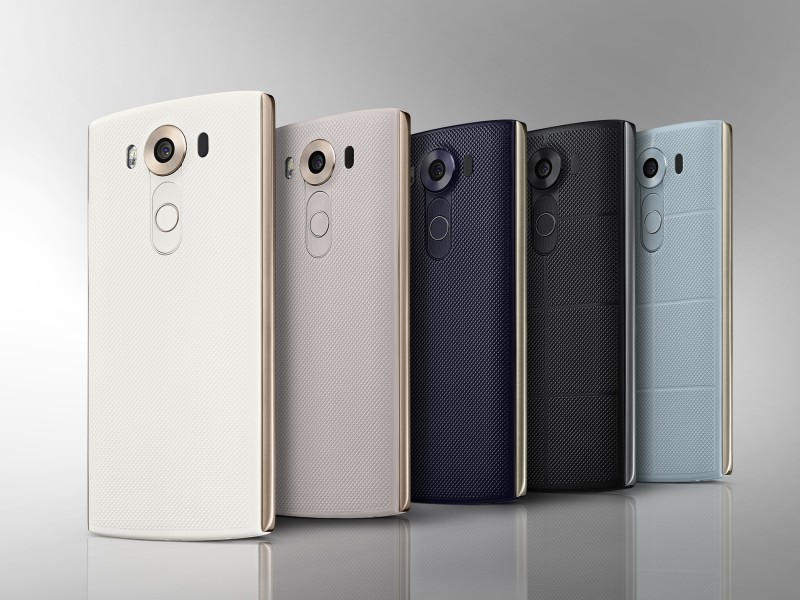
LG V10 color options
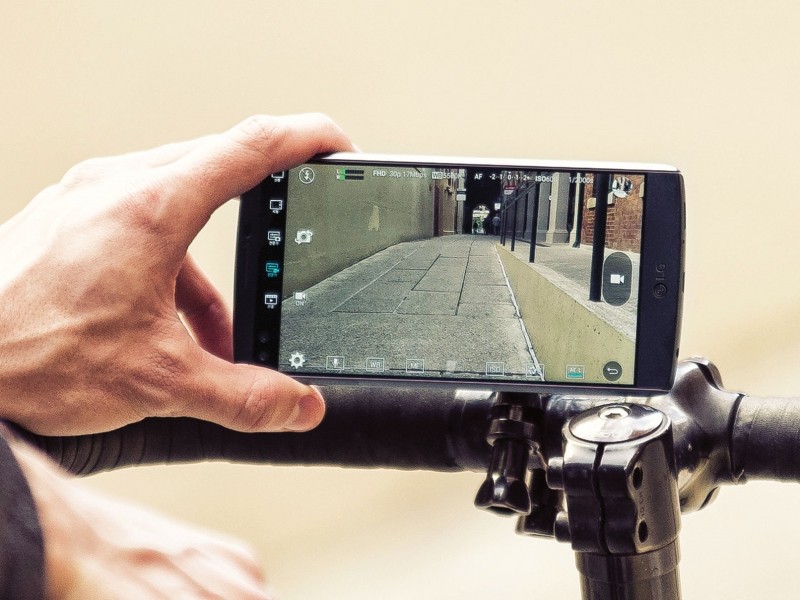
LG V10 manual video mdoe
Support our mission to keep content open and free by engaging with theCUBE community. Join theCUBE’s Alumni Trust Network, where technology leaders connect, share intelligence and create opportunities.
Founded by tech visionaries John Furrier and Dave Vellante, SiliconANGLE Media has built a dynamic ecosystem of industry-leading digital media brands that reach 15+ million elite tech professionals. Our new proprietary theCUBE AI Video Cloud is breaking ground in audience interaction, leveraging theCUBEai.com neural network to help technology companies make data-driven decisions and stay at the forefront of industry conversations.