




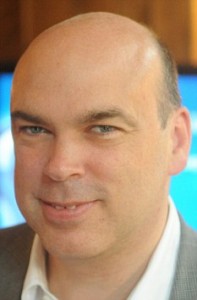
 Hewlett Packard announced plans to spin off its PC business last month, despite being the leading global PC vendor, to focus on its enterprise software and services. The plan was spurred along with news of HP’s plans to acquire UK-based software company Autonomy. Oracle CEO Larry Ellison, who has been constantly criticizing HP lately, bashed HP’s $10.3 billion acquisition of Autonomy and offloading of its PC business. Autonomy CEO Mike Lynch responded in turn.
But most analysts actually agree with Ellison’s view that HP’s acquisition of Autonomy of the quote is too high. At the Oracle’s earnings conference call, Ellison said, “Autonomy was shopped to us. We looked at the price and thought the price is abnormally high.”
Autonomy’s technology helps customers to filter e-mail, text documents and video and other unstructured data. Ellison argues that Oracle can also provide such services, and its integration with Oracle’s database software can provide better results than providing as standalone separate software.
In the return fire statement, Lynch says that Ellison’s comments gave away his lack of knowledge in the area of unstructured data, saying “Ellison’s understanding of the problems in the unstructured world is very weak.”
Lynch said Autonomy will secure a good portion of HP’s return, including a large sales team through the sale of the HP software, the provision of Autonomy’s technology-related consulting services, as well as the integration of Autonomy’s software. “We have most of the software industry running Autonomy,” he said.
Oracle, on the other hand, is one of the biggest technology companies and leader in integrated hardware and software systems. They invented the database machine more or less with HP and then redeveloped with Sun. Now they are moving towards Exadata, a market HP and IBM are already quite active. Exadata consists of many disks and a great deal of memory to reduce latency in very huge databases.
Harping on another pain point between the two companies, Oracle’s upping the ante against HP’s Itanium chip. Oracle unveiled its high-end SuperCluster system, powered by new Oracle’s eight-core T4 SPARC chip. Oracle claims the new system will offer twice the performance of an Itanium-based Integrity server from HP.
HP currently runs Oracle database software on HP Integrity servers on over 140,000 customers systems. Oracle decision to abandon x86 chips from Intel and Itanium powered systems and to focus on its own x86 microprocessor blocks HP’s support of the products used by clients, which would bring HP’s Itanium-based server business inevitably to an end.
HP fired CEO Leo Apotheker last week, crowning Meg Whitman as the next CEO to take his place. If HP wants continuity around its business model, it’s going to be a rough road for the next CEO to run the $40 billion empire.
Support our mission to keep content open and free by engaging with theCUBE community. Join theCUBE’s Alumni Trust Network, where technology leaders connect, share intelligence and create opportunities.
Founded by tech visionaries John Furrier and Dave Vellante, SiliconANGLE Media has built a dynamic ecosystem of industry-leading digital media brands that reach 15+ million elite tech professionals. Our new proprietary theCUBE AI Video Cloud is breaking ground in audience interaction, leveraging theCUBEai.com neural network to help technology companies make data-driven decisions and stay at the forefront of industry conversations.