
 NEWS
NEWS
NEWS
NEWS
NEWS


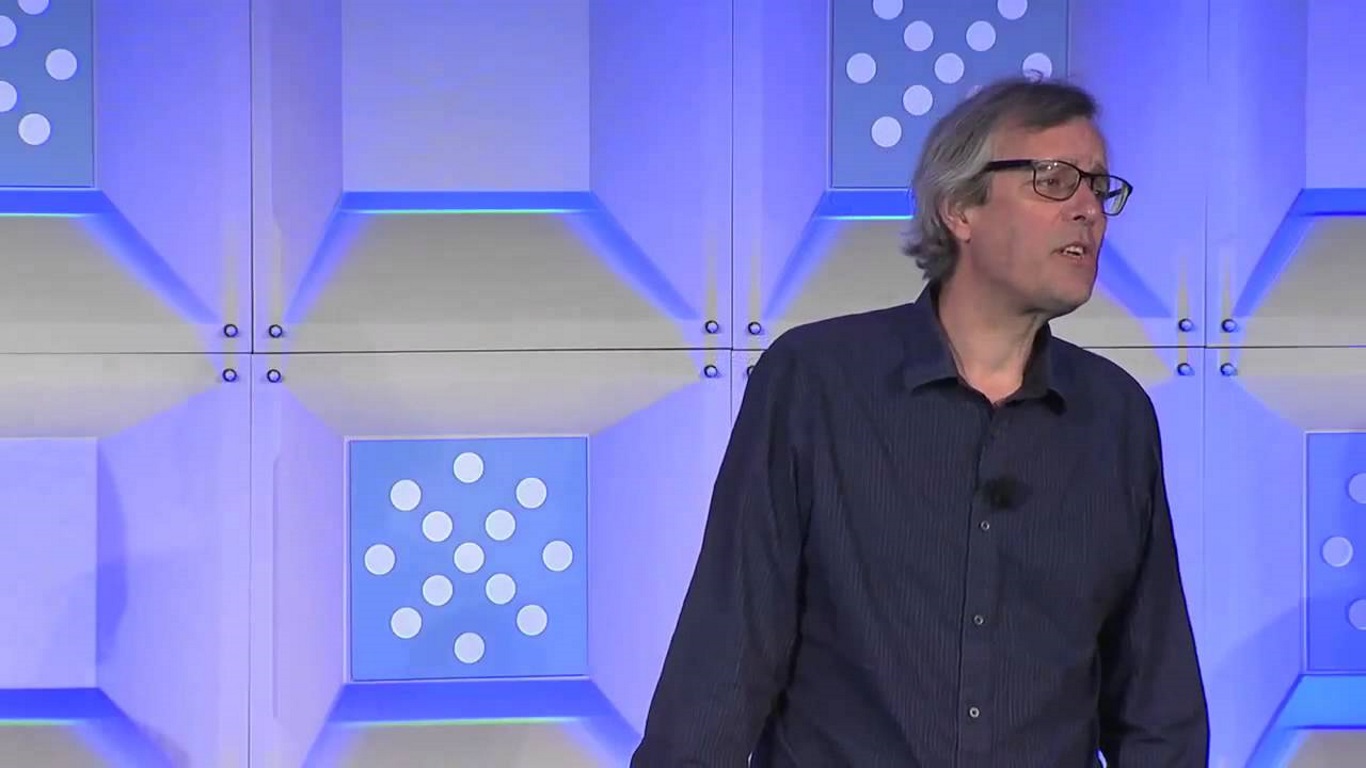
CERN Infrastructure Services Manager Tim Bell
Over the last four years OpenStack has emerged as a truly viable way for enterprises to build their own cloud infrastructure, without relying on public cloud providers like Amazon Web Services Inc. But it’s not just traditional enterprises who’re leaping onto the bandwagon – CERN, the European physics laboratory and home of the Large Hadron Collider (LHC), is also using OpenStack as part of its quest to unlock some of the mysteries of the universe.
Speaking at the OpenStack Summit in Paris, CERN Infrastructure Services Manager Tim Bell described how OpenStack has become a key part of the organization’s architecture.
Bell’s job is to help manage the IT infrastructure that collects and analyzes data from CERN’s LHC, which was built to help scientists try and understand the biggest mysteries in the universe.
“We’re worried about dark matter,” Bell said. “We’re concerned where all the anti-matter has gone.” Bell said physicists also believe in the existence of particles within the four dimensions of the known universe that haven’t yet been observed, such as gravitons, which are thought to mediate the force of gravity.
Naturally, trying to answer such complex questions produces some seriously Big Data that needs to be stored, crunched together and analyzed.
Bell says CERN expects to be consuming up to 400 petabytes of data by 2023, and so it’s going to require some extremely scalable infrastructure. When the organization began looking for a solution, it became clear that open-source software, specifically OpenStack, was the most viable option.
CERN began testing back in 2011 with the OpenStack Cactus release, before moving its deployment into production in 2013 with the Grizzly release. Fast-forward to the present and it’s now running four OpenStack clouds on last year’s Icehouse release, with the largest deployment packing some 70,000 compute cores in 3,000 servers. CERN’s other three OpenStack instances are smaller, containing around 45,000 cores between them.
CERN is also doing its bit for the OpenStack project, contributing relevant bits of code where it’s made its own modifications and enhancements. Indeed, Bell revealed how CERN played a key role in creating the multi-cloud federation capabilities available in later OpenStack releases.
“So remember,” Bell told his audience, “whenever you’re helping out OpenStack, you’re helping us understand how the universe works and what it’s made of.”
Support our mission to keep content open and free by engaging with theCUBE community. Join theCUBE’s Alumni Trust Network, where technology leaders connect, share intelligence and create opportunities.
Founded by tech visionaries John Furrier and Dave Vellante, SiliconANGLE Media has built a dynamic ecosystem of industry-leading digital media brands that reach 15+ million elite tech professionals. Our new proprietary theCUBE AI Video Cloud is breaking ground in audience interaction, leveraging theCUBEai.com neural network to help technology companies make data-driven decisions and stay at the forefront of industry conversations.