

 NEWS
NEWS
NEWS
NEWS
NEWS

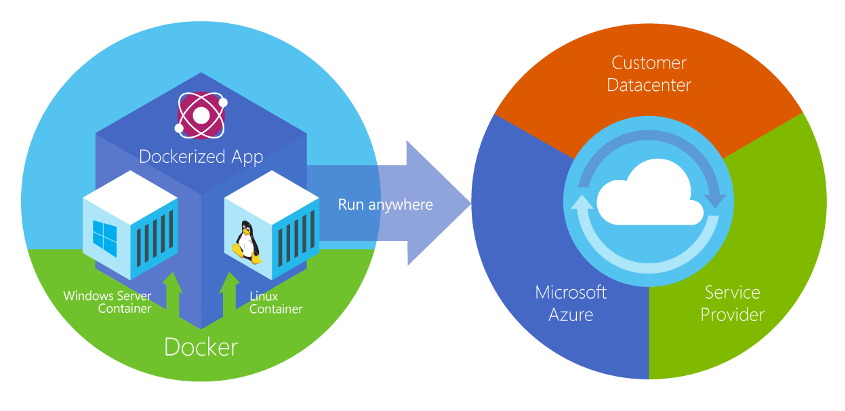
Better late than never. Eleven months after Amazon and five behind Google Inc., Microsoft Corp. is finally rolling out its own managed container platform to help developers run their microservices projects in the public cloud. The delay is the result of a strategic gamble that may just help set its value proposition apart from the pack.
Instead of developing a homegrown clustering component to orchestrate applications deployed under the Azure Container Service like its rivals have for their own clouds, Microsoft has opted to go with the open-source Mesos framework. The technology offers numerous advantages beyond merely saving its engineers the time and effort of reinventing the wheel.
Developed six years ago at UC Berkeley with the goal of providing a unified way to consume infrastructure, Mesos has since evolved and grown with the help of feedback from big-name users such as Airbnb Inc. to become a true-to-form realization of its lofty mission statement. As a result, the framework is not only likely superior to anything Microsoft could have developed internally in a few months but also to the other available alternative.
That being using Google’s likewise open-source Kubernetes container management system, the prefered choice for developers. The two projects are both inspired by the Borg scheduler that administrates the search giant’s data centers but Mesos manages to come much closer to the source thanks to a more flexible resource allocation model that allows applications to treat a cluster as a single machine.
That makes provisioning capacity easier and more efficient, benefits that Microsoft is currently alone among its peers in offering to container adopters. But that exclusivity may not last much longer given that Amazon has also recognized the potential of Mesos and released a proof-of-concept drive for plugging the framework into its rivaling platform earlier this year. That means full-blown support can’t be very far behind.
Of course, all that interest doesn’t mean Mesos is a magic bullet for every container project. Applications need to be specially optimized in order to take full advantage of the framework’s capabilities, a complicated undertaking that makes it less attractive for existing workloads and smaller experiments than the easier-to-use Kubernetes. But Microsoft already has that covered, having added support for Google’s open-source alternative all the way back last year.
The Azure Container Service made its debut at Redmond’s annual cloud conference this morning alongside several other offerings, the most notable of which is a new instance type that employs Nvidia Corp’s Tesla K80 GPU and the complementary Grid 2.0 virtualization technology. It’s geared towards CAD applications and other graphically intensive workloads that can’t be served as well by Microsoft’s regular compute-intensive virtual machines.
Support our mission to keep content open and free by engaging with theCUBE community. Join theCUBE’s Alumni Trust Network, where technology leaders connect, share intelligence and create opportunities.
Founded by tech visionaries John Furrier and Dave Vellante, SiliconANGLE Media has built a dynamic ecosystem of industry-leading digital media brands that reach 15+ million elite tech professionals. Our new proprietary theCUBE AI Video Cloud is breaking ground in audience interaction, leveraging theCUBEai.com neural network to help technology companies make data-driven decisions and stay at the forefront of industry conversations.