
 NEWS
NEWS
NEWS
NEWS
NEWS

While many of the attendees at EMC World 2016 come from a business sector, representatives of public institutions are making their use of EMC-related technologies known as well, showing a penetration beyond the usual revenue-focused implementation of these solutions.
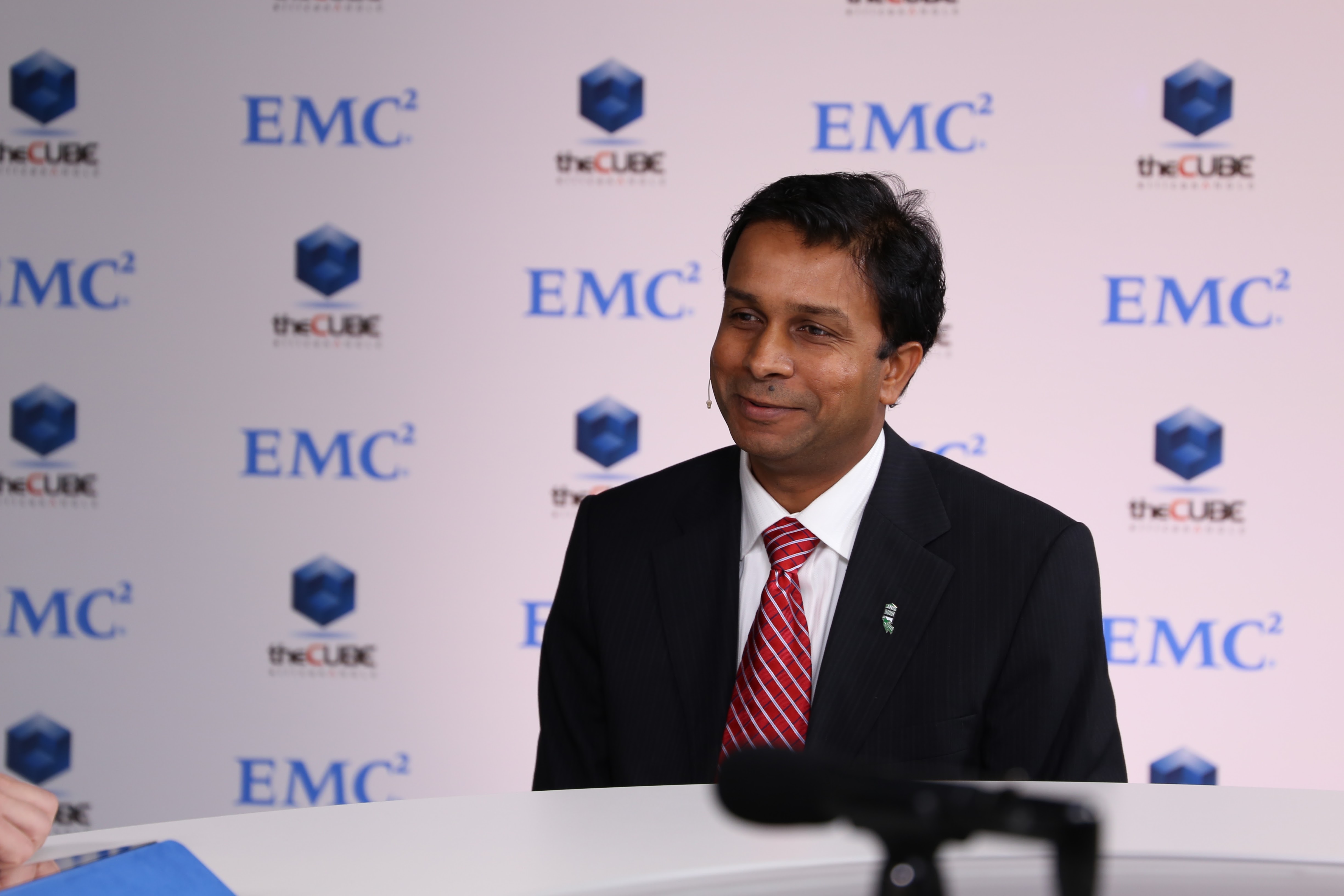
Rama Dhuwaraha, associate vice chancellor and CIO of University of North Texas System, met with Stu Miniman (@stu) and Brian Gracely (@bgracely), cohosts of theCUBE, from the SiliconANGLE Media team, to answer their questions on how the university is handling stack adjustment, efficiency optimization and building teams with diverse strengths.
theCUBE’s team started the interview by fielding Dhuwaraha’s thoughts on several topics, one of which was naturally how his teams are approaching the stack. In his assessment, the process of refining the stack is still very much being felt out. “We need to move up the stack in terms of Platform as a Service and Software as a Service,” he said. “Infrastructure as a Service still is [the foundation].”
Moving on to consider the possibilities for enterprises looking to make the move to hybrid-cloud basing, Dhuwaraha felt that it can be a significant challenge that not all of those groups can meet. “In the beginning, it’s a copious amount of details you go through, and there are not too many of them who can really go down the path of doing a hybrid cloud.”
But it was the acceleration made possible by successfully moving to the cloud that he felt held numerous advantages for those who could make that transition.
“We’ve now undertaken projects in data-warehousing, analytics, dashboarding; all of this was impossible before [accelerated delivery],” he said. “Mobile applications are getting accelerated, so deployments for that are on the horizon, in the next three months, so you can see how fast we’re able to move on some of these. … Our high-performance computing is the next area we want to improve. … The automation stack also extends into platforms and software, and we haven’t got there yet, and we’re looking to get that done.”
On the subject of how he builds his teams at the university, Dhuwaraha emphasized bringing together people from a wide array of backgrounds and technical focuses.
“We hire for the cultural fit,” he said. “That’s important, and we want a diversified employee workforce, whether it’s arts background, science background, engineering, all of those. And together we’re molding a team where we can leverage our strengths and minimize our weaknesses. … And it’s really helped us.”
Asked to look back and pick out a situation in which he felt things could have been done differently to better effect, Dhuwaraha settled on architecture as one of the stand-out items.
“I think enterprise architecture is the key to some of these systems where when you’re bringing in different ecosystems and you’re architecting them … because we have service management side, so we’re working on IT service management, portfolio transitioning. … If we could sequence these a little better, I think we would have achieved a more optimal rate of adoption.”
But Dhuwaraha made clear that getting caught up in regrets over possible alternate routes was not something that interested him. Instead, he wanted to focus on making a clear path forward. “I think we want to take simple steps first,” he said. “In increasing the complexity, what you’re going to do is decrease the adoption.”
Watch the full interview below, and be sure to check out more of SiliconANGLE and theCUBE’s coverage of EMC World 2016.
Support our mission to keep content open and free by engaging with theCUBE community. Join theCUBE’s Alumni Trust Network, where technology leaders connect, share intelligence and create opportunities.
Founded by tech visionaries John Furrier and Dave Vellante, SiliconANGLE Media has built a dynamic ecosystem of industry-leading digital media brands that reach 15+ million elite tech professionals. Our new proprietary theCUBE AI Video Cloud is breaking ground in audience interaction, leveraging theCUBEai.com neural network to help technology companies make data-driven decisions and stay at the forefront of industry conversations.