
 NEWS
NEWS
NEWS
NEWS
NEWS

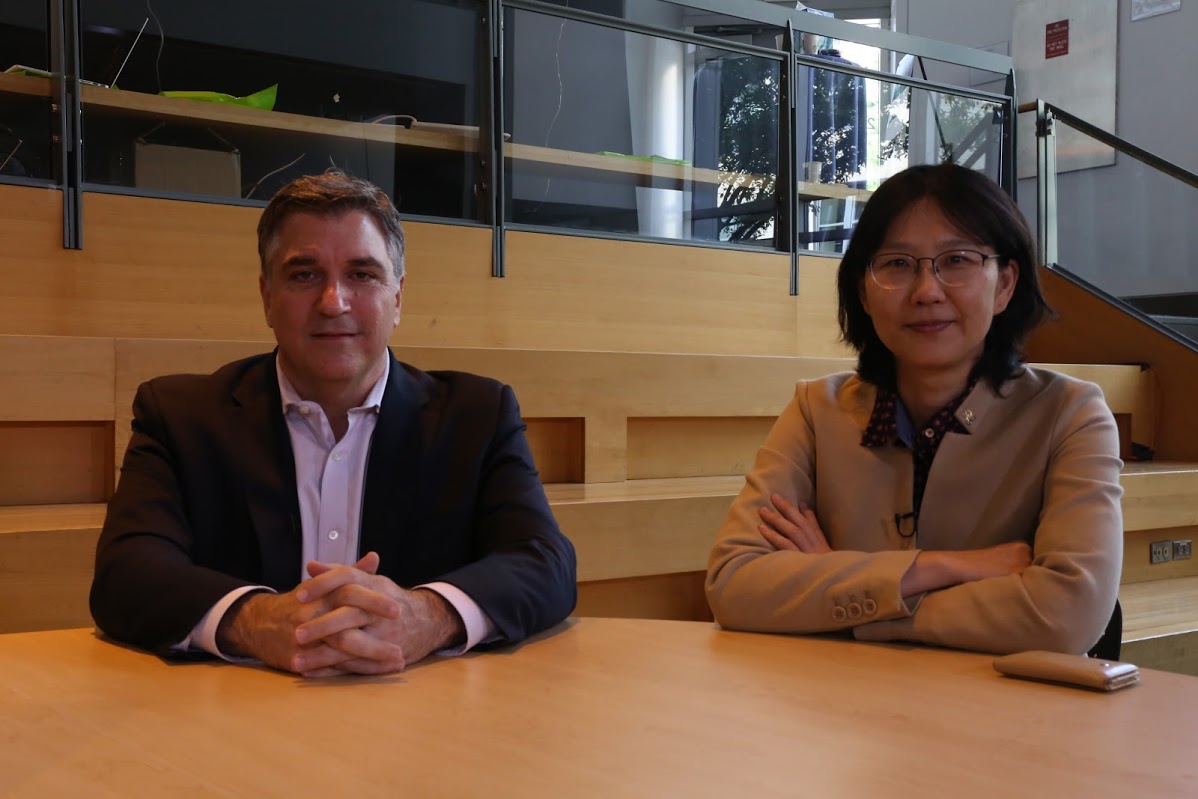
During the MIT CDOIQ Symposium at the MIT Campus in Cambridge, MA, two people from different parts of the world and at different stages of transitioning into the world of Big Data came together to talk about their roles. And it is clear that there is a very large gap in the way data is used in enterprises in the United States compared to other parts of the world.
Joe Caserta, president of Caserta Concepts, LLC, and Yulan Yuan, professor, Department of Tourism Management, at Jinwen University of Science and Technology, joined Stu Miniman (@stu) and Paul Gillin (@pgillin), cohosts of theCUBE, from the SiliconANGLE Media team, to discuss what they are experiencing in the world of Big Data.
The role of the Chief Data Officer (CDO) is a fairly new function within the American enterprise. According to Caserta, who is a 30-veteran in the data space, there has been an evolution of data over that time period. He explained that the CDO is a fairly new role, but in the past few years as data technology has exploded, the role has shifted from purely governance to helping companies monetize data and analytics.
“There is some aspect of divide and conquer, where you have a CDO organization that will have maybe a chief analytics officer, chief data governance officer, and that collection of people will be a new division within an organization,” Caserta said. “From the executive leadership down, data is becoming so critical within an organization. It’s not just a backroom collection of data; it’s become a way of doing business.”
Caserta stated that if you consider the role of the CDO as a technology function, it might be a mistake. “What we are advising our clients to do is more of a collaboration. If your agile, you think of a scrum team with specialists in order to solve a problem. I think the data office, IT, and the business and project management should all come together and bring their own level of expertise,” said Caserta.
He illustrated his point by noting that there is a technology aspect to provide a solution, but the CDO will only provide the data side of things. Aspects such as where to get the data, how to govern the data, how to disseminate the data, he feels all of those decisions are really being removed for the IT function.
“The IT function is just becoming more of an application development function, and the data side is separately owned by the chief data officer organization,” continued Caserta.
Yuan looks at Big Data from a tourism industry perspective and how her organization is linking to the IT personnel for their expertise. For her team, they are collaborating with engineering and also cognitive scientists and trying to catch up with other industries. Tourism has a great deal of data to manage, and Yuan’s role in Taiwan is trying to bring together the computer science engineering team with the business people in the tourism industry. She is here to discuss the cross discipline effort of bringing together IT and tourism to work on Big Data.
“Speaking about Big Data in Taiwan, from a pure science background, there are several programs established in different universities. Together we host the conference in Jinwen University in Taiwan,” Yuan explained. “They have a really great data program, and we try to bring people from different backgrounds to work together.”
Yuan described the key issues facing her organization as being security, privacy and cross-functional communications. Currently, she said there is not a role comparable to the role of CDO in her country because it is not seen a money-making position. As Big Data becomes more cohesive in her part of the world, she sees this changing eventually.
Watch the full interview below, and be sure to check out more of SiliconANGLE and theCUBE’s coverage of the MIT CDOIQ Symposium.
Support our mission to keep content open and free by engaging with theCUBE community. Join theCUBE’s Alumni Trust Network, where technology leaders connect, share intelligence and create opportunities.
Founded by tech visionaries John Furrier and Dave Vellante, SiliconANGLE Media has built a dynamic ecosystem of industry-leading digital media brands that reach 15+ million elite tech professionals. Our new proprietary theCUBE AI Video Cloud is breaking ground in audience interaction, leveraging theCUBEai.com neural network to help technology companies make data-driven decisions and stay at the forefront of industry conversations.