



 NEWS
NEWS
NEWS
NEWS
NEWS

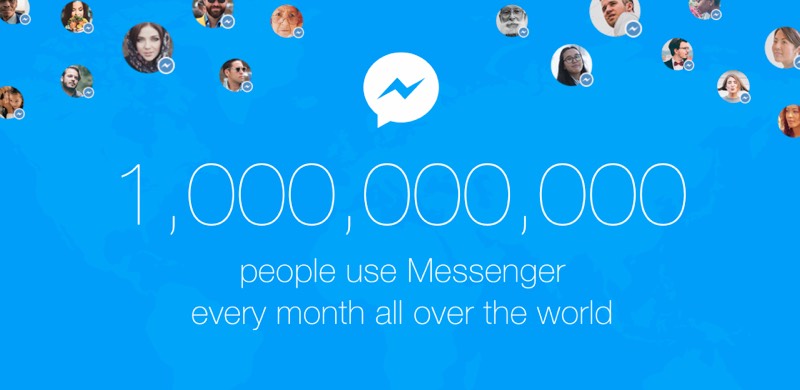
Some 27 months after Facebook forced users to use its dedicated chat app if they wanted to chat privately with other users, Facebook’s Messenger has passed the 1 billion active users mark.
Significantly, the 1 billion number is up 200 million from the 800 million users Facebook reported in January.
In an announcement post, Facebook shared some statistics about Messenger, including that the most downloaded sticker pack was from The Angry Birds Movie; Messenger users send 22 million animated GIFs per day at an average of 254 GIFs per second; there have been 1.2 billion games of Basketball played within the app, or the equivalent of 975,000 NBA seasons; 250 million games of soccer have been played in the app, and that 360 million Valentines were sent in Messenger and 300 million flower stickers sent on Mother’s Day.
Other, more impressive statistics include Facebook claiming that Messenger now has a 10 percent global market share of VOIP calls, Messenger is the second most popular iOS app, that the Android version has been downloaded over 1 billion times, and that 17 billion photos are sent on Messenger each month.
“As part of this journey to 1 billion, we focused on creating the best possible experiences in modern day communications,” Facebook Messenger Chief David Marcus said in a statement. “We remain focused on helping connect people to the people and businesses who matter most. Thank you to everyone who uses Messenger around the world, and we’re looking forward to connecting the next billion.”
There were legitimate gripes about Facebook forcing users to use the Messenger app by removing messaging functionality from the Facebook app itself, but the reality is slightly over two years later those holdouts have mostly given in.
One of the core reasons people have been flocking to Messenger, despite not being given a choice if they wish to send a message on Facebook, is that the company has been continually improving the product, most recently with the addition of chat bots.
As SiliconANGLE’s Robert Hof explained in April Facebook is attempting to transfer Messenger into a platform for the post-app era that not only includes chat bots but a Messenger Send/Receive API, or application programming interface, that will let businesses send and receive not only text messages, but images and interactive “rich bubbles” that include calls to action such as a “message me” button.
Put simply, the Facebook Messenger of 2016 is a different app to the one launched in 2013, and within another few years will be unrecognizable again, and ultimately we’re all the better off for it.
Support our mission to keep content open and free by engaging with theCUBE community. Join theCUBE’s Alumni Trust Network, where technology leaders connect, share intelligence and create opportunities.
Founded by tech visionaries John Furrier and Dave Vellante, SiliconANGLE Media has built a dynamic ecosystem of industry-leading digital media brands that reach 15+ million elite tech professionals. Our new proprietary theCUBE AI Video Cloud is breaking ground in audience interaction, leveraging theCUBEai.com neural network to help technology companies make data-driven decisions and stay at the forefront of industry conversations.