


 EMERGING TECH
EMERGING TECH
EMERGING TECH
EMERGING TECH

A week after the launch of its eighth-generation Core chips for personal computers and smartphones, Intel Corp. is introducing another new processor that targets an entirely different use case.
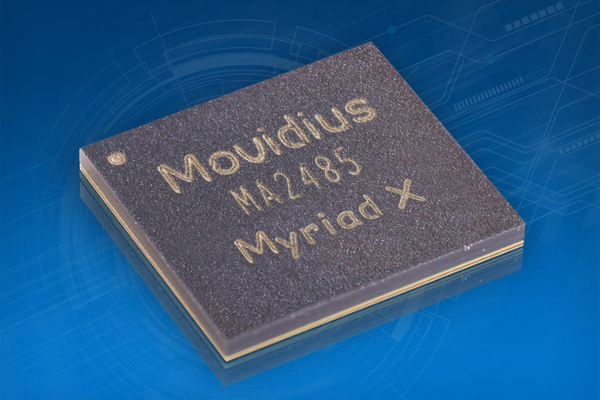
The company this morning unveiled the Myriad X, a compact system-on-a-chip geared toward devices with an embedded artificial intelligence. It’s optimized to run machine learning and deep learning algorithms that process visual input such as camera footage. The unit shares this feature with its predecessor, the Myriad 2, which Intel sells as part of a $79 thumb drive for developers that became available a month ago.
Both chips are based on technology that the company obtained through the acquisition of Movidius Ltd. last September. According to Intel, the Myriad X can perform over 4 trillion operations per second or TOPS within the same two-watt power envelope as the Myriad 2. When running multiple neural networks, the chip works up to 10 times faster than its predecessor.
This speed boost is credited in large part to the Neural Compute Engine that Intel has introduced into the Myriad X. It’s a hardware block that can provide over 1 TOPS of horsepower for deep learning workloads, the most sophisticated class of AI models. The chip also packs 16 vector processors for handling image data, four more than the Myriad 2, and an expanded on-board memory pool.
Intel said these enhancements enable the Myriad X to process up to 700 million pixels worth of visual input per second from as many as eight different cameras. This horsepower is packaged into a piece of silicon smaller than a person’s thumb that can be fitted into a wide range of devices.
A drone maker, for example, could incorporate the chip into its quadcopters to help them identify and avoid obstacles. Meanwhile, camera manufacturers might employ the Myriad X to automatically highlight points of interest in video footage. Intel also listed virtual reality headsets, smart appliances and robots among the devices that can put the processor to use.
Like the rest of the chip industry, Intel has been moving beyond its traditional central processing unit chips in response to the demand for new kinds of high-volume processing of data required by machine learning and artificial intelligence as well as lower-power mobile and Internet of Things devices.
Support our mission to keep content open and free by engaging with theCUBE community. Join theCUBE’s Alumni Trust Network, where technology leaders connect, share intelligence and create opportunities.
Founded by tech visionaries John Furrier and Dave Vellante, SiliconANGLE Media has built a dynamic ecosystem of industry-leading digital media brands that reach 15+ million elite tech professionals. Our new proprietary theCUBE AI Video Cloud is breaking ground in audience interaction, leveraging theCUBEai.com neural network to help technology companies make data-driven decisions and stay at the forefront of industry conversations.