 CLOUD
CLOUD
CLOUD
CLOUD






CLOUD

Containers (a virtualized method of running distributed applications) awkwardly straddle a line between state-of-the-art and too hairy-to-handle. Thankfully, their complexity and that of Kubernetes — an open-source container-management platform — is coming under assault from partnering vendors.
Red Hat Inc. announced container management partnerships with public cloud providers Amazon Web Services Inc. and Google Cloud Platform. Now it’s tripling down with a similar offering for Microsoft Corp.’s Azure Cloud.
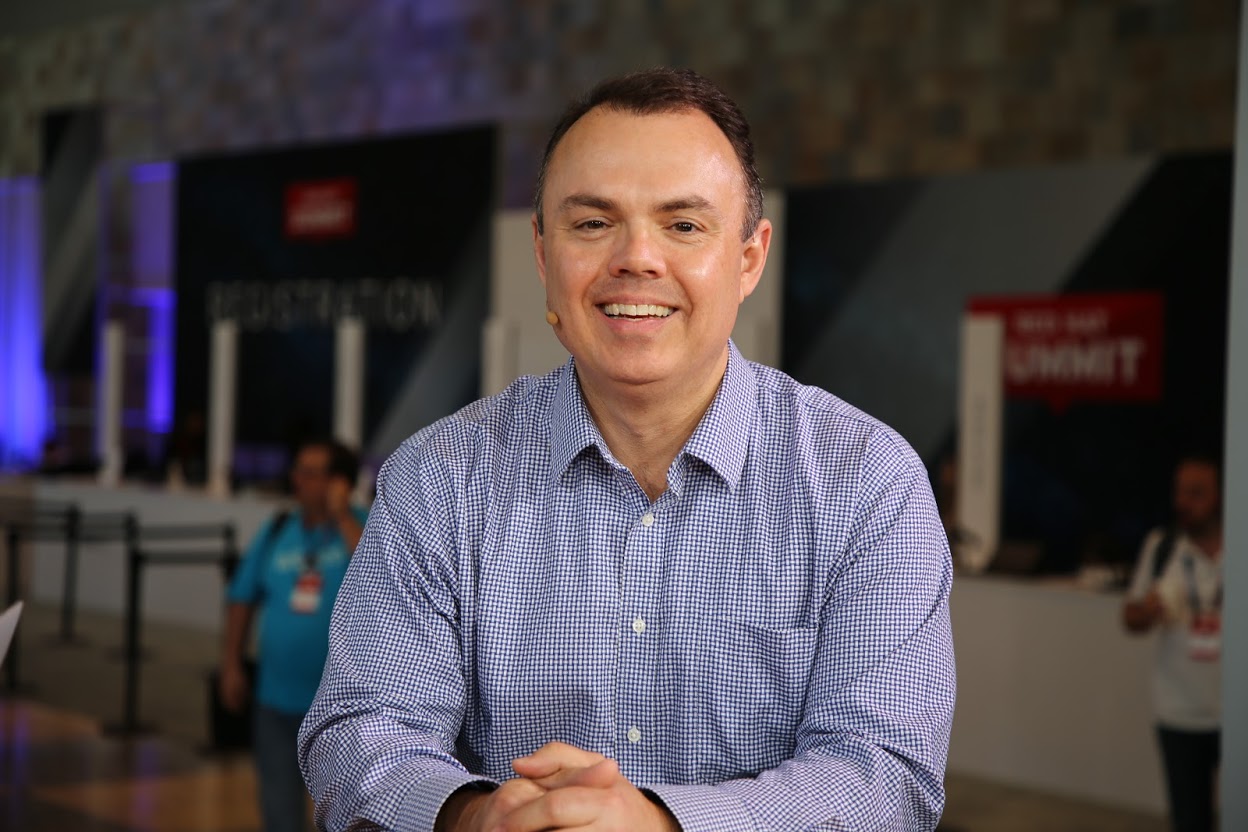
“It means the coming of age of both containers and industry standards around this,” according to Mike Ferris (pictured), vice president of technical business development and business architecture at Red Hat.
The companies have jointly engineered Red Hat OpenShift on Azure to cut away the hassles of container management in a hybrid cloud environment. This is an important step out of the mire of container and Kubernetes minutia toward a ready-to-use enterprise solution, according to Ferris.
Ferris spoke to John Furrier (@furrier), host of theCUBE, SiliconANGLE Media’s mobile livestreaming studio, and guest host John Troyer (@jtroyer), chief reckoner at TechReckoning, at Red Hat Summit in San Francisco. They discussed how Red Hat and Azure are teaming up to steer customers through the container-management maze. (* Disclosure below.)
As if container adoption were not puzzling enough to enterprises, the simultaneous shift to hybrid cloud adds another layer of frustration to modernizing infrastructure and applications. By integrating Red Hat and Azure technologies into a single platform that can play the field from on-premises to cloud and back, OpenShift for Azure eases logistics pains, Ferris pointed out.
“Regardless of what application you have, where you need it to be run, or what services you need to plug in, you need to make sure those are available everywhere,” he stated.
The companies have also melded service management for the product, so nothing is lost in translation between the Red Hat and Azure side, Ferris added. “It’s actually the industry’s first jointly manage service on a public cloud,” he said.
It will be a Microsoft first-party product. “They’re going to be selling it in the market; we’ll be selling it in the market,” Ferris explained. “Customers can call Microsoft as their first line, but if they happen to call Red Hat, we’ve got this back-end infrastructure we know how to escalate. We’ve got joint ticketing systems. We know how to work on this together.”
Watch the complete video interview below, and be sure to check out more of SiliconANGLE’s and theCUBE’s coverage of the Red Hat Summit event. (* Disclosure: TheCUBE is a paid media partner for Red Hat Summit. Neither Red Hat Inc., the event sponsor, nor other sponsors have editorial control over content on theCUBE or SiliconANGLE.)
Support our mission to keep content open and free by engaging with theCUBE community. Join theCUBE’s Alumni Trust Network, where technology leaders connect, share intelligence and create opportunities.
Founded by tech visionaries John Furrier and Dave Vellante, SiliconANGLE Media has built a dynamic ecosystem of industry-leading digital media brands that reach 15+ million elite tech professionals. Our new proprietary theCUBE AI Video Cloud is breaking ground in audience interaction, leveraging theCUBEai.com neural network to help technology companies make data-driven decisions and stay at the forefront of industry conversations.