
 CLOUD
CLOUD
CLOUD
CLOUD

CLOUD

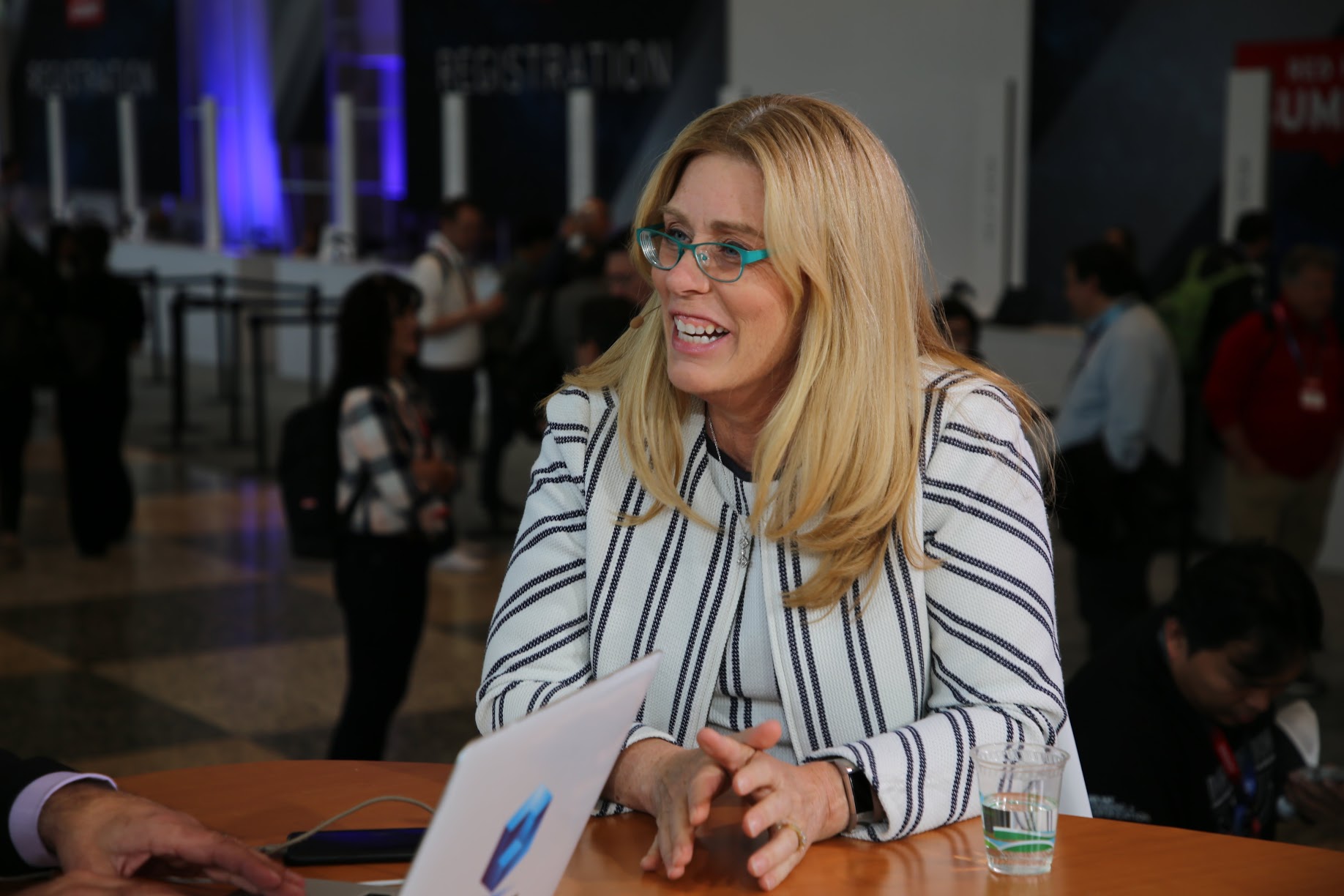
When Kim Stevenson (pictured) joined Lenovo Group Ltd last year, the technology company known mostly for smartphone manufacturing was considered an underdog in the world of data centers for enterprise computing, and that’s exactly what attracted her to the gig. Now the senior vice president and general manager of the Data Center Solutions Division at Lenovo, Stevenson sees an opportunity to capture the minds and hearts of information technology professionals amidst the industry’s changing tides.
“We organized, about this time last year, by customer segment to serve the unique needs … in terms of hyper-scaling customers, high-performance compute and enterprise, both at the software-defined and traditional layer,” Stevenson explained. Lenovo has since made notable strides in the data center market, as its hyperscale offerings pique interest and the company minimizes the losses of such a costly pivot.
Sitting down with theCUBE, SiliconANGLE’s mobile livestreaming studio, Stevenson met with host John Furrier (@furrier) and guest host John Troyer (@jtroyer) at the recently concluded Red Hat Summit to discuss Lenovo’s goals for an increasingly connected business world, as well as how Stevenson envisions the data center of the future. (* Disclosure below.)
After a landmark deal with IBM Corp., Lenovo acquired a legacy line of servers and set sights on the enterprise computing market. To fulfill that aspiration, Stevenson sees Red Hat Inc.’s open-source solutions as key to scaling modern technologies for hybrid cloud environments.
“We’ve chosen, from a software perspective, a deep partnership model with Red Hat as one of the partners,” Stevenson said. “If I look forward I would say, ‘Look, we’re going to have to go deeper and partner more broadly across the [independent software vendor] sphere to continue to bring these tightly integrated appliances and simple cloud deployment models to the market.’”
And that’s exactly what Stevenson plans to do. Lenovo’s partnership with Red Hat involves co-development to ensure seamless integration and security, from the appliance hardware to the specialized software. As open-source finds its place in enterprise computing, Red Hat’s OpenShift and the Cloud Native Computing Foundation’s Kubernetes platform have become popular technologies for managing containers in virtualized settings. Red Hat’s support for container management has changed the game for Lenovo.
“We’ve taken our systems management software XClarity, and we’re the first to embed that into cloud forms so that we can move assets, public assets to private assets, and vice versa,” Stevenson said. “That wouldn’t be possible without working really closely with Red Hat.”
This level of co-development also addresses the matter of security when it comes to container management, from the supply chain to the partner channel. Stevenson sees Lenovo’s hardware business as a benefit to building out secure appliances and works closely with Red Hat to factor in software security needs from the onset. Lenovo’s deep investment in OpenShift actually accelerates its container deployments to “figure out the security by design, versus security after the fact,” Stevenson stated.
On a mission to reinvent enterprise computing structures, Stevenson anticipates a new era for the data center. With cloud computing firmly established as a practice and service model, the days of data consolidation are over, according to Stevenson.
“There will be more data centers; they just will be micro-data centers, because they will reflect the edge of every company — those endpoint aggregations you need to do to figure out what your data analysis is going to be,” Stevenson said.
She also expects a simplification of IT operating models as more private clouds get deployed and the work of maintaining the underlying infrastructure gets abstracted away through automation and service models. Instead of aligning operations around their independent functions of engineering, application deployment and application maintenance, Stevenson suggests that enterprises organize IT operations according to lines of business and projected outcomes.
Watch the complete video interview below, and be sure to check out more of SiliconANGLE’s and theCUBE’s coverage of the Red Hat Summit event. (* Disclosure: TheCUBE is a paid media partner for Red Hat Summit. Neither Red Hat Inc., the event sponsor, nor other sponsors have editorial control over content on theCUBE or SiliconANGLE.)
Support our mission to keep content open and free by engaging with theCUBE community. Join theCUBE’s Alumni Trust Network, where technology leaders connect, share intelligence and create opportunities.
Founded by tech visionaries John Furrier and Dave Vellante, SiliconANGLE Media has built a dynamic ecosystem of industry-leading digital media brands that reach 15+ million elite tech professionals. Our new proprietary theCUBE AI Video Cloud is breaking ground in audience interaction, leveraging theCUBEai.com neural network to help technology companies make data-driven decisions and stay at the forefront of industry conversations.