













 INFRA
INFRA
INFRA
INFRA

INFRA

Imagine a physical map of the world. There is a key with cardinal directions, paths, land boundaries, and perhaps even flow lines for the oceans. Now picture how a map from the year 1400 might look. The United States of America and Mexico, for example, are referred to by names such as “New France” or “New Spain.” These countries have now evolved into the ones we know today.
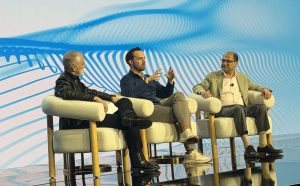
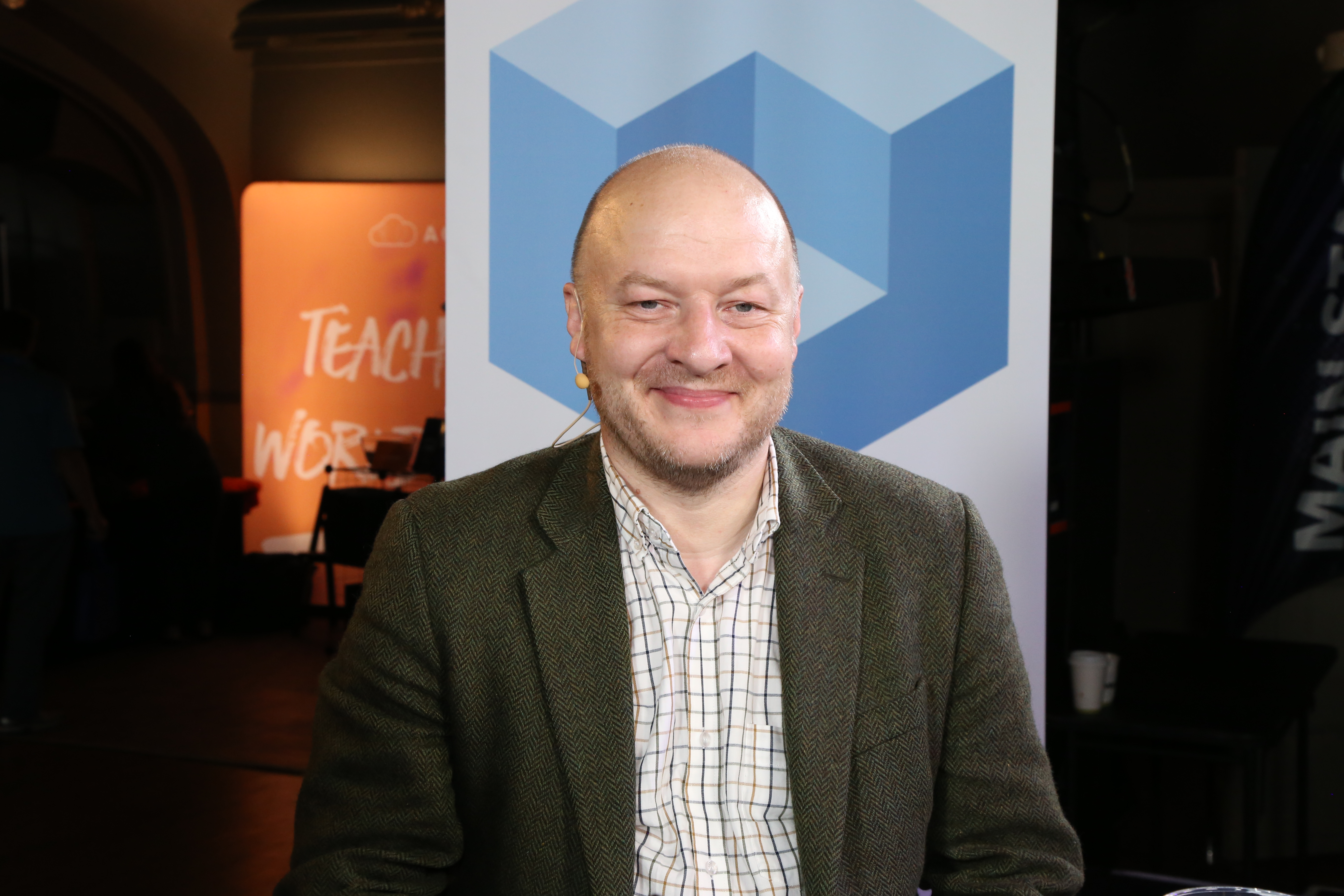
The idea of the historical evolution of a map is analogous to the map of business across the globe, according to Simon Wardley (pictured), advisor at the Leading Edge Forum, a cross-industry think tank that helps organizations re-imagine their digital agendas.
“In a geographical map, you have consistency of movement,” he said. “If I go North from England, I end up in Scotland. You have the same thing with a business map, but that movement is described by evolution.” And one recent evolution in the enterprise is serverless cloud computing.
Wardley spoke with Stu Miniman (@stu), host of theCUBE, SiliconANGLE Media’s mobile livestreaming studio, at the ServerlessConf event in San Francisco. They discussed how mapping business works and the future of finance in development.
There is a code execution layer, or framework, to applications that has become more of a utility, which is now called platform, Wardley explained to Miniman. “Underneath that are all these components like operating systems, containers, container management — Kubernetes type systems,” he added, referring to platforms like Kubernetes, which is an open-source container-orchestration system for automating deployment, scaling and management of containerized applications.
Wardley compared these hidden components to a toaster’s nuts and bolts. They are never seen, no one cares how they function, but in the end, they are necessary and important. “Containers are an important, but invisible subsystem,” Wardley explained. “[But] the focus needs to be on the code execution.”
Although Wardley attempted to implement the serverless idea in 2005, he realized the timing was too early. However, the “map of business” now seems to be heading toward the combination of finance and development for serverless, according to Wardley.
“Refactoring has never really had financial value. By exposing the cost per function and looking at the capital flow, it suddenly does,” he said. “So what I’m really interested in are the new management practices, the new tooling around observing capital flow, monitoring/managing capital flow, refactoring around that space and building new business models. It’s not quite there yet, but it’s emerging.”
Watch the complete video interview below, and be sure to check out more of SiliconANGLE’s and theCUBE’s coverage of the ServerlessConf event.
Support our mission to keep content open and free by engaging with theCUBE community. Join theCUBE’s Alumni Trust Network, where technology leaders connect, share intelligence and create opportunities.
Founded by tech visionaries John Furrier and Dave Vellante, SiliconANGLE Media has built a dynamic ecosystem of industry-leading digital media brands that reach 15+ million elite tech professionals. Our new proprietary theCUBE AI Video Cloud is breaking ground in audience interaction, leveraging theCUBEai.com neural network to help technology companies make data-driven decisions and stay at the forefront of industry conversations.