

 EMERGING TECH
EMERGING TECH
EMERGING TECH

EMERGING TECH

Done right, data analytics can propel a project from seedling to salad, time-lapse video style. The right way sidesteps undifferentiated heavy lifting from the get-go. The wrong way toils in the basement building plumbing from scratch. This is clear in pharmaceutical research; the failure rate of projects begs for a shorter route from hypothesis to conclusion.
Researchers are trying out artificial intelligence to cut the 90-plus-percent fail rate of drug-discovery projects. It’s key to use prefabs for table-stakes stuff and leave room for tweaking, swapping and switching where it helps.
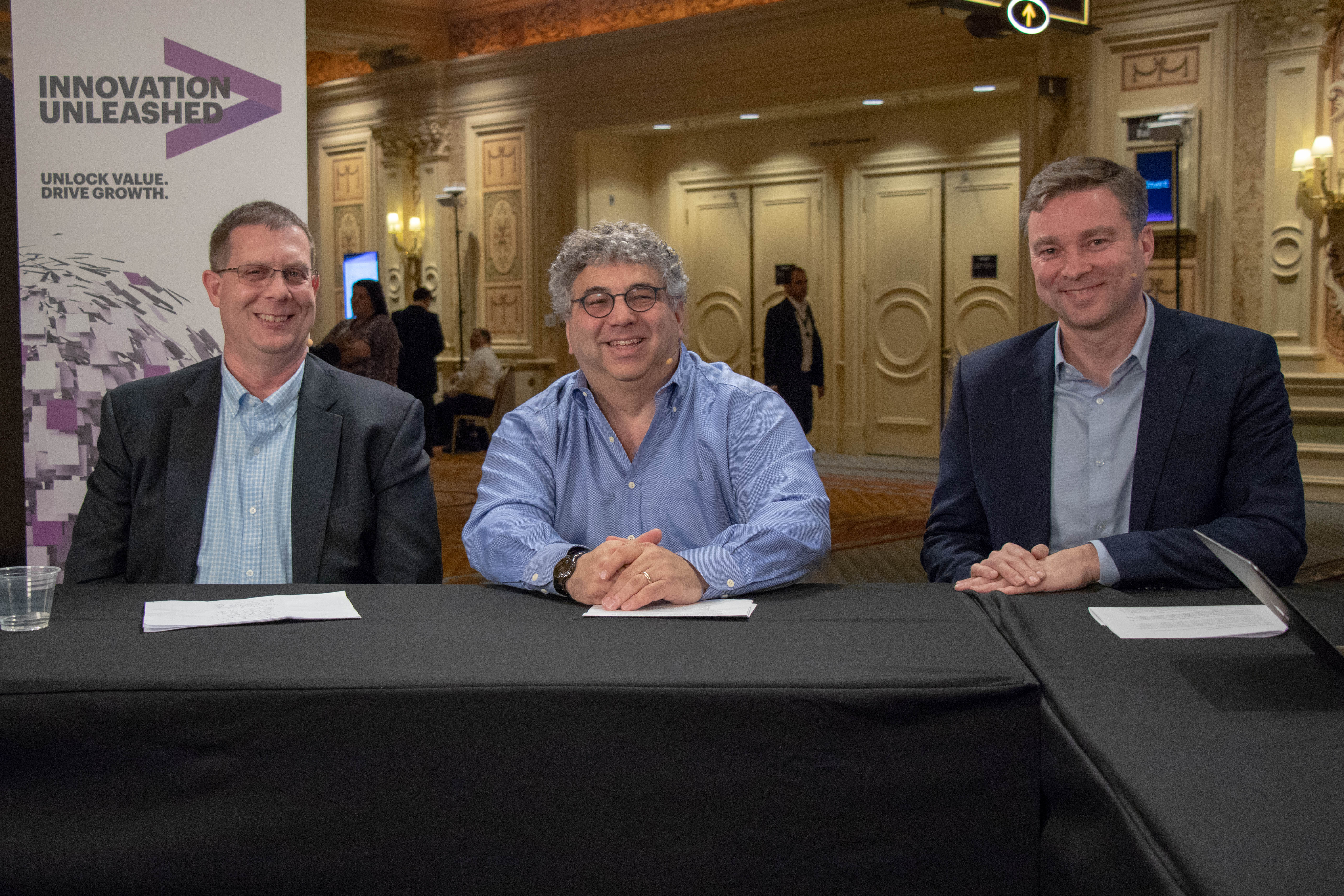
“You could go out and buy a barrel of oil, bring it home, refine it in your backyard, and make your own gasoline,” said Hal Stern (pictured, center), assistant vice president of IT engineering at Merck Research Laboratories. “It’s not recommended.”
It’s much easier and cost effective to drive to the ExxonMobil and fill the tank. Likewise, AI and machine learning tools should offer high-level, differentiating value to users, not pre-competitive commodities, Stern added. Merck is refactoring its core apps to balance the economics of commodities with unique, value-adding advantages. “We’re refining that barrel of oil for every single application we have,” he said.
Stern; Joe Donahue (pictured, left), managing director of global life sciences R&D at Accenture LLP; and Derek Seymour (pictured, right), global group leader of industry verticals segments, AWS Partner Network, at Amazon Web Services Inc., spoke with Rebecca Knight (@knightrm), host of theCUBE, SiliconANGLE Media’s mobile livestreaming studio, during the AWS Executive Summit in Las Vegas. They discussed efforts to speed up drug research with AI and ML. (* Disclosure below.)
A drug-discovery project today can take more than a decade and cost billions, according to Donahue. “We’re looking for ways that we can apply technology to really improve the odds of discovering a new drug that can help patients sooner and faster,” he said.
The ability to rapidly cycle data through that discovery process is critical, according to Sternd. Also critical is the ability to switch out elements to reshape hypotheses. “The problem is that we buy a lot of applications, and the applications were not designed to be able to interchange data freely,” he stated.
Merck and Accenture are co-creating an “industry-standard open platform” that allows freer manipulation of data elements, Donahue explained.
“We’ve effectively created that environment where the technology companies [like AWS] can plug in their secret sauce via standardized [application program interfaces] and microservices, and then the pharmaceutical and biotech companies can leverage those capabilities … ,” Donahue concluded.
Watch the complete video interview below, and be sure to check out more of SiliconANGLE’s and theCUBE’s coverage of the AWS Executive Summit. (* Disclosure: TheCUBE is a paid media partner for the AWS Executive Summit event. Neither Accenture LLP, the event sponsor, nor other sponsors have editorial control over content on theCUBE or SiliconANGLE.)
Support our mission to keep content open and free by engaging with theCUBE community. Join theCUBE’s Alumni Trust Network, where technology leaders connect, share intelligence and create opportunities.
Founded by tech visionaries John Furrier and Dave Vellante, SiliconANGLE Media has built a dynamic ecosystem of industry-leading digital media brands that reach 15+ million elite tech professionals. Our new proprietary theCUBE AI Video Cloud is breaking ground in audience interaction, leveraging theCUBEai.com neural network to help technology companies make data-driven decisions and stay at the forefront of industry conversations.