

 INFRA
INFRA
INFRA
INFRA

INFRA

Who isn’t cruising on the container bandwagon these days? They provide a virtualized means to run distributed software applications. They’re the tickets to multicloud since users can deploy them across multiple environments; they can move legacy applications to the public cloud; they’re magic.
Well, maybe not that last one.
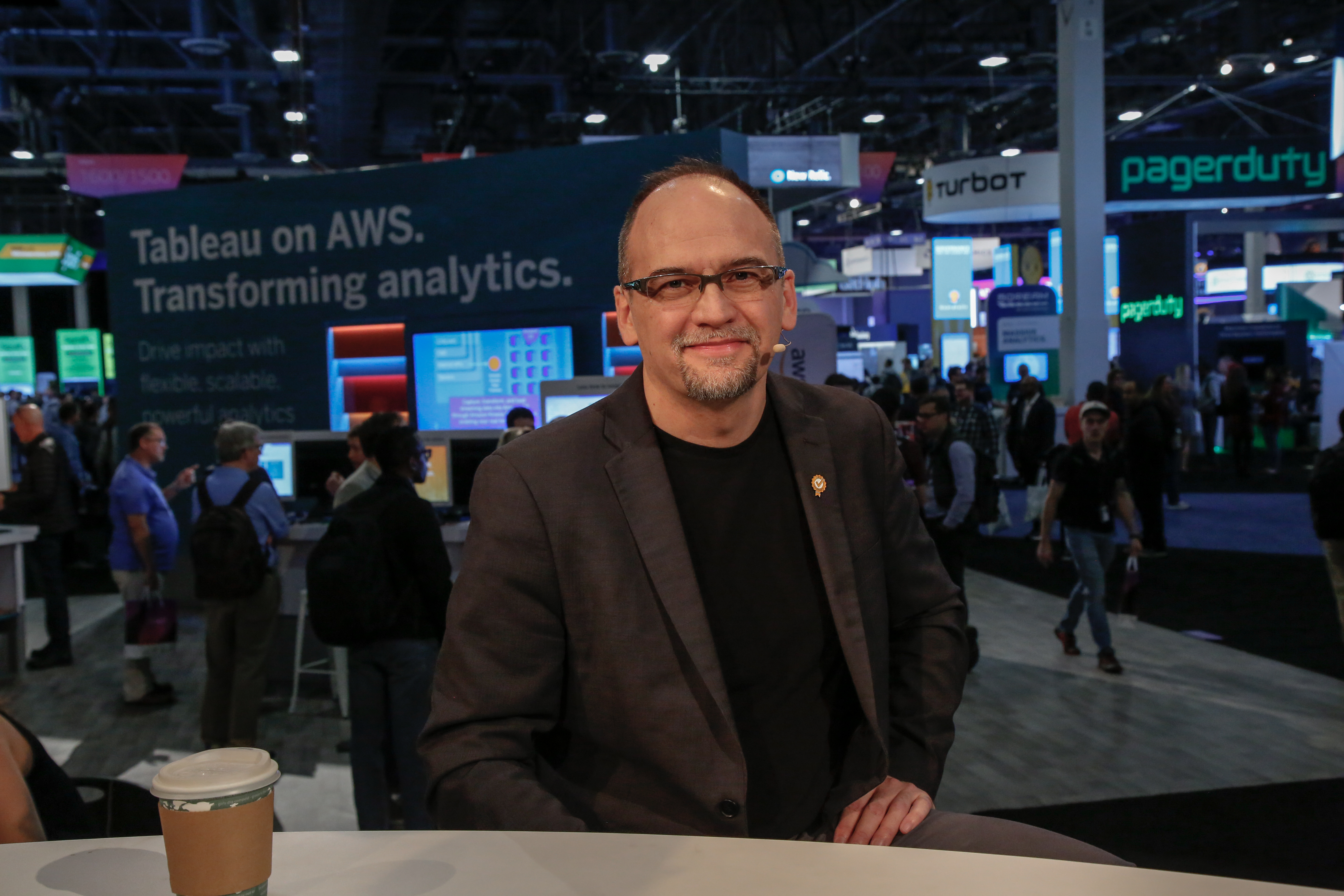
“People think they’re kind of magical,” said Andrew Hillier (pictured), co-founder and chief technology officer of Cirba Inc. (DBA Densify).
The thinking is that containers will make their whole environment a well-oiled, cost-effective, agile machine. It’s not 100 percent off the mark. The container environments Densify analyzes check some of the right boxes but leave others glaringly bare. “We see these environments that are agile, but their utilization is terrible,” he said.
Utilization of infrastructure resources may get worse when companies adopt containers; they assume they just don’t have to worry about it, according to Hillier. Unfortunately, that’s not the case. They need visibility into the resources containers use, or they could be over-provisioning, overspending and underperforming.
Hillier spoke with John Walls (@JohnWalls21), host of theCUBE, SiliconANGLE Media’s mobile livestreaming studio, and guest host Justin Warren (@jpwarren), chief analyst at PivotNine Pty Ltd, during AWS re:Invent in Las Vegas. They discussed the importance of keeping container resource-consumption in check. (* Disclosure below.)
For as wonderful as containers are, they don’t take care of their own resources. “When somebody makes a container, they say, ‘I need 500 millicores or a whole CPU,'” Hillier said. “If you get that wrong, the whole thing kind of breaks down, because these container orchestrators aren’t that smart.”
The problem that results for users is pretty simple: They’re buying the wrong stuff. All the resource types available from providers like Amazon Web Services Inc. is now close to impossible for individuals to track, according to Hillier.
Densify provides continuous resource analysis and optimization. It constantly watches workloads, what providers are selling, and it gives recommendations. It can take humans out of the loop or provide detailed reports on what it’s recommending and why.
It has a patented rule engine that understands the collateral effects of moving from one instance to another. This helps users figure out what is possible and desirable upfront, so they can press go on automation without receiving a return-to-sender message.
“You can’t automate something that’s wrong,” Hillier concluded.
Watch the complete video interview below, and be sure to check out more of SiliconANGLE’s and theCUBE’s coverage of AWS re:Invent. (* Disclosure: Densify sponsored this segment of theCUBE. Neither Densify nor other sponsors have editorial control over content on theCUBE or SiliconANGLE.)
Support our mission to keep content open and free by engaging with theCUBE community. Join theCUBE’s Alumni Trust Network, where technology leaders connect, share intelligence and create opportunities.
Founded by tech visionaries John Furrier and Dave Vellante, SiliconANGLE Media has built a dynamic ecosystem of industry-leading digital media brands that reach 15+ million elite tech professionals. Our new proprietary theCUBE AI Video Cloud is breaking ground in audience interaction, leveraging theCUBEai.com neural network to help technology companies make data-driven decisions and stay at the forefront of industry conversations.