

 BIG DATA
BIG DATA
BIG DATA

BIG DATA

What’s a 25-year-old data analytics company look like? Even before the big data era, Qlik Technologies Inc. has been in the business of visualizing and actionizing business information. More than two decades on, the company maintains a straightforward philosophy to data organization and early work in artificial intelligence.
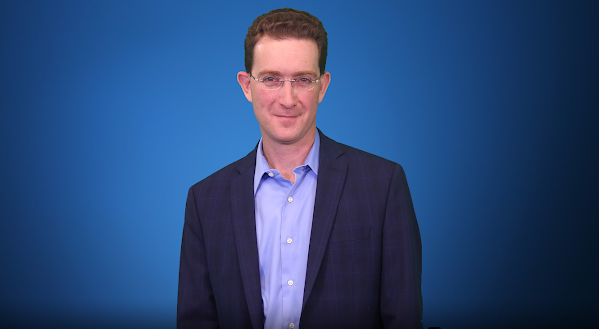
With new markets come new challenges, as witnessed in the data economy. The number of data sources has exploded in recent years, sometimes 100-fold, according to Qlik’s head of enterprise data integration Itamar Ankorion (pictured). He sees a scaling problem for companies adopting real-time and streaming analytics services, and helps his clients make mole hills of data mountains.
“We have customers that work with 500, 600 — some over 2,000 sources of data feeding their data analytic system. So scale becomes a critical need. We need the ability to bring data from hundreds or thousands of sources, source systems efficiently and with very low impact. Ideally, to do it also with less resources,” said Ankorion.
In a special series of interviews with Qlik executives, Ankorion; Joe DosSantos, global head of data management strategy; and Drew Clarke, chief strategy officer, spoke with Stu Miniman (@stu), host of theCUBE, SiliconANGLE Media’s mobile livestreaming studio, at theCUBE’s studio in Boston, Massachusetts. They discussed Qlik’s adaptive nature over the decades, the role of fresh acquisitions in the evolution of its product portfolio, and how the company advises data analytics initiatives for scale. (* Disclosure below.)
Watch the complete interview with Ankorion and Clarke below:
Scaling up a data model means starting small. Recent history serving as a test plate for big data deployments, enterprises are now ready to run larger-scale analytics across a diverse set of workloads. From these early experiments with clients, Qlik sees a path to scaling analytics.
“It’s already evolved significantly,” Ankorion said. “These big data systems need to support different types of workloads; some are machine learning in science, some are streaming analytics, some are serving data from microservices to power digital applications. There’s a lot of need for data in the journey.”
One very important type of data needed to scale analytics efforts is metadata. It can help organize data for better searchability and governance. Metadata can also help detect changes in the data itself. Because when it comes time to cite data’s findings to support business decisions, there must be confidence in the algorithms belying artificial intelligence and automation technologies manipulating today’s data economy.
“If you’re going to try and develop an algorithm, you don’t want the data shifting under your feet, because all of the sudden your results will change,” DosSantos said.
By studying mass patterns across billions of rows of data, Qlik’s change data capture software through Attunity re-factors data accordingly.
Watch the complete interview with DosSantos below:
Qlik’s change data capture software through Attunity is fundamental to the company’s product portfolio, enabling more innovation for end users. “You have significantly less impact on the systems, so you can scale because you’ve moved less data,” Ankorion said.
It’s this dedication to metadata that’s helped Qlik evolve its services to help clients make the jump from experimental and small-scale batch data processing to real-time and streaming data analytics. Acquisitions have played a key role in Qlik’s evolution, snapping up data visualization and location data startups, as well as data lake and management companies. The recent acquisition of Attunity Ltd. plays to Qlik’s CDC objectives.
Attunity’s real-time data management solutions will be integrated with Qlik’s product portfolio, including Qlik Data Catalyst’s delivery tools and Qlik’s Associative Big Data Index. “We’re independent and provide solutions for any data platform, analytics platform, and cloud platform,” said Ankorion, who played a central role in Attunity’s acquisition as their former chief marketing officer.
From the data science customer working in R and Python with their own machine-learning application to the customer working on DataRobot, Qlik + Attunity can support all platforms with speed, at scale, Ankorion concluded.
Be sure to check out more of SiliconANGLE’s and theCUBE’s CUBE Conversations. (* Disclosure: Qlik Technologies Inc. sponsored this segment of theCUBE. Neither Qlik nor other sponsors have editorial control over content on theCUBE or SiliconANGLE.)
Support our mission to keep content open and free by engaging with theCUBE community. Join theCUBE’s Alumni Trust Network, where technology leaders connect, share intelligence and create opportunities.
Founded by tech visionaries John Furrier and Dave Vellante, SiliconANGLE Media has built a dynamic ecosystem of industry-leading digital media brands that reach 15+ million elite tech professionals. Our new proprietary theCUBE AI Video Cloud is breaking ground in audience interaction, leveraging theCUBEai.com neural network to help technology companies make data-driven decisions and stay at the forefront of industry conversations.