 SECURITY
SECURITY
SECURITY
SECURITY

The U.S. Coast Guard issued a safety alert on Monday warning ship operators to update their security following a “significant cyber incident” involving a vessel bound for the Port of New York and New Jersey in February.
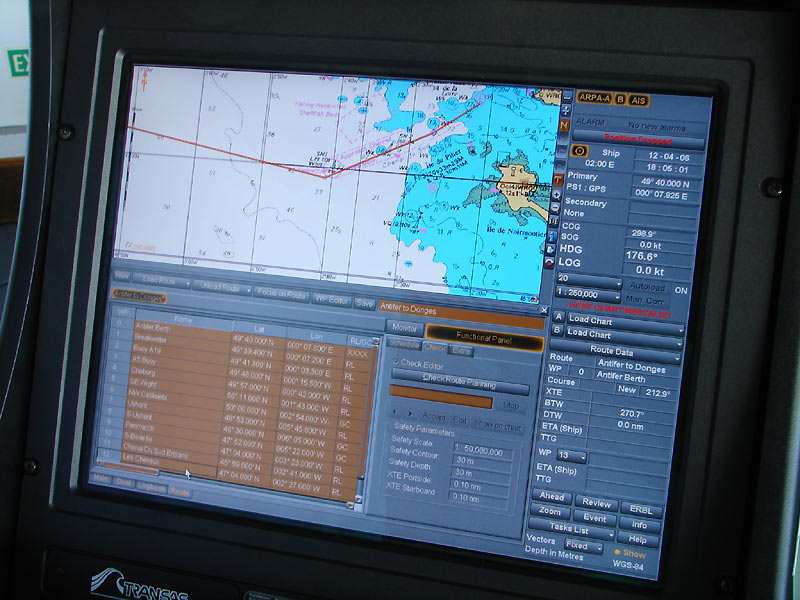
According to the warning, an interagency team of cyberexperts led by the Coast Guard was called on to respond and evaluate the attack on an unnamed “deep draft vessel” after malware had “significantly degraded” the functionality of its onboard computer system. Fortunately, essential vessel control systems were not affected.
The crew of the vessel is said to have been aware of security risks and did not use onboard computers to undertake personal activities that may have exposed the onboard network to attack. The shipboard network was used for official business, however, including updating electronic charts, managing cargo data and communication with shoreside facilities including pilots, agents and the Coast Guard.
“It is unknown whether this vessel is representative of the current state of cybersecurity aboard deep draft vessels,” the Coast Guard alert stated. “However, with engines that are controlled by mouse clicks, and growing reliance on electronic charting and navigation systems, protecting these systems with proper cybersecurity measures is as essential as controlling physical access to the ship or performing routine maintenance on traditional machinery.”
The warning went on to encourage the maritime community to adapt to the changing threat landscape by recognizing the need to implement basic hygiene measures. Recommendations include segmenting networks, creating unique network profiles for each employee, using antivirus software, regularly patching operating systems and avoiding the use of external media.
That a ship was infected by malware doesn’t come as a great surprise. Research published in July 2017 found that vessels could be hacked through their satellite systems.
“While one might think that a vessel runs on the ultimate disconnected or segmented network – and thus be inherently safe from common security issues – that isn’t always the case,” Matthew Gardiner, a cybersecurity strategist at email management and security firm Mimecast Services Ltd., told SiliconANGLE. “Increasingly, everything from airplanes, to industrial control systems, to cars and trucks and ships can be thought of as internet-connected systems, similar to consumer products such as TVs, cameras and home automation systems. These intelligent devices can both be attacked and co-opted by cybercriminals to be part of larger attacks.”
Support our mission to keep content open and free by engaging with theCUBE community. Join theCUBE’s Alumni Trust Network, where technology leaders connect, share intelligence and create opportunities.
Founded by tech visionaries John Furrier and Dave Vellante, SiliconANGLE Media has built a dynamic ecosystem of industry-leading digital media brands that reach 15+ million elite tech professionals. Our new proprietary theCUBE AI Video Cloud is breaking ground in audience interaction, leveraging theCUBEai.com neural network to help technology companies make data-driven decisions and stay at the forefront of industry conversations.