



 BIG DATA
BIG DATA
BIG DATA

BIG DATA

Think sports data, and player stats instinctively come to mind. But behind the scenes of sports leagues you’ll find teams of analysts crunching a different set of numbers. Data on ticket sales, sponsorship, and customer engagement have become just as important to the team as game points, field goals or free throws.
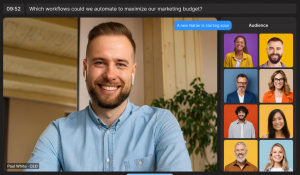
“On the business side we’re focused on two things,” said Matt Kobe (pictured), vice president of business strategy and analytics at the Chicago Bulls. “One is being essentially internal consultants for the customer-facing functions … ticketing, sponsorship, marketing, digital. Then on the back end we’re building out the technical infrastructure for the organization — so everything from data warehouse to customer relationship management to email marketing.”
Kobe spoke with Dave Vellante, host of theCUBE, SiliconANGLE Media’s mobile livestreaming studio, during the MIT CDOIQ Symposium this week in Cambridge, Massachusetts. They discussed data analytics in sports business and the Chicago Bulls’ strategic use of data to engage and grow the team’s fan base (see the full interview with transcript here).
A full stadium for every home game is Kobe’s ultimate goal. “That has cascading effects into other revenue streams,” he said. “Think about concessions, and merchandise, and sponsorship. It’s a lot easier to sell sponsorship when your building is full than if you’re building isn’t full. And so our focus is on how do we fill the building in the most efficient way possible.”
Five years ago, Kobe was the sole business analyst for the Bulls. Now he heads a full-time team of six, close to the current average for the NBA. “If you look at the NBA seven to eight years ago, there was a handful of business analytics teams and those teams had one or two people,” he said. “Now, every single team in the NBA has some sort of business analytics team, and the average staff is seven.”
That growth is thanks to the ascendance of big data in the digital era. Changing consumer expectations, increased online presence and new marketing tactics have made business analytics increasingly necessary.
Ticketing and sponsorship are two areas that are critical to the financial success of a sports team, and both are increasingly complex to manage, according to Kobe. “If you look at ticketing, you’ve got all the secondary markets,” he said. “You have all this data flowing in, and they need someone to make sense of all that data.”
Sponsorship is no longer “selling a sign that sits on the side of the court,” but integrated partnerships where the sponsor expects to see results on investment. “So, you’re seeing a lot more collaboration between analytics and sponsorship to go back to those partners and say, ‘Hey, here’s what we delivered,’” Kobe explained.
Social media is an important tool to prove these results. The Bulls have more than 25 million social media followers, with 19 million on Facebook alone, according to Kobe. “Sponsors see those numbers and they know that we can deliver impressions,” he said. “They know we can deliver engagement, and they want access to those channels.”
More powerful than huge numbers are huge numbers that reach the right demographics for a brand. “We want the right folks engaging with our brands, and that’s really what we’re starting to think about,” Kobe said. “If you get 10 million impressions but they’re 10 million impressions to the wrong group of potential customers, that’s not terribly helpful.”
It’s a self-perpetuating cycle: An enthusiastic fan base means more ticket and merchandise sales, which in turn increases sponsorship interest. Increased revenue means the ability to attract top-tier players, which in turn leads to increased team performance, which means more fan engagement, and so on.
“At the end of the day, we’re trying to use data to enhance the customer and fan experience,” Kobe said.
Here’s the complete video interview, part of SiliconANGLE’s and theCUBE’s coverage of the MIT CDOIQ Symposium:
Support our mission to keep content open and free by engaging with theCUBE community. Join theCUBE’s Alumni Trust Network, where technology leaders connect, share intelligence and create opportunities.
Founded by tech visionaries John Furrier and Dave Vellante, SiliconANGLE Media has built a dynamic ecosystem of industry-leading digital media brands that reach 15+ million elite tech professionals. Our new proprietary theCUBE AI Video Cloud is breaking ground in audience interaction, leveraging theCUBEai.com neural network to help technology companies make data-driven decisions and stay at the forefront of industry conversations.