







 IOT
IOT
IOT
IOT

IOT

The world is eagerly anticipating the widespread availability of 5G wireless technology and the internet of things innovations it heralds. But, first priority is overcoming the divide between information and operational technologies and creating an ecosystem to support edge and IoT devices.
Are slow-to-adapt telcos prepared to grab opportunity and lead into the forecast $4.1-trillion edge market?
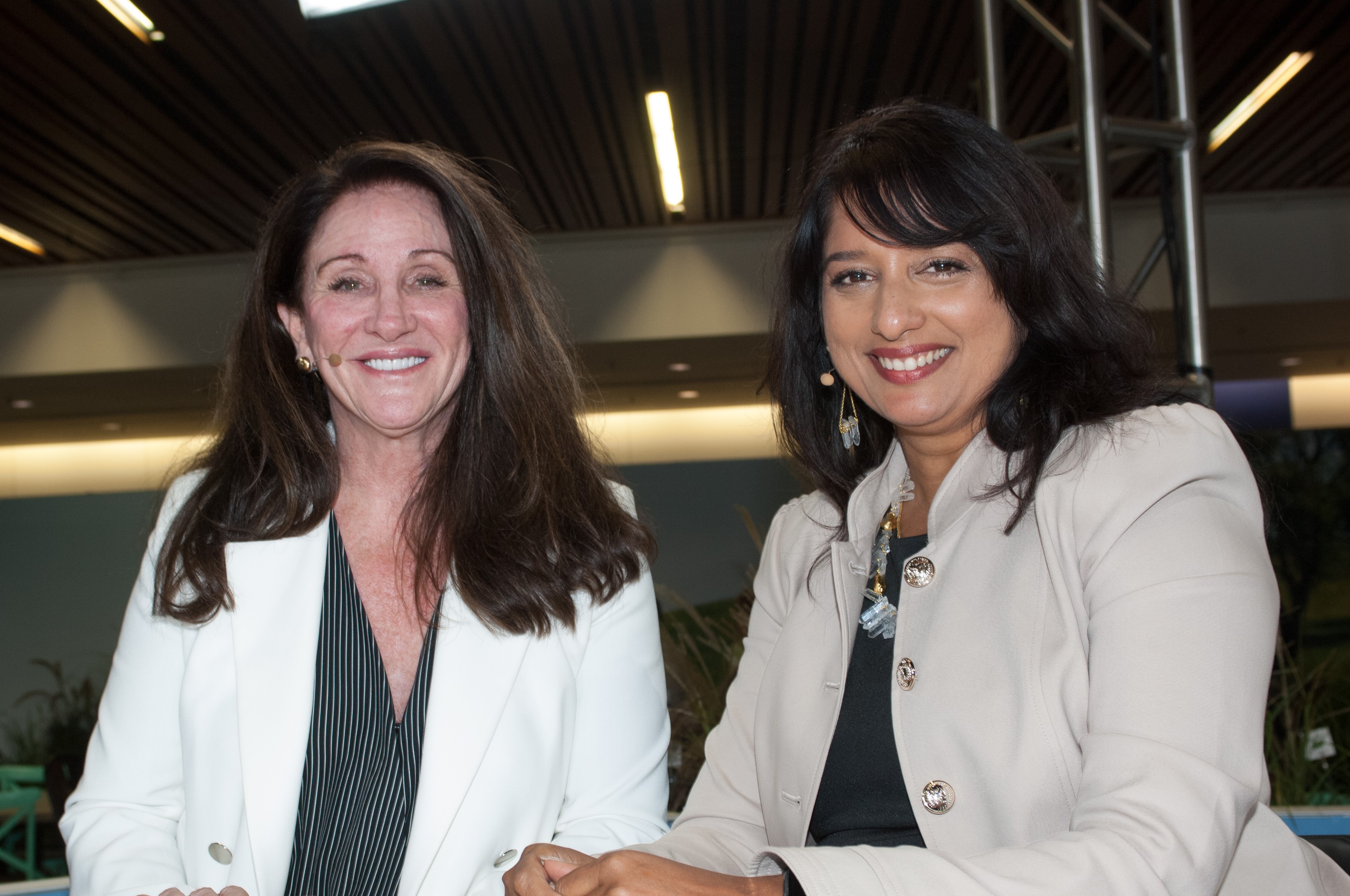
“[Telcos] own that last mile of customer access … they own the cell towers,” said Honoré LaBourdette (pictured, left), vice president of global market and business development of the Telco and Edge Cloud Business Unit at VMware Inc. “So, as we push compute out to the radio access, telcos have an opportunity to participate.”
LaBourdette and Lakshmi Mandyam (pictured, right), vice president of product management, edge/IoT, at VMware, spoke with John Furrier (@furrier) and Stu Miniman (@stu), co-hosts of theCUBE, SiliconANGLE Media’s mobile livestreaming studio, during the VMworld event in San Francisco. They discussed how VMware is supporting telcos make the transition from static architecture into the new paradigm of software-defined networking (see the full interview with transcript here). (* Disclosure below.)
[Editor’s note: The following answers have been condensed for clarity.]
Furrier: 5G deployments are happening around the world. What will be the impact, and what is it going to enable?
LaBourdette: One of the things that’s happening with the deployments of 5G isn’t just the innovation associated with the spectrum technology of five generations of mobile technology. There is an entire transformation happening with the core infrastructure of the telco network. As the telcos software-define the infrastructure on which they run their services, that then extends all the way through from the cloud to the core to the edge for all of the radio access and everything associated with 5G.
Furrier: And how will this impact the industrial IoT and IoT markets?
Mandyam: On the IoT side, there’s a similar transformation going on. Right now, there’s a really siloed infrastructure, siloed use cases, and people are not able to scale. [But] most of the data that’s being generated [by IoT] is actually being generated from the devices at the edge. [So,] it’s really important to have an infrastructure that scales.
The old paradigm was around moving data to the compute. But, the new paradigm is going to be moving compute to the data, especially on the edge in the IoT. This is where managing that whole compute infrastructure is going to be really, really important. And that’s what the VMware Telco Edge brings.
Furrier: So, is the architecture a do-over?
LaBourdette: Well, there’s very much an opportunity to evolve rather than do-over. The beauty of software is that now we can have inherent security in all of the aspects of the software-defined network all the way through the edge. There is an opportunity now … for security to leverage all of what you could do with a software-defined approach and have security be intrinsic into everything from the cloud to the core to the edge.
Specifically for IoT, if you think about to Lakshmi’s comment about pushing the compute to the apps and pushing the compute where the applications are going to be or the user is going to be, I think there’s going to be a greater requirement for security, actually at the edge than even what we see in the cloud today.
Miniman: [SiliconANGLE] did some original research back when General Electric Co. was putting together their Industrial Internet, and one of the biggest stumbling blocks we saw is that huge gap between IT and OT. The telco world doesn’t tie into the traditional data center world.
LaBourdette: 5G is the technology that I think is going to create the catalyst for those technologies to come together. So, you have the enterprise edge, you have the industrial edge, and you have the telco edge. And over time, the more the telcos start pushing compute out to their edge, and enterprise push compute out to their edge, and then you have all of these industrial IoT devices, the definition of the edge is going to begin to blur.
What we’re seeing with our telco customers is that they’re finally beginning to realize that they can actually accelerate their time to revenue with new services with a software-defined infrastructure. We’ve crossed the chasm now to where we have over 100 discreet telcos that are in production on our platform.
So when we talk about $4.1 trillion of opportunity and the need to develop an ecosystem that can support those edge and IoT solutions, the telcos really are in the cat seat to take advantage of that.
Watch the complete video interview below, and be sure to check out more of SiliconANGLE’s and theCUBE’s coverage of the VMworld event. (* Disclosure: VMware Inc. sponsored this segment of theCUBE. Neither VMware nor other sponsors have editorial control over content on theCUBE or SiliconANGLE.)
Support our mission to keep content open and free by engaging with theCUBE community. Join theCUBE’s Alumni Trust Network, where technology leaders connect, share intelligence and create opportunities.
Founded by tech visionaries John Furrier and Dave Vellante, SiliconANGLE Media has built a dynamic ecosystem of industry-leading digital media brands that reach 15+ million elite tech professionals. Our new proprietary theCUBE AI Video Cloud is breaking ground in audience interaction, leveraging theCUBEai.com neural network to help technology companies make data-driven decisions and stay at the forefront of industry conversations.