




 INFRA
INFRA
INFRA
INFRA
INFRA

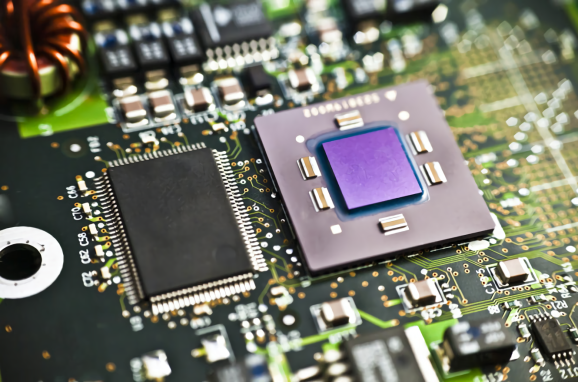
Arm Ltd. today announced the Cortex-R82, a chip designed to enable a new generation of storage devices that will not only hold data but also help process it.
Such devices are part of an emerging hardware category known as computational storage. The technology promises to provide a speed boost for latency-sensitive workloads such as machine learning and real-time analytics applications.
Normally, the task of storing data and processing it is relegated to separate components inside a system. The disk or flash drive holds onto the information while a separate processor does the processing. Data has to travel from the storage drive to the processor and back every time an operation is carried out, which creates delays that can slow down performance.
The emerging computational storage devices Arm targets attempt to do away with these delays to speed up applications. Instead of sending information to a separate chip for processing, the storage drive processes it locally using its built-in controller. A controller is a tiny computing module inside flash and disk drives that normally performs only low-level tasks such as writing and reading data.
Arm’s new Cortex-R82 is designed to serve as the controller for computational storage devices. It’s available as a chip design that hardware makers can license and customize based on their needs.
According to the company, the Cortex-R82 may be implemented with up to eight processing cores that provide as much as double the performance of its previous-generation R8 product. The extra computing power allows the chip to run a full Linux distribution as well as applications, all directly inside a storage drive.
Companies planning to run machine learning models on their storage drives can extract additional performance from the Cortex-R82 by equipping it with Arm’s Neon machine learning technology. Arm says Neon speeds up neural network performance by up to 14 times compared with the previous-generation R8.
There are many potential applications for computational storage hardware. A construction company, for instance, could deploy safety cameras in construction sites that use AI models running on an internal flash drive to flag potential dangers. Arm also listed more traditional data center use cases such as database acceleration, video transcoding and real-time analytics among the potential applications.
Support our mission to keep content open and free by engaging with theCUBE community. Join theCUBE’s Alumni Trust Network, where technology leaders connect, share intelligence and create opportunities.
Founded by tech visionaries John Furrier and Dave Vellante, SiliconANGLE Media has built a dynamic ecosystem of industry-leading digital media brands that reach 15+ million elite tech professionals. Our new proprietary theCUBE AI Video Cloud is breaking ground in audience interaction, leveraging theCUBEai.com neural network to help technology companies make data-driven decisions and stay at the forefront of industry conversations.