 EMERGING TECH
EMERGING TECH
EMERGING TECH
EMERGING TECH

Chipmaker Mobileye Global Inc. today reported better-than-expected financial results for the second quarter and raised its full-year guidance.
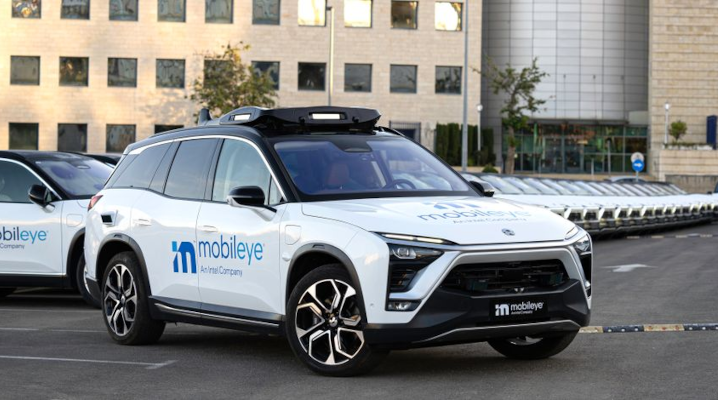
Mobileye, a former Intel Corp. subsidiary, makes advanced driver assistance systems and chips for powering them. The company says its silicon has been installed in more than 100 million vehicles to date. Mobileye is currently pursuing a long-term effort to build an autonomous driving system, called Chauffeur, that will allow cars to operate without human input in most situations.
Mobileye’s revenue declined 1% year-over-year, to $454 million, in the second quarter. Analysts polled by Zacks had expected a slightly lower $452.6 million. Mobileye detailed that one factor behind the sales drop was a “de-stocking of SuperVision units” at its main customer.
SuperVision is Mobileye’s most advanced driver assistance system. It includes multiple automated driving features designed to reduce the risk of vehicle collisions. Additionally, it can ease tasks such as parking, switching lanes and navigating traffic jams.
The system collects road data using a suite of sensors that includes 11 cameras and a radar device. Computing tasks, meanwhile, are carried out by two processors from Mobileye’s EyeQ system-on-chip series. The SoCs in the series are based primarily on the open-source RISC-V chip architecture, while some also feature Arm Ltd. technology.
The second quarter saw Porsche become the second major automaker to adopt SuperVision. Porsche parent company VW Group, officially Volkswagen AG, is already a Mobileye customer. During the quarter, it started testing a Mobileye-powered version of its VW ID.Buzz minivan.
“We’re positioned well for the increased revenue growth in the 2nd half of 2023 indicated by our guidance,” said Mobileye Chief Executive Officer Amnon Shashua. “Future business highlights of the quarter included tangible evidence of the depth of our relationship with VW Group and an expansion of meaningful engagements for our advanced portfolio to 9 large OEMs.”
Mobileye disclosed today that the cost of making its EyeQ chips, which power the SuperVision system, rose in the second quarter. That weighed on its adjusted operating margin. Research and development expenses also increased during the quarter, which further eroded Mobileye’s bottom line.
The company ended the second quarter with an adjusted operating income of $140 million, which represents a 31% margin. That’s down from an adjusted operating income of $182 million and a 40% margin a year earlier. Mobileye’s adjusted earnings amounted to 17 cents per share, more than the 13 cents projected by analysts.
Despite its decreased margins in the second quarter, the chipmaker today raised its full-year profit guidance. Mobileye is now expecting to end fiscal 2023 with an adjusted net income of between $600 million and $631 million. That’s a significant increase over the previously provided range of $548 million to $577 million.
Mobileye also reaffirmed its revenue guidance. The company expects that its 2023 sales will range between $2.06 million and $2.11 billion.
Support our mission to keep content open and free by engaging with theCUBE community. Join theCUBE’s Alumni Trust Network, where technology leaders connect, share intelligence and create opportunities.
Founded by tech visionaries John Furrier and Dave Vellante, SiliconANGLE Media has built a dynamic ecosystem of industry-leading digital media brands that reach 15+ million elite tech professionals. Our new proprietary theCUBE AI Video Cloud is breaking ground in audience interaction, leveraging theCUBEai.com neural network to help technology companies make data-driven decisions and stay at the forefront of industry conversations.