

 CLOUD
CLOUD
CLOUD
CLOUD
CLOUD

Shares of Oracle Corp. dropped more than 10% in extended trading today after the cloud and database giant missed expectations on quarterly revenue while going full-steam ahead on its ongoing artificial intelligence infrastructure buildout.
The company reported second-quarter earnings before certain costs such as stock compensation of $2.26 per share, easily beating Wall Street’s target of $1.64 per share. However, though revenue grew by 16% from a year earlier, to $16.06 billion, it fell short of the $16.21 billion analyst estimate.
In terms of profitability, Oracle showed a big improvement, with net income of $6.14 billion in the quarter, up from just $3.15 billion in the year-ago quarter. However, the company’s guidance was perhaps a tad discouraging for investors. Oracle executives said they’re looking for earnings of between $1.70 and $1.74 in the third-quarter, which is only in-line with the Street’s forecast of $1.72. The company also called for revenue growth of between 19% and 21% versus the Street’s $16.87 billion estimate, which implies 19% growth.
Oracle said it delivered $7.98 billion in cloud revenue during the quarter, above the $7.92 billion consensus estimate. Within that segment, cloud infrastructure revenue came to $4.1 billion, up 68% from a year ago.
Today was the first quarterly earnings call by Oracle’s new co-Chief Executive Officers Clay Magouyrk and Mike Sicilia, who took over the job from former CEO Safra Catz in September. In a call with analysts, Sicilia highlighted a number of new cloud infrastructure customer wins with companies including Airbus, Deutsche Bank, LSEG, Panasonic, Canon and Rubrik.
Valoir analyst Rebecca Wettemann told SiliconANGLE that it’s quite telling that Sicilia felt the need to highlight so many customer wins during the call. “The market has been really nervous about Oracle’s overreliance on OpenAI and other AI plays from a RPO and forecast perspective, so this litany of customer wins and apps growth acceleration shows some welcome diversity,” she said.
Oracle’s software business didn’t fare so well, however, with revenue declining 3%, to $5.88 billion, falling short of the Street’s $6.06 billion estimate. On the other hand, Oracle’s future does look promising, with the company pointing to remaining performance obligations that soared 438% from a year ago, to a staggering $523 billion. RPO, as the metric is known, refers to contracted revenue that has not yet been realized, and is really a measure of the company’s enormous backlog of orders, mostly for cloud infrastructure capacity. Wall Street had been forecasting RPO of $501.8 billion.
Oracle Principle Financial Officer Doug Kehring said on the call that the increase was the result of new commitments by customers including Meta Platforms Inc., Nvidia Corp. and others, and told analysts that the company is hoping to be able to convert this revenue sooner than expected.
“This is good news for Oracle and its capex story,” Wettemann said, referring to Oracle’s runaway capital expenditures. The company has been trying to position itself at the center of the AI boom by committing to a massive data center buildout, and expects capex to increase to $50 billion this year, up from $21.2 billion in the previous fiscal year.
While the increased capex has boosted the company’s revenue and backlog, some investors have become worried about the enormous amounts of debt it has taken on to fund its investments. Much of Oracle’s backlog stems from OpenAI Group PBC, which has committed to spending more than $300 billion on Oracle’s cloud infrastructure services over the next five years. “The longer the backlog sits there, the greater the risk that Oracle can’t monetize it, or the AI landscape changes enough that certain customers can’t pay on their commitments,” Wettemann explained.
Constellation Research analyst Holger Mueller said some eagle-eyed investors may have noted that Oracle’s growing revenue is coming at a steep cost, resulting in lower profitability as it generates more sales. “The problem is that the $2 billion in cloud revenue growth only translated to around half a billion in operating income,” the analyst said. “At the same time, Oracle keeps spending like a drunken sailor on capex and is cash flow-negative by $13 billion. While this could end up great if AI pans out, it could also become a problem.”
Kehring tried to reassure investors, telling analysts on the call that the company remains committed to maintaining its investment-grade debt rating. “There are other financing options through customers that may bring their own chips to be installed in our data centers and suppliers who may lease their chips rather than sell them,” he said. “Both of these options enable Oracle to synchronize our payments with our receipts and borrow substantially less than most people are modeling.”
Mueller agreed that the debt Oracle has been taking on isn’t a problem. “With interest payments at approximately $1 billion, the debt load is more than manageable for the company,” he said.
The company said its earnings during the quarter were boosted by a $2.7 billion pretax gain on the sale of its interest in chip design business Ampere, which is set to be acquired by SoftBank Group Corp. for $6.5 billion. Oracle announced the sale in March.
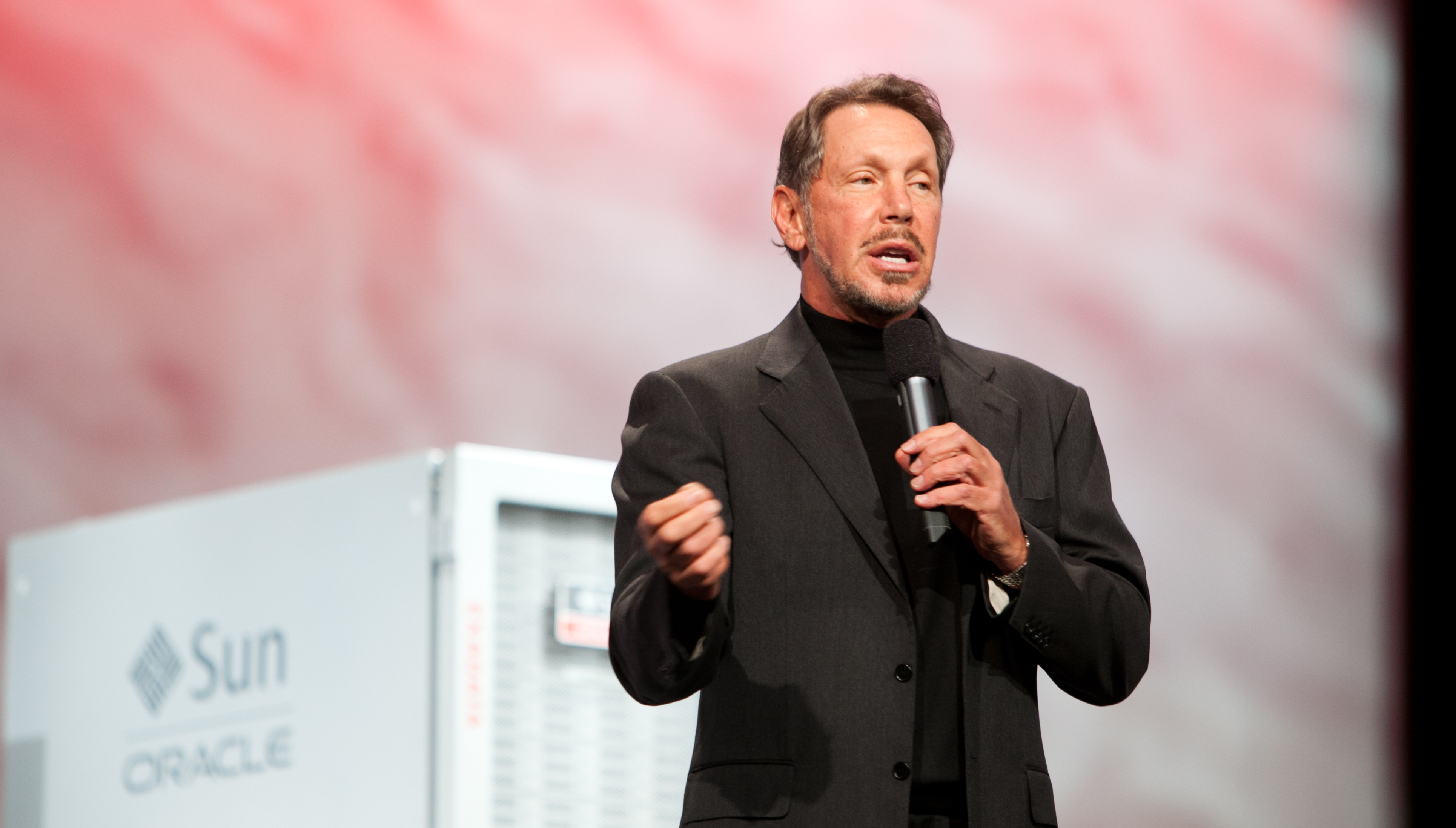
Oracle founder, Chairman and Chief Technology Officer Larry Ellison (pictured), who remains the company’s most influential executive, said the decision to sell Ampere was taken because he thinks it no longer makes sense to continue designing, manufacturing and using its own chips in its data centers. “The company is committed to a policy of chip neutrality,” he said. “[It needs] to be prepared and able to deploy whatever chips our customers want to buy.”
The earnings call comes on the back of a 23% drop in Oracle’s share price last month, its worst monthly performance since 2021. But although the stock declined further today, it’s still up more than 33% in the year to date, ahead of the broader, technology-focused Nasdaq index, which has gained just 22% this year.
Support our mission to keep content open and free by engaging with theCUBE community. Join theCUBE’s Alumni Trust Network, where technology leaders connect, share intelligence and create opportunities.
Founded by tech visionaries John Furrier and Dave Vellante, SiliconANGLE Media has built a dynamic ecosystem of industry-leading digital media brands that reach 15+ million elite tech professionals. Our new proprietary theCUBE AI Video Cloud is breaking ground in audience interaction, leveraging theCUBEai.com neural network to help technology companies make data-driven decisions and stay at the forefront of industry conversations.