 AI
AI
AI
AI

AI

Something that’s been building for several years has finally come into clearer view as enterprises shift their attention from model performance to the systems that bring intelligence into production. The conversation now centers on how agentic AI fits into real workloads, reshaping expectations for automation, performance and the work developers can hand off to software.
At AWS re:Invent, that shift became more explicit as analysts examined how cloud architectures are evolving to support large-scale, AI-driven systems, according to theCUBE’s John Furrier. Their discussion pointed to a more unified stack emerging across compute, models, governance layers and developer tooling, reflecting how the cloud is moving from managing infrastructure to managing outcomes.
“We’ve been talking about AI factors now for over a year, large-scale systems,” Furrier said in a keynote analysis during the event. “In a way, agents are an extension of the cloud. You have a lot of cloud infrastructure. I won’t say replatforming, but it kind of feels like the same game.”
During the event, Furrier, along with theCUBE’s Paul Nashawaty, Dave Vellante and Rob Strechay, provided commentary on the rise of agentic AI, shifts in cloud architecture and the expanding role of data integration across the enterprise stack. TheCUBE’s coverage also featured interviews with executives, engineers and ecosystem partners on how organizations are adopting AI-driven systems while balancing governance, performance and operational scale. (* Disclosure below.)
Here’s theCUBE’s complete video analysis with Nashawaty, Furrier, Zeus Kerravala, founder and principal analyst at ZK Research, and Sarbjeet Johal, founder and chief executive officer of Stackpane:
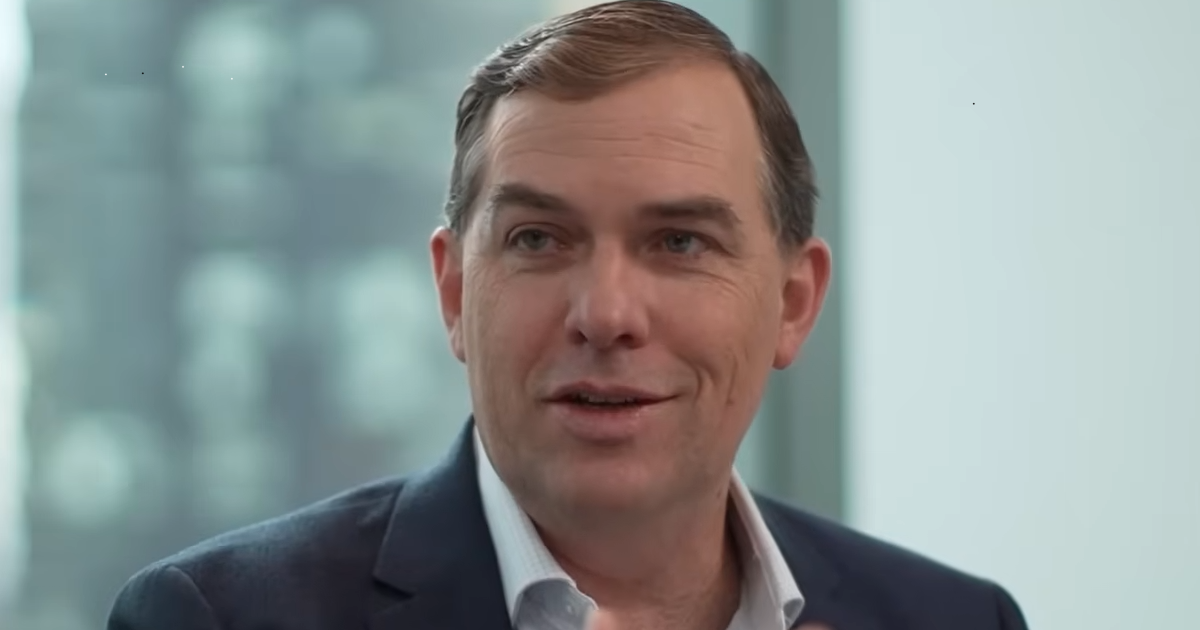
AWS leadership is signaling that agentic AI is becoming the organizing principle for its next phase of cloud strategy, according to Matt Garman (pictured), chief executive officer of AWS. This framing positions agents as the primary way enterprises will capture value from intelligent systems, supported by a stack spanning custom silicon, new model families, training substrates and runtime services.
“The next 80% to 90% of enterprise AI value will come from agents,” Garman told theCUBE.
That vision extends to how AWS packages its infrastructure for the small cohort of customers that require sovereign-scale capacity, according to Garman. The company’s AI Factories and campus-scale builds reflect a belief that the “new computer” is a tightly integrated system that removes operational burden while preserving strong control over data and governance.
“99.999% of customers will never purchase an AI factory,” he said. “Generic tokens are useless unless they know your business.”
Here’s theCUBE’s complete video interview with Matt Garman:
Within that architecture, AWS is positioning agentic AI to shift software from a short-lived coding helper to a long-running teammate that absorbs planning, DevOps and security workloads, according to Swami Sivasubramanian, vice president of agentic AI at AWS. The goal is to move past modest productivity gains toward systems that learn across thousands of repositories and sharpen their performance with each upgrade cycle.
“The problem right now with most AI assistants [is] that they always act more like an intern instead of a very tenured teammate within the company,” Sivasubramanian said during the event. “That means every day is like day one, and you keep training the intern.”
Storage leaders described a parallel shift on the data plane as teams push for native services that let agents operate closer to organizational information while maintaining scale and performance, according to Andy Warfield, VP and distinguished engineer at AWS. With capabilities such as S3 Vectors, the focus turns to how quickly systems can connect model reasoning with real enterprise data while keeping latency and cost in check.
“I think that what the storage teams are really seeing is [that] on the generative AI side, we’ve got models that can write code, we’ve got models that can write docs,” Warfield told theCUBE. “At the end of the day, the big bridge that is on us to solve is the bridge between all of that kind of capability and the data that people have.”
Here’s theCUBE’s complete video interview with Andy Warfield:
Enterprise teams are moving from experimental deployments to operational use of agentic AI, placing new weight on sovereign cloud architectures, according to Jerry Chen, partner at Greylock Partners. Leaders want environments that support automation, agent processes and model-driven reasoning while preserving control over where data lives and how it’s governed.
“You can say cloud is dead, long live cloud,” Chen told theCUBE. “It’s like you’re seeing a transformation from what Amazon and all the cloud vendors were before to what they will become, which is basically cloud plus AI.”
Frontier models are entering a new phase as organizations look for systems that understand their domains instead of simply performing well on benchmarks, according to Rohit Prasad, senior VP and head scientist of artificial intelligence at AWS. Nova Forge answers that demand by giving enterprises structured ways to inject proprietary data at multiple training stages while maintaining the model’s stability.
“A frontier model comes out,” Prasad said during the event. “Public benchmarks look great. And then, the production reality sets in that when you try to build your applications, your workflows — it doesn’t meet your expectations quite a few times. There’s a fundamental reason for that [and it’s] because the knowledge you have of your domain, your use cases, is not in the frontier model.”
One way the impact of agentic AI is showing up in real-world operations is through systems designed to improve full customer experiences rather than isolated tasks, according to Colleen Aubrey, SVP of applied AI solutions at AWS. The company’s Just Walk Out technology illustrates how visual reasoning at the edge can support autonomous decision-making while meeting privacy and regulatory requirements.
“With Just Walk Out, I think the team has done a very nice job here because it really is in the unidentified movements,” she told theCUBE. “Full privacy, but also the power of full visual reasoning. We’re exploring a bunch of different applications of where you would put visual reasoning to work in an organization that solves other adjacent problems. We’re early in exploring them.”
Developers are undergoing their own evolution as agent-based tooling matures from casual “vibe coding” into structured workflows that mirror how senior engineers define and validate software, according to Deepak Singh, VP of developer agents and experience at AWS. Kiro’s spec-driven model turns conversational intent into formal designs and executable tasks, helping ensure agentic AI strengthens rigor as opposed to undermining it.
“The challenge with [vibe coding] is five days after you’ve written an application, you’ve kind of forgotten why,” Singh said. “In a team environment, it becomes even more interesting because three months later, nobody has any idea why you wrote the software you did.”
Here’s theCUBE’s complete video interview with Deepak Singh:
Ecosystem partnerships are increasingly important as companies work to unify data, workflows and emerging agentic AI systems without locking themselves into rigid architectures, according to Nick Johnston, SVP of partnerships at Salesforce Inc. Customers want open, pre-aligned platforms that activate data across applications while preserving governance and flexibility.
“We’ve always been an open platform and really love embracing the ecosystem, but now customers are asking for a lot of choice,” he told theCUBE. “Agentforce 360 for AWS … is a simplified procurement path and setup path for customers to basically decide to use Agentforce 360 … running top to bottom on AWS infrastructure and AWS model-hosting services.”
Here’s theCUBE’s complete video with Nick Johnston:
The push for consistent, predictable performance across environments is accelerating multicloud integration strategies, especially as AI workloads surge across industries, according to Nathan Thomas, VP of product management at Oracle Corp. Enterprises want their mission-critical data available to modern pipelines without rethinking where those workloads physically run.
“To give you an idea, there’s two live regions today,” Thomas said during the event. “We’ve announced that there’ll be 20 more coming soon. We’re out with 19c and then, of course, just updated to 26ai.”
That same demand for seamless data access is driving deeper alignment between AWS and Snowflake Inc., with integrations across Catalog, Glue and Bedrock supporting agentic AI use cases in areas such as financial services and cybersecurity, according to Mike Gannon, chief revenue officer of Snowflake, and Chris Grusz, managing director of technology partnerships at AWS. Their collaboration shows how shared infrastructure and standardized signals can shorten the path from raw data to intelligent applications.
“Cortex Agents from Snowflake are available to run inside of Amazon Bedrock AgentCore,” Grusz told theCUBE. “That includes their Cortex Agent for financial services. If you want to do financial service reporting, they’ve got an agent to go do that.”
Executives also point to early customer outcomes as evidence of how unified cloud environments help enterprises advance their agentic AI initiatives. By running Snowflake’s AI platform natively on AWS, teams can apply generative insights to domains ranging from retail analytics to cancer research, according to Gannon.
“We just made this launch of Snowflake Intelligence, where you can literally put in the hands of a CFO or a CEO a prompt using natural language,” he said. “When you show the realities and the power of putting this kind of technology in the hands of an executive versus it only being in the hands of any analyst, it’s a materially different game.”
Here’s theCUBE’s complete video with Mike Gannon and Chris Grusz:
For more of theCUBE’s coverage of AWS re:Invent, check out these segments:
And make sure to check out these exclusive interviews with John Furrier from the AWS headquarters:
To watch more of theCUBE’s coverage of AWS re:Invent, here’s our complete video playlist:
(* Disclosure: TheCUBE is a paid media partner for AWS re:Invent. Sponsors of theCUBE’s event coverage do not have editorial control over content on theCUBE or SiliconANGLE.)
Support our mission to keep content open and free by engaging with theCUBE community. Join theCUBE’s Alumni Trust Network, where technology leaders connect, share intelligence and create opportunities.
Founded by tech visionaries John Furrier and Dave Vellante, SiliconANGLE Media has built a dynamic ecosystem of industry-leading digital media brands that reach 15+ million elite tech professionals. Our new proprietary theCUBE AI Video Cloud is breaking ground in audience interaction, leveraging theCUBEai.com neural network to help technology companies make data-driven decisions and stay at the forefront of industry conversations.