
 AI
AI
AI
AI
AI

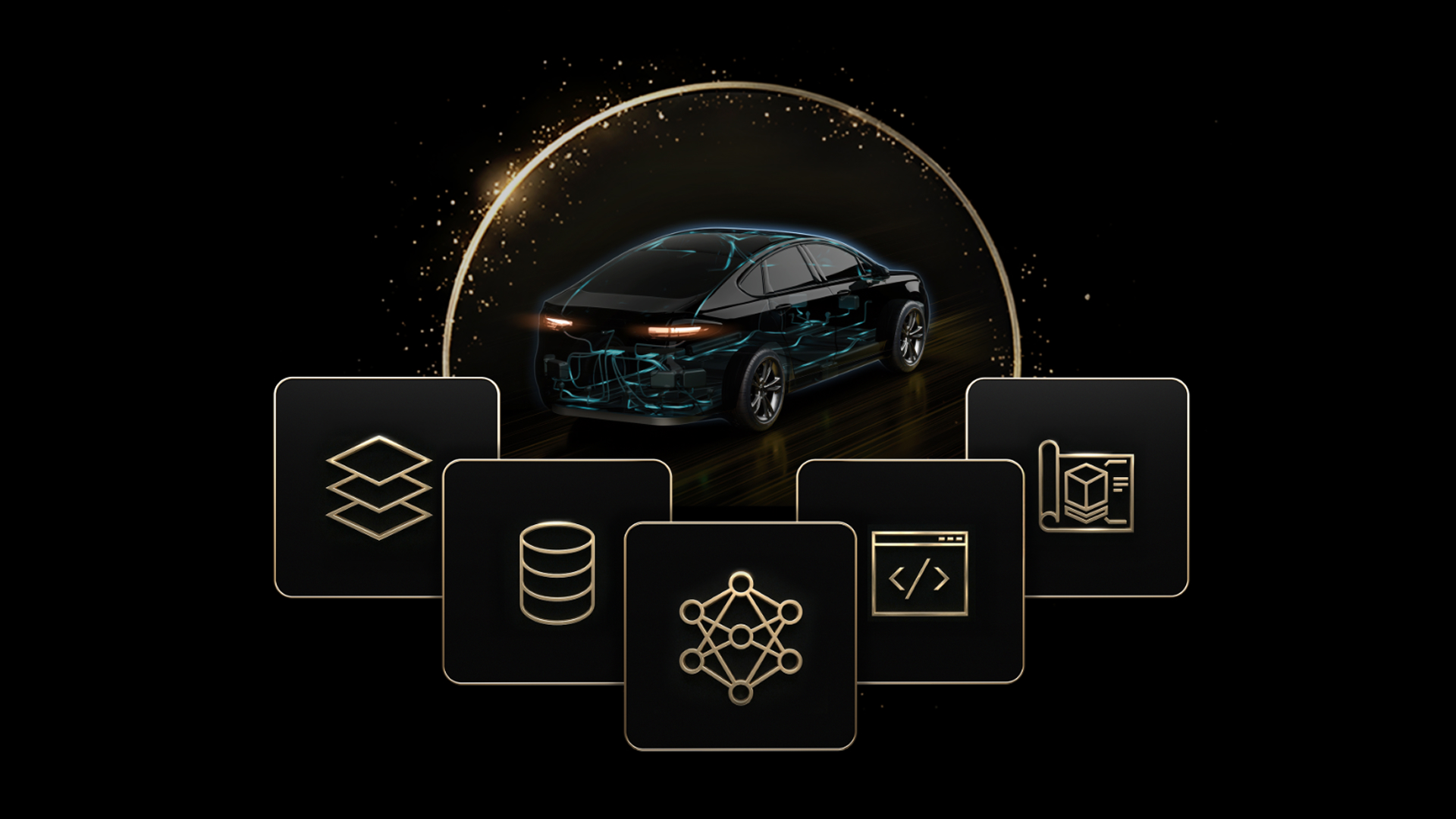
At CES 2026, Nvidia Corp. announced Alpamayo, a new open family of AI models, simulation tools and datasets aimed at one of the hardest problems in technology: making autonomous vehicles safe in the real world, not just in demos.
On the surface, Alpamayo looks like another AI platform announcement. In reality, it’s a continuation — and validation — of a shift I’ve been tracking for years across my interviews on theCUBE: the industry is moving from perception AI to physical AI — systems that can perceive, reason, act and explain decisions in environments where mistakes are unacceptable.
This isn’t about better lane-keeping or smoother highway driving. It’s about the long tail: rare, unpredictable situations that don’t show up often, but define whether autonomy is safe, scalable and trustworthy.
Traditional autonomous driving systems have treated the problem like a pipeline: See the world, plan a route, execute commands. That approach works — until something unexpected happens.
Alpamayo represents a different philosophy. Nvidia is introducing models that can think through situations step-by-step, showing not just what a vehicle should do, but why. That ability to reason — and to explain decisions — is critical if autonomy is going to move beyond pilots and into widespread Level 4 deployment.
Just as important: Alpamayo is not meant to run directly in cars. It’s a teacher system — a way to train, test and harden autonomous stacks before they ever touch the road. That distinction matters, and it aligns closely with what we’ve been hearing from operators actually deploying autonomy today.
If you’ve been watching our coverage, Alpamayo feels less like a leap and more like a convergence.
In my interviews with Gatik, CEO Gautam Narang described how they use Nvidia-partnered simulation to scale safely across markets. Gatik doesn’t rely on simulation instead of real-world driving — they use it to multiply learning. Thousands of real miles become millions of synthetic miles, across every sensor modality, to validate safety before expanding into new regions.
What stood out to me in that conversation wasn’t the tooling — it was the philosophy. Gautam was clear: There is no substitute for real-world data. Simulation and synthetic data only work when they’re grounded in live telemetry. That blend — real data feeding simulation, simulation feeding learning loops — is exactly what Nvidia is formalizing with Alpamayo.
That’s physical AI in practice: the fusion of a physical system (a truck), digital twins and large-scale compute working together as one system.
We heard a similar reality check in our discussions with Plus.ai. CEO David Liu made a point I’ve repeated often on theCUBE: Near-real-time is not real-time. When you’re moving 80,000 pounds down a highway, decisions every 50 milliseconds aren’t a luxury — they’re the baseline.
Plus treats the vehicle as an edge supercomputer. The AI driver runs locally, making decisions 20 times per second, while learning happens in the cloud and is continuously distilled back into the vehicle. That architecture — cloud-trained intelligence, on-device execution — is exactly the pattern Alpamayo is designed to support.
Nvidia’s Thor and Cosmo platforms show up repeatedly in these conversations for a reason. Autonomy isn’t just a software problem. It’s a full-stack systems problem: sensors, compute, networking, redundancy and safety validation all working together.
Another theme that keeps resurfacing in our coverage is confusion around autonomy levels. In my conversation with Tensor, the distinction was refreshingly clear: Level 2 and Level 3 assist the driver. Level 4 replaces the driver — hands off, eyes off, in defined conditions.
Reliable Level 4 isn’t about flashy demos. It’s about consistency across environments, privacy-preserving on-device intelligence, and resilience when connectivity drops. Alpamayo’s emphasis on reasoning, explanation and simulation-first validation speaks directly to those requirements.
This is also why openness matters. Nvidia isn’t locking Alpamayo behind closed doors. By releasing open models, open simulation, and large-scale open datasets, they’re enabling the ecosystem — automakers, startups and researchers — to stress-test autonomy at scale.
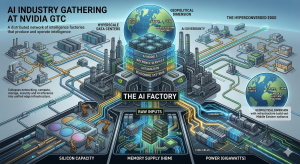
Zooming out, Alpamayo fits neatly into a broader arc we’ve been covering with Nvidia across events like GTC and Dell Tech World. As Kari Briski has explained on theCUBE, enterprises — and now robotics and mobility companies — are moving from CPU-era operations to GPU-driven AI factories.
These factories don’t just produce models. They produce decisions. Tokens become actions. Data becomes behavior. In physical systems like vehicles and robots, latency, throughput and reliability aren’t abstract metrics — they determine safety.
Alpamayo is what happens when that AI factory mindset is applied to the physical world.
Alpamayo isn’t the “ChatGPT moment for cars” because it’s flashy. It’s because it acknowledges a hard truth: Autonomy only scales when systems can reason about the unexpected and explain their choices.
From simulation-heavy operators such as Gatik, to real-time edge systems like Plus, to agentic vehicle visions such as Tensor, the industry has been signaling the same thing in our interviews for years. Nvidia is now putting structure, tooling and openness behind that signal.
This is physical AI growing up — and it’s one of the clearest steps yet toward making Level 4 autonomy real, not theoretical.
Support our mission to keep content open and free by engaging with theCUBE community. Join theCUBE’s Alumni Trust Network, where technology leaders connect, share intelligence and create opportunities.
Founded by tech visionaries John Furrier and Dave Vellante, SiliconANGLE Media has built a dynamic ecosystem of industry-leading digital media brands that reach 15+ million elite tech professionals. Our new proprietary theCUBE AI Video Cloud is breaking ground in audience interaction, leveraging theCUBEai.com neural network to help technology companies make data-driven decisions and stay at the forefront of industry conversations.