

 CLOUD
CLOUD
CLOUD
CLOUD
CLOUD

Google LLC’s parent company Alphabet Inc. beat expectations as it delivered its fourth-quarter financial results today, but its stock was trading lower after it revealed plans for a dramatic increase in its investments in artificial intelligence data centers over the next year.
The company reported earnings before certain costs such as stock compensation of $2.82 per share, easily beating the analyst consensus estimate of $2.63 per share. Revenue for the period came to $113.83 billion, up 18% from a year earlier and above Wall Street’s target of $111.43 billion. All told, Alphabet generated $34.45 billion in net income, up from $26.53 billion one year ago.
The most concerning number was not Alphabet’s top or bottom line but its capital expenditure forecast for fiscal 2026. The company said in October that it was planning a “significant increase” in spending in the new year, and that wasn’t a lie. Today, it forecast capex in the range of $175 billion to $185 billion, which is more than double its 2025 spending.
Alphabet Chief Financial Officer Anat Ashkenazi told analysts on a conference call that most of the capex will go toward investing in artificial intelligence compute capacity for Google DeepMind and meeting “significant cloud customer demand.” In addition, some of the money will go toward strategic investments in the company’s “Other Bets” segment and on driving higher returns for advertisers.
Despite Ashkenazi’s assurances that the increased spending is a good thing, investors reacted negatively to the forecast, and the company’s stock was down more than 2% in late trading.
Nonetheless, the performance of Google’s ad business went a long way toward quelling fears that its competitors in the AI industry might erode its main source of revenue in future. Ad revenue from Google Search was up 17% from a year earlier, easily surpassing Wall Street’s consensus. YouTube ad sales were less spectacular, falling just shy of the analysts’ consensus estimate, but it was a strong quarter for ads overall.
“Our advertising results were negatively affected from the lapping of the strong spend on U.S. election in the fourth quarter of 2024,” Ashkenazi said, indicating that the year-over-year comparison would have been even more impressive if not for that.
About a year ago, investors were becoming increasingly concerned that Alphabet’s core business, Google Search, could be in trouble. The company had the shock of its life when OpenAI Group PBC’s ChatGPT first emerged in late 2022, and for a long time it struggled to match the capabilities of its rivals’ leading AI models.
However, that has now changed. With the arrival of Gemini 3 in November, Google’s top model is widely considered to be at least on a par with those built by OpenAI and other AI companies, such as Anthropic PBC.
Google has made Gemini a core feature of Search with the introduction of AI Overviews, which provides AI-generated summaries of search results above its traditional list of links. It has proven to be highly effective, helping the company to maintain a near 90% market share.
Meanwhile, the Google Cloud business is also going strong. Revenue from the unit, which houses most of Google’s AI services and products, jumped 48% from a year earlier, to $17.66 billion, surpassing the Street’s $16.18 billion forecast. Its order backlog increased 55%, reaching $240 billion by the end of the quarter, Ashkenazi said.
Google Cloud’s growth is an encouraging sign that reinforces the idea that Alphabet’s core monetization engine remains intact and is scaling aggressively enough that it can support an elevated investment cadence, said Investing.com analyst Thomas Monteiro. “Despite increased investor scrutiny, this print supports the view that Google is spending into strength and differentiation, not spending to stay relevant,” he added. “The capex step-up is being pulled forward by real product and platform momentum rather than being purely defensive.”
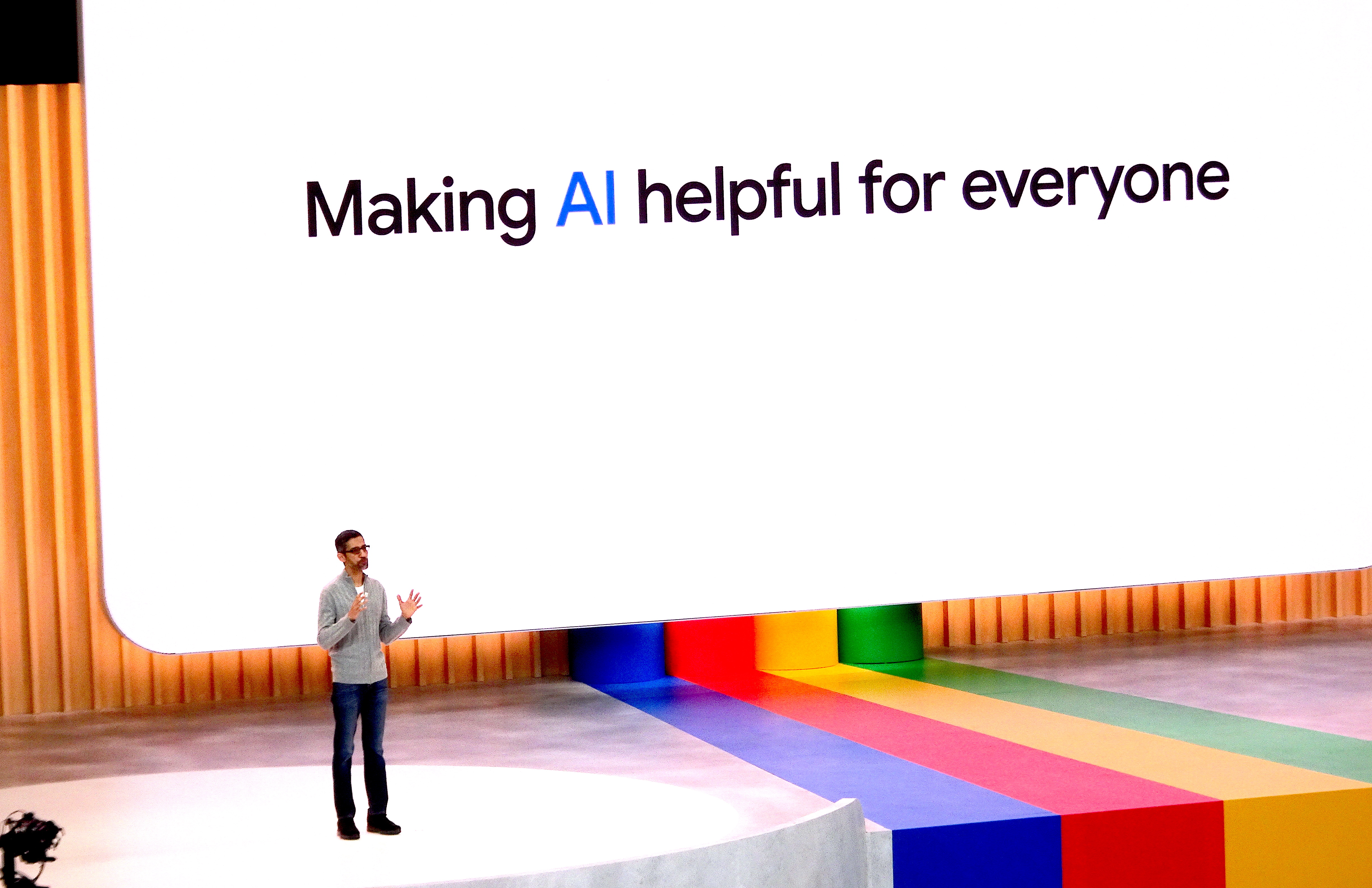
Alphabet Chief Executive Sundar Pichai (pictured) said on the call that the Gemini AI app now counts more than 750 million monthly active users, up from 650 million at the end of the last quarter. “As we scale, we are getting dramatically more efficient,” he said. “We were able to lower Gemini serving unit costs by 78% over 2025 through model optimizations, efficiency and utilization improvements.”
Valoir analyst Rebecca Wettemann told SiliconANGLE that Google has made significant strides, both in terms of Gemini’s performance and its efficiency. “Since its release, fans have raved about Gemini’s improvements in reasoning, multimodal handling, and enlarged context windows,” she said. “But Google is focused not just on delivering AI, but making it more efficient. This is really important as the market continues to grumble about an AI bubble and the cost of delivering on data centers.”
Alphabet’s Other Bets segment, which includes the self-driving car unit Waymo and the life sciences business Verily, posted revenue of $370 million in the quarter, down 7% from a year earlier. Its overall loss came to $3.61 billion, up more than 200%. About $2.1 billion of that loss stemmed from stock-based compensation charges related to Waymo’s research and development expenses.
The robotaxi firm is making good progress, though, recently closing on a fresh round of funding that increased its value to $16 billion. It served more than 15 million trips across five major U.S. cities in 2025, including Austin, Texas, Atlanta, Los Angeles, Phoenix and the San Francisco Bay Area.
Support our mission to keep content open and free by engaging with theCUBE community. Join theCUBE’s Alumni Trust Network, where technology leaders connect, share intelligence and create opportunities.
Founded by tech visionaries John Furrier and Dave Vellante, SiliconANGLE Media has built a dynamic ecosystem of industry-leading digital media brands that reach 15+ million elite tech professionals. Our new proprietary theCUBE AI Video Cloud is breaking ground in audience interaction, leveraging theCUBEai.com neural network to help technology companies make data-driven decisions and stay at the forefront of industry conversations.