

 AI
AI
AI
AI
AI

WaveMaker Inc., an enterprise web and mobile application platform provider, today announced the launch of a new agentic artificial intelligence application generation system aimed at standardizing AI development.
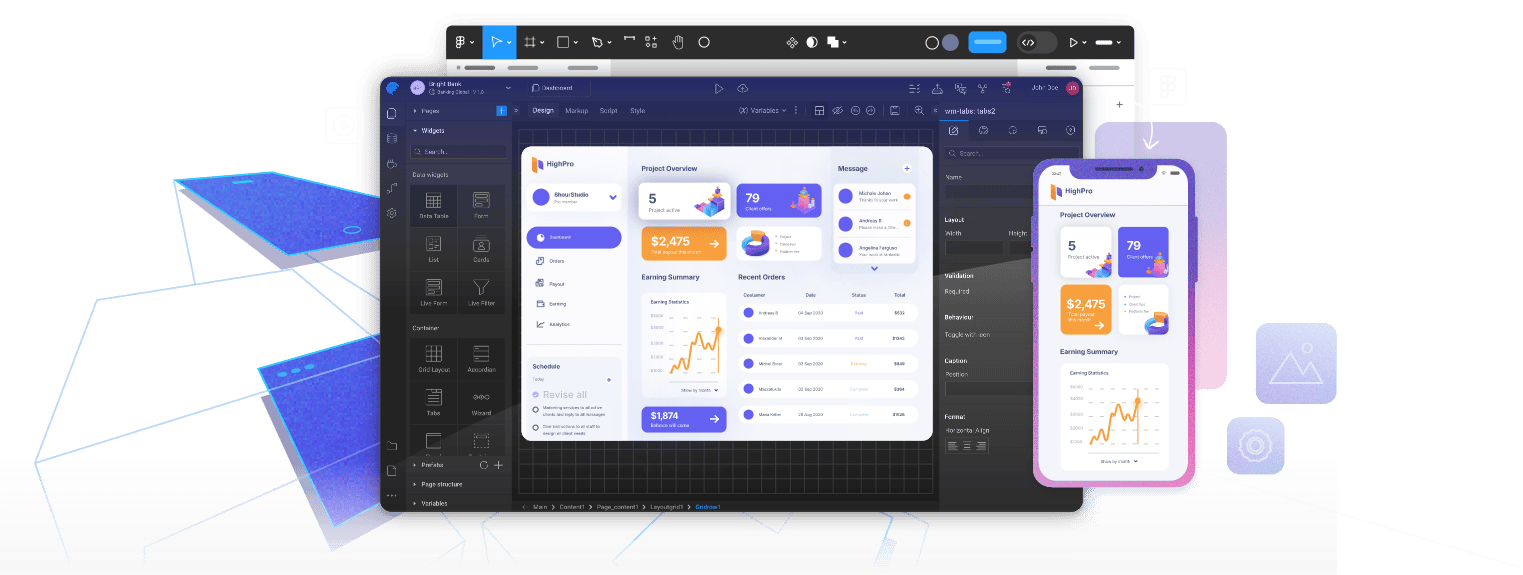
The company said it focused on the ongoing trend of agentic AI, where artificial intelligence is harnessed to do automated work under the hood in hybrid environments where developers combine their integrated developer environments, or IDEs, where code lives and visual design studios that provide a canvas.
“We don’t go directly from intent to code,” Vikram Srivats, head of product experience at WaveMaker, told SiliconANGLE in an interview. “We actually have what’s called a two-pass model.”
Developers can submit Figma design files and write up their intent in natural language, allowing the system to generate tech-agnostic application markup, giving developers a chance to verify that it’s headed in the right direction.
Srivats described the goal as collapsing the usual gap between user experience, or UX, and implementation: “We sort of brought design into development,” he explained.
Once verified, a deterministic engine performs code generation to ensure enterprise-quality coding, reduce errors and lower AI token costs.
WaveMaker is also pitching the architecture as a direct response to a problem enterprises are now feeling in the budget: AI-assisted development can get expensive fast when teams lean on models to generate and regenerate full blocks of code. WaveMaker’s answer is to generate a lightweight intermediate “WaveMaker markup” first, then translate it into production code with a deterministic generator — reducing how often the model has to do heavy work.
This is being especially felt by enterprise teams that lean on models such as Anthropic PBC’s Claude Code, OpenAI Group PBC’s Codex or Google LLC’s Gemini, which can quickly become costly per token when coding. Some of these large language models may have low input pricing, but that soars on output.
Srivats said WaveMaker’s approach is meant to keep token use down because the intermediate layer is lighter than raw code. “We’re actually not consuming as many tokens as we would need,” he said, adding that the markup stage keeps “the actual load on consuming LLM tokens… very, very low.”
He described a model-agnostic posture that can work with major providers, but he also framed the product as something WaveMaker wants to package as a wide-ranging offering rather than as a loose toolkit. In other words, it’s meant to feel like a complete system that teams can standardize on, even as the model landscape keeps shifting.
“We have not built this for individual developers. We’ve built it for teams that can have multiple skills,” Srivats said, describing an audience that would work best with a mixture of both tech-savvy and design-oriented people who bring a variety of capabilities to the table.
He also leaned into the ongoing enterprise reality that applications don’t end at generation. They live for years, and teams keep adding features, patching vulnerabilities and evolving UI systems.
He argued WaveMaker’s approach is built for that lifecycle, because developers need “real code” they can extend. And because the platform uses of open standards — down to packaging and deployment — teams can avoid getting trapped in a dead-end stack as frameworks change.
“All the applications built on our system are long-lived applications,” Srivats said. “You have code in hand… This is real code.”
This allows developers to future proof without fear of suffering too much from design drift that ordinary tools can’t handle — such as when the initial implementation diverges from the original vision over time.
He said this is why the company brought Figma and development together from the onset: It’s basically the chocolate and the peanut butter combined that sets the company apart in an already crowded market for low-code AI-driven app design products.
Support our mission to keep content open and free by engaging with theCUBE community. Join theCUBE’s Alumni Trust Network, where technology leaders connect, share intelligence and create opportunities.
Founded by tech visionaries John Furrier and Dave Vellante, SiliconANGLE Media has built a dynamic ecosystem of industry-leading digital media brands that reach 15+ million elite tech professionals. Our new proprietary theCUBE AI Video Cloud is breaking ground in audience interaction, leveraging theCUBEai.com neural network to help technology companies make data-driven decisions and stay at the forefront of industry conversations.