
 INFRA
INFRA
INFRA
INFRA

INFRA

Quantum sensing is stepping out of the lab and into real-world systems — with Nvidia tightly woven into the playbook.
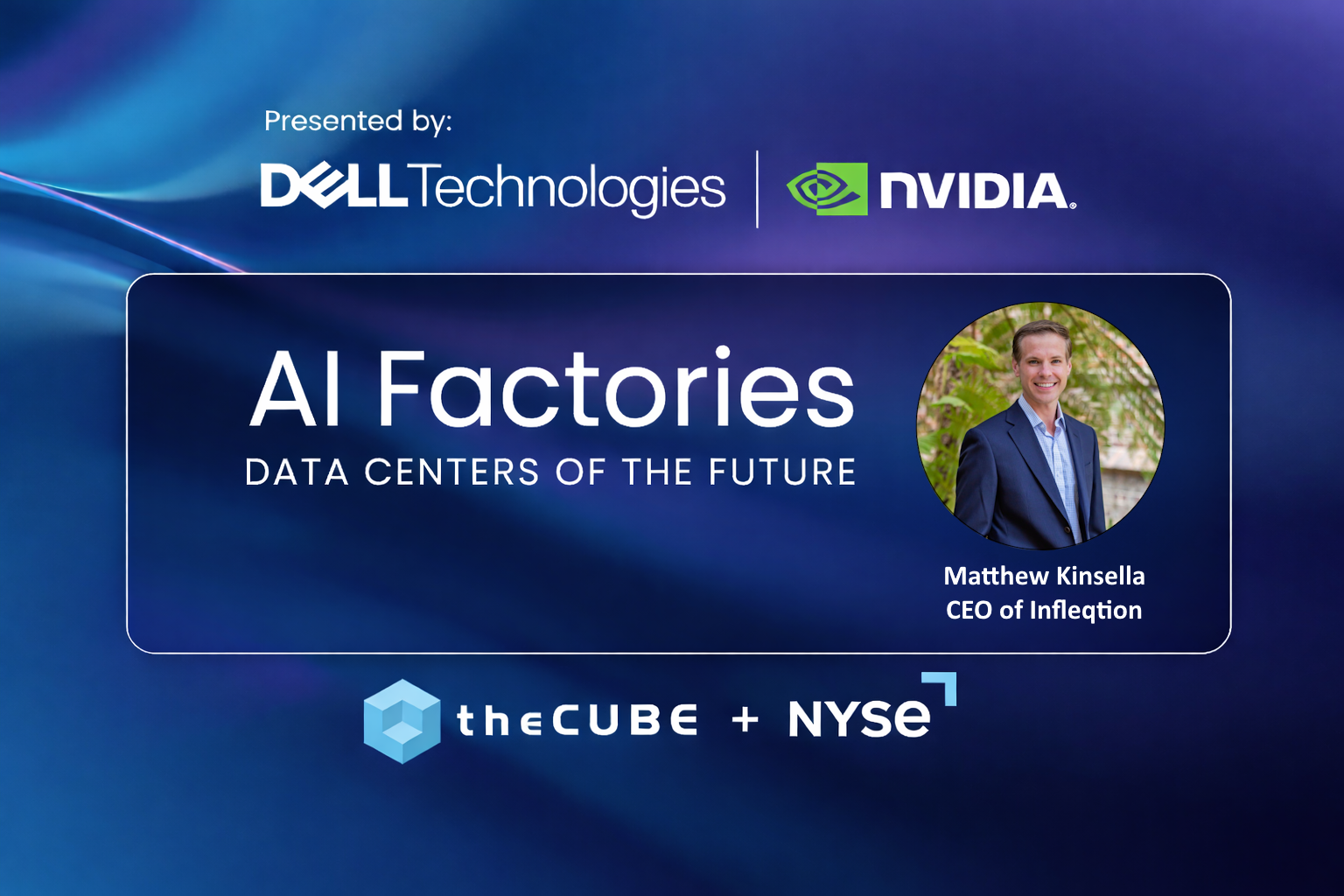
For years, much of the quantum narrative has focused on distant computing breakthroughs, but Infleqtion Inc. is charting a more immediate path, generating revenue from deployed systems and using today’s products to finance longer-term milestones. Infleqtion CEO Matthew Kinsella (pictured) has modeled the strategy on Nvidia’s playbook, prioritizing real customer use cases, such as atomic clocks, RF systems and gravity sensors, that already outperform classical alternatives, while expanding integration with Nvidia’s GPU ecosystem across the data center and the edge as quantum sensing scales.
“Our mission has always been to take quantum from the research lab and take it out into commercialization,” Kinsella said, adding that the company has modeled its approach on Nvidia’s commercialization strategy, first applying its core quantum engine to near-term use cases where it already demonstrates clear advantages — such as timekeeping and sensing — while steadily advancing toward broader quantum computing capabilities.
Kinsella spoke with theCUBE’s John Furrier for theCUBE + NYSE Wired: AI Factories – Data Centers of the Future interview series, during an exclusive broadcast on theCUBE, SiliconANGLE Media’s livestreaming studio. They discussed how Infleqtion is commercializing quantum sensing while deepening its strategic integration with Nvidia’s GPU ecosystem across the data center and the edge.
This isn’t a surface-level partnership; it’s about how the systems are designed. Infleqtion expects GPUs and quantum processors to work alongside each other inside next-generation infrastructure, not as separate stacks. Nvidia’s NVQLink initiative, unveiled at GTC, signals that direction by creating a direct pathway between GPUs and quantum machines to streamline development and bring hybrid systems online faster, according to Kinsella.
“What they put out into the world at [Nvidia GTC Washington, D.C.] was really interesting,” he said. “It’s called NVQLink, and it’s a way to link their GPUs to quantum computers because the cross-currents between quantum and GPUs are massive. This is just a way to accelerate the ways for GPUs and QPUs to work hand in hand.”
That distinction matters because today’s quantum machines are still prone to errors. Detecting that something went wrong is the easy part; figuring out why is far more complicated. Tracing those faults back to their source becomes an inference-heavy task, and that’s where GPUs come in, helping Infleqtion move more quickly toward stable, practical systems, Kinsella explained.
“The identification of the errors is relatively easy, but tracing them back to their root cause is actually an inference problem,” he added. “As we can utilize GPUs to do the inference to trace back to the errors, we can accelerate the correction of those errors and get to useful quantum computing.”
Infleqtion isn’t waiting for fault-tolerant quantum machines to build a business. The company has already landed contracts, including a NASA deal to send gravity sensors into space and is extending the same neutral atom platform from clocks and RF systems toward full computing over time, according to Kinsella.
“On the sensing side of our business, we already have quantum advantage; these are products that do things that classical products can’t do,” he said. “We announced a big contract with NASA two weeks ago, where we’re sending some quantum sensors into space to sense gravity on the Earth’s surface and, in fact, changes in gravity on the Earth’s surface with extreme precision.”
The Nvidia relationship also reaches the edge. Infleqtion has ported quantum-developed software onto Nvidia’s Jetson edge-deployed GPUs, improving how edge systems ingest and process high-velocity data streams. That work has already translated into defense deployments, showing that quantum-inspired techniques can deliver immediate commercial impact when paired with classical hardware, Kinsella added.
“We’ve started to actually deploy our software on Nvidia’s GPUs and monetize that in the form of edge-deployed sensors for the Army and the Navy, allowing them to ingest either real-time streaming data from sensors or real-time RF streams that would normally overwhelm an edge GPU,” he said. “It’s been incredible to see a quantum-inspired software loaded onto classical GPUs and showing performance advantages.”
The market isn’t hypothetical, Kinsella explained. Infleqtion is already bringing in revenue from sensing products while continuing work toward 100 logical qubits and larger computing ambitions. For now, the focus is on expanding what’s commercially viable and advancing the longer-term roadmap in parallel.
“The quantum sensing market is real, and we are addressing it in size today,” Kinsella said. “I think the other thing that is misunderstood is useful quantum computers are coming sooner than people anticipate. We all need to prepare for Q-Day. We all need to prepare for the days when quantum computers are going to be able to break encryption, and we will get there, but this is happening.”
Here’s the complete video interview, part of SiliconANGLE’s and theCUBE’s coverage of theCUBE + NYSE Wired: AI Factories – Data Centers of the Future interview series:
Support our mission to keep content open and free by engaging with theCUBE community. Join theCUBE’s Alumni Trust Network, where technology leaders connect, share intelligence and create opportunities.
Founded by tech visionaries John Furrier and Dave Vellante, SiliconANGLE Media has built a dynamic ecosystem of industry-leading digital media brands that reach 15+ million elite tech professionals. Our new proprietary theCUBE AI Video Cloud is breaking ground in audience interaction, leveraging theCUBEai.com neural network to help technology companies make data-driven decisions and stay at the forefront of industry conversations.