

 AI
AI
AI
AI

AI

Agentic AI is transforming the cybersecurity threat landscape, pushing lateral threat prevention to the forefront as enterprises rethink how to protect workloads after a breach.
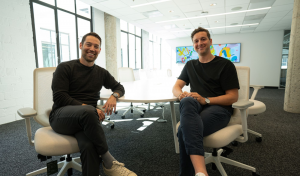
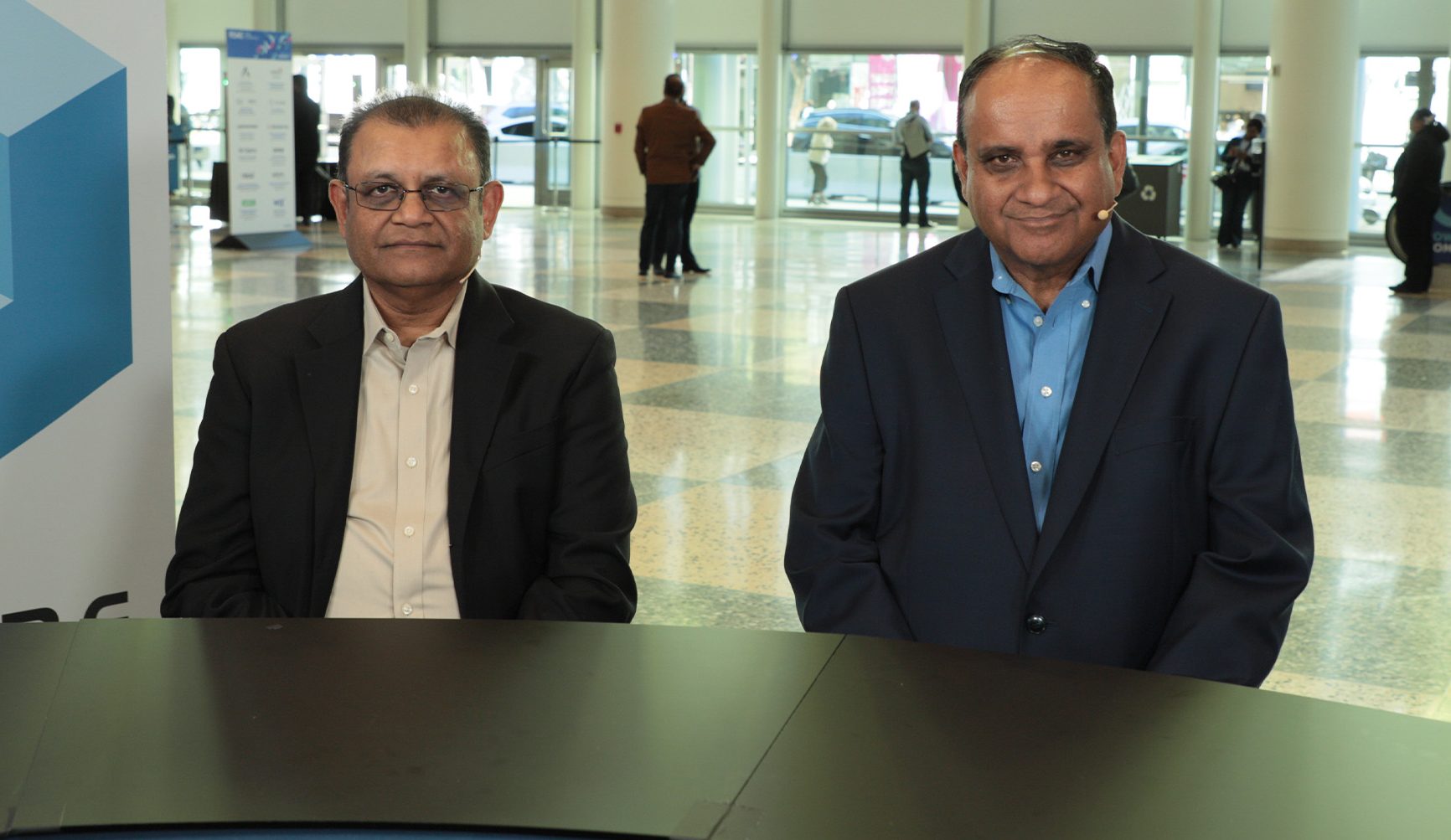
As AI-powered tools make it easier for threat actors to discover vulnerabilities in open-source code and launch autonomous attacks at machine speed, the case for defense in depth — and especially lateral — threat prevention has never been stronger, according to Umesh Mahajan (pictured, right), vice president and general manager of the application networking and security division at Broadcom Inc.
“AI is the best at finding vulnerabilities. Earlier, hackers had to read the open-source code and figure out which way to attack,” Mahajan told theCUBE. “Now AI can do all that for you. Write a couple of agents — it can crawl through a million lines of open source and then it’ll mercilessly attack your environment one by one. You have to imagine ahead where these attacks are going to come in. Something likely might get compromised.”
Mahajan and Prashant Gandhi (left), vice president of products for the application networking and security division at Broadcom, spoke with theCUBE’s Dave Vellante at the RSAC 2026 Conference, during an exclusive broadcast on theCUBE, SiliconANGLE Media’s livestreaming studio. They discussed lateral threat prevention and defense-in-depth strategies for AI workloads. (* Disclosure below.)
The growing sophistication of attacks means that perimeter breaches are increasingly inevitable. Exploits remain the leading entry point for the sixth consecutive year, and attackers are handing off access to secondary groups in as little as 22 seconds. Once inside, those adversaries move laterally — which is precisely where Broadcom’s VMware vDefend platform is designed to intervene, according to Gandhi.
“If you really look at any AI-generated attack, ultimately what happens is that the perimeter is breached, the attacker gets in, lands on a weakly protected asset, then moves laterally,” Gandhi explained. “That lateral propagation is where we come in, because we lay the trap in the lateral world, and that’s where we drive zero trust.”
That “lateral world” is where Broadcom sees its role becoming more important. The company is taking a more platform-centric approach to lateral threat prevention, with a four-step prescriptive deployment framework and integrated controls positioned close to the workload so policy can be enforced more directly, Gandhi explained.
“For any security to work effectively, you have to do enforcement, prevention, mitigation — not just detection — and you need to do that right next to the workload,” Gandhi said, referencing VMware Cloud Foundation’s private cloud stack and Broadcom’s integration at the hypervisor layer as the architectural layers where zero-trust controls can be applied most directly.
Broadcom is now also trying to remove some of the friction with its prescriptive approach and advanced threat prevention. The company found that many customers were not struggling because they lacked tools, but because they were overwhelmed by deployment complexity, Mahajan explained. Broadcom’s pitch now is that the fastest path to better security starts with making zero trust easier to operationalize.
“Start [in a] simple prescriptive way,” Mahajan said. “Then you successively move up the chain and automate the whole thing and tell them exactly which requirements are being met by that. That’s the only way we believe customers will move and get secure in the zero trust journey and this fight against these multiple attacks [that are] coming.”
Here’s the complete video interview, part of SiliconANGLE’s and theCUBE’s coverage of the RSAC 2026 Conference:
(* Disclosure: Broadcom sponsored this segment of theCUBE. Neither Broadcom nor other sponsors have editorial control over content on theCUBE or SiliconANGLE.)
Support our mission to keep content open and free by engaging with theCUBE community. Join theCUBE’s Alumni Trust Network, where technology leaders connect, share intelligence and create opportunities.
Founded by tech visionaries John Furrier and Dave Vellante, SiliconANGLE Media has built a dynamic ecosystem of industry-leading digital media brands that reach 15+ million elite tech professionals. Our new proprietary theCUBE AI Video Cloud is breaking ground in audience interaction, leveraging theCUBEai.com neural network to help technology companies make data-driven decisions and stay at the forefront of industry conversations.