 AI
AI
AI
AI








AI

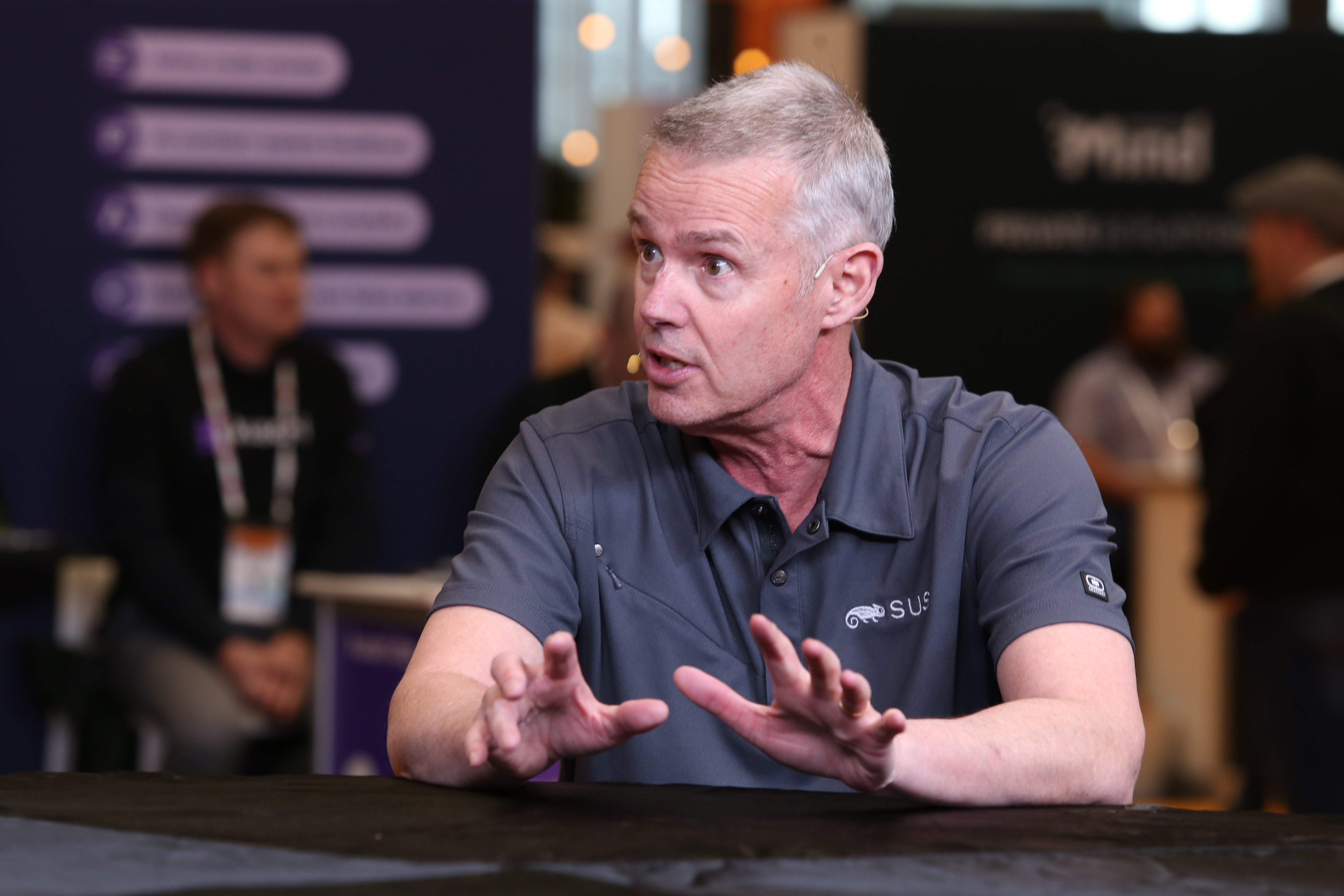
The modernization push is arriving amid near-universal Kubernetes adoption, with 82% of container users now running it in production. SUSE S.A. is positioning itself at the center of this shift with a broadened platform spanning container management, AI workloads and virtualization, according to Peter Smails (pictured), general manager of cloud-native at SUSE. That demand is being driven by customers who want more choice and greater control over their infrastructure.
“Customers want choice, they want flexibility,” Smails told theCUBE. “What are the underpinnings of that? Open source is one of the core pillars of that. [Enterprises should] continue to focus on open source as an underlying technology base. And number two is [that] whatever you do from a vendor standpoint, focus on openness, because it puts control into the hands of the customer, not the control of the vendor.”
Smails spoke with theCUBE’s Rebecca Knight and Paul Nashawaty at KubeCon + CloudNativeCon EU, during an exclusive broadcast on theCUBE, SiliconANGLE Media’s livestreaming studio. They discussed SUSE’s open infrastructure strategy across AI, cloud-native and virtualization. (* Disclosure below.)
Infrastructure is getting harder to manage as enterprise environments become more distributed and more complex. SUSE is aiming to simplify that with the latest release of SUSE Rancher Prime, which now features an AI-powered assistant called Liz that orchestrates a crew of context-aware agents spanning storage, security, observability and fleet management. The system allows administrators to issue natural-language commands that trigger complex workflows — such as scanning security posture and patching vulnerabilities — all through a single interface, Smails explained.
“What makes it exceptionally cool is that … if customers have their own agents that they want to bring in … Liz can actually then provide [support] through a singular interface, making Rancher the infrastructure management platform that much more intelligent,” he said. “It’s very ecosystem-driven, very extensible and very context-aware.”
SUSE is also advancing its position as a modern VMware alternative through SUSE Virtualization, which added multi-instance GPU support, auto balancing and live storage migration. Rather than offering a like-for-like replacement, SUSE aims to deliver a unified open infrastructure platform for managing virtual machines and containers side by side, Smails noted.
“Think open, think open, think open,” he said. “Whether that’s open source [or] open infrastructure, because if you look at the key thing — it is a journey.”
Here’s the complete video interview, part of SiliconANGLE’s and theCUBE’s coverage of the KubeCon + CloudNativeCon EU event:
(* Disclosure: SUSE sponsored this segment of theCUBE. Neither SUSE nor other sponsors have editorial control over content on theCUBE or SiliconANGLE.)
Support our mission to keep content open and free by engaging with theCUBE community. Join theCUBE’s Alumni Trust Network, where technology leaders connect, share intelligence and create opportunities.
Founded by tech visionaries John Furrier and Dave Vellante, SiliconANGLE Media has built a dynamic ecosystem of industry-leading digital media brands that reach 15+ million elite tech professionals. Our new proprietary theCUBE AI Video Cloud is breaking ground in audience interaction, leveraging theCUBEai.com neural network to help technology companies make data-driven decisions and stay at the forefront of industry conversations.