 AI
AI
AI
AI





AI

As cloud infrastructure consolidates, AI identity controls are moving to the center of how enterprises secure and manage autonomous agents.
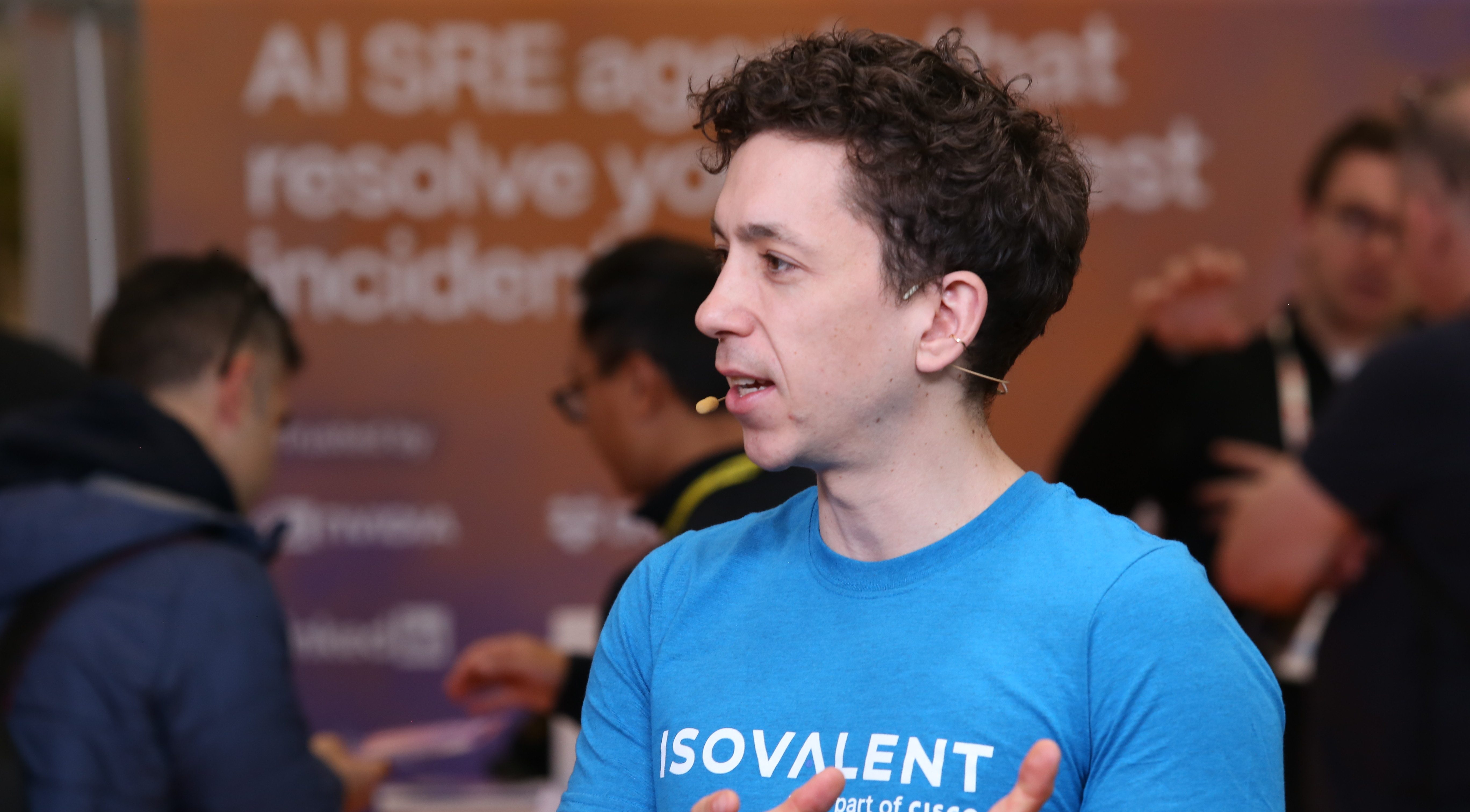
That shift is being driven by a familiar but fast-growing challenge: managing non-human actors at scale. As AI agents spread across enterprise environments, identity is emerging as a foundational layer for controlling how those systems connect and operate, according to Bill Mulligan (pictured), Cilium and eBPF maintainer at Isovalent Inc. That is the problem Cilium, an open-source platform for cloud-native networking, security and observability, is built to solve, using network-level identity to give enterprises more control over modern workloads.
“You have all these new agents in your infrastructure. You’re doing it at an unprecedented scale, and it’s all about the network,” Mulligan said. “That’s what Cilium’s trying to solve. I think the core of what Cilium is doing is giving [each agent] an identity in the network. It’s making everything a device on the network.”
Mulligan spoke with theCUBE’s Rob Strechay and Rebecca Knight at KubeCon + CloudNativeCon EU, during an exclusive broadcast on theCUBE, SiliconANGLE Media’s livestreaming studio. They discussed the growing importance of AI identity controls and the broader shift toward more unified cloud-native platforms. (* Disclosure below.)
Before, the focus was on containers, but now the industry is moving into a world of agents that need identities, along with complementary controls for security and observability. At the same time, enterprises are also bringing virtual machines — software-based computers that run as separate systems on shared hardware — into the Kubernetes and cloud-native world, according to Mulligan. The goal is to use Cilium to treat each of those workloads as a known entity on the network so that the same security and observability model can apply across all of them.
“[It’s all] just another device on the network,” Mulligan said. “You can do containers, you can do VMs, you can do AI agents — giving everything identity, putting it on the network and being able to do networking, observability and security around that.”
While the underlying infrastructure challenges remain similar as workloads shift from VMs to containers and now AI agents, the rise of AI is increasing the need for deeper visibility into what those systems are actually doing. That means adding the right context to low-level activity so operators can tell whether a process belongs to a VM, a container or an AI agent, according to Mulligan.
“What you need to do is take that kernel context that is just like, ‘Okay, this process tried to open this network connection, this process tried to access this file,’ and you need to apply the context that you know,” he said. “Is this a VM? Is it a container? Is it an AI agent? That’s what the abstraction of Cilium does. That’s why it’s become such a powerful platform, because it takes this really low, granular, super raw data and correlates that with the context that we have to give you the abstraction that you need.”
Here’s the complete video interview, part of SiliconANGLE’s and theCUBE’s coverage of the KubeCon + CloudNativeCon EU event:
(* Disclosure: The Cloud Native Computing Foundation sponsored this segment of theCUBE. Neither the CNCF nor other sponsors have editorial control over content on theCUBE or SiliconANGLE.)
Support our mission to keep content open and free by engaging with theCUBE community. Join theCUBE’s Alumni Trust Network, where technology leaders connect, share intelligence and create opportunities.
Founded by tech visionaries John Furrier and Dave Vellante, SiliconANGLE Media has built a dynamic ecosystem of industry-leading digital media brands that reach 15+ million elite tech professionals. Our new proprietary theCUBE AI Video Cloud is breaking ground in audience interaction, leveraging theCUBEai.com neural network to help technology companies make data-driven decisions and stay at the forefront of industry conversations.