

 AI
AI
AI
AI

AI

Cyber resilience is taking on new urgency as the threat landscape undergoes its most dramatic transformation in a generation, with AI turbocharging both the scale and speed of attacks while rewriting the rules of defense.
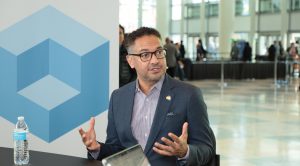
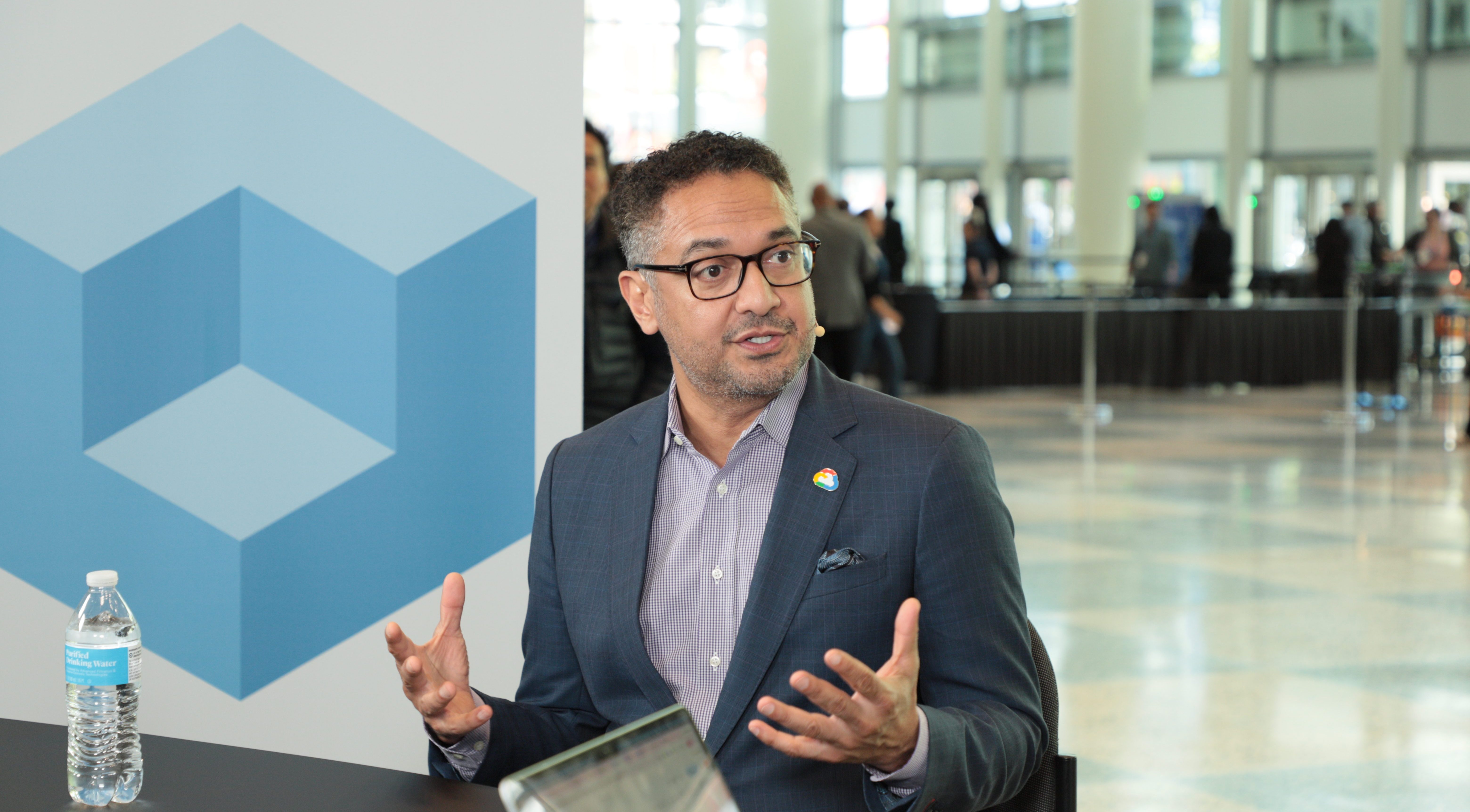
Enterprises face a new reality in which adversaries no longer need deep technical expertise to mount sophisticated attacks. That shift is especially consequential as company assets move ever deeper into the cloud, elevating comprehensive cyber resilience to a board-level mandate, according to Francis deSouza (pictured), chief operating officer and president of security products at Google Cloud.
“AI is changing every part of the cybersecurity landscape,” deSouza told theCUBE. “On the one hand, it’s causing the emergence of new threat actors on the scene, and so organizations … that wouldn’t have been in the threat landscape before, but now they’re able to leverage AI to develop malware themselves and also to chain malware together to create an agentic attack.”
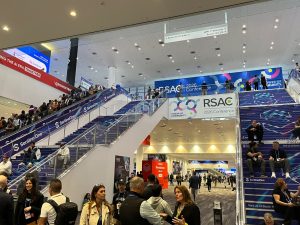
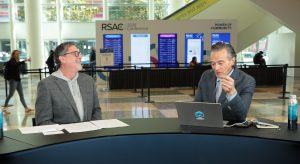
DeSouza spoke with theCUBE’s Dave Vellante at the RSAC 2026 Conference, during an exclusive broadcast on theCUBE, SiliconANGLE Media’s livestreaming studio. They discussed how AI is reshaping the threat landscape, the evolving calculus of cyber resilience and how Google Cloud is positioning its security portfolio for the agentic era. (* Disclosure below.)
The acceleration of attacks is no longer theoretical. According to the Mandiant M-Trends 2026 report, the median time between an attacker gaining initial access and handing off to a secondary threat group has collapsed from more than eight hours in 2022 to just 22 seconds in 2025, based on more than 500,000 hours of incident response work. That level of compression makes human-only defense structurally impossible, deSouza noted.
“Time is measured in seconds and minutes,” he said. “It’s not possible to mount a human-only defense against an AI attack. The old models of having a human defense or a human-in-the-loop defense have really got to change. Now what we’re seeing is primarily an agentic defense — using AI to fight AI — so that you can move at machine speed too, and you can have humans overseeing the process, creating guardrails, creating the policies and the strategies and monitoring what’s happening.”
Defenders, however, are accruing a structural advantage of their own: context. AI gives security teams the ability to model what normal behavior looks like across identities, assets and cloud environments — and to detect anomalies far faster than legacy tooling allowed. That insight underpins Google LLC’s recently completed $32 billion acquisition of Wiz Inc., which moves the center of gravity for cloud security protection up the stack, deSouza explained. But shadow AI presents its own compounding risk: tools such as OpenClaw, with hundreds of documented malicious skills already circulating on GitHub, illustrate how unmanaged agent deployments can introduce supply chain vulnerabilities at scale, he added.
“You have to manage the supply chain of your software,” deSouza said. “All the components that your software is using could be used as Trojan horses to bring malicious software into your company.”
Google is applying that philosophy internally as it expands AI across its own operations, using the company’s broad deployment footprint to shape how it thinks about governance, security and risk at scale. That experience is also reflected in deSouza’s dual role overseeing Google Cloud’s security portfolio, which underscores how closely AI adoption must be aligned with the broader foundations needed to support it, he explained.
“One of the roles I play at Google is that I’m one of the executive sponsors of a program we call ‘Google on Google AI,’ where we catalog all the different use cases that we have, and as you can imagine, we have many places in Google — from coding to our treasury to how we manage suppliers — where we deeply use AI,” he said. “There’s no such thing as an AI strategy without a security strategy and a data strategy, and they all need to move together at the same time.”
Here’s the complete video interview, part of SiliconANGLE’s and theCUBE’s coverage of the RSAC 2026 Conference:
(* Disclosure: TheCUBE is a paid media partner for the RSAC 2026 Conference. Sponsors of theCUBE’s event coverage do not have editorial control over content on theCUBE or SiliconANGLE.)
Support our mission to keep content open and free by engaging with theCUBE community. Join theCUBE’s Alumni Trust Network, where technology leaders connect, share intelligence and create opportunities.
Founded by tech visionaries John Furrier and Dave Vellante, SiliconANGLE Media has built a dynamic ecosystem of industry-leading digital media brands that reach 15+ million elite tech professionals. Our new proprietary theCUBE AI Video Cloud is breaking ground in audience interaction, leveraging theCUBEai.com neural network to help technology companies make data-driven decisions and stay at the forefront of industry conversations.