


 NEWS
NEWS
NEWS
NEWS

NEWS

In public health, where sensitive patient data and urgent decisions collide, cloud-native scientific computing is becoming the antidote to slow, fragmented innovation.
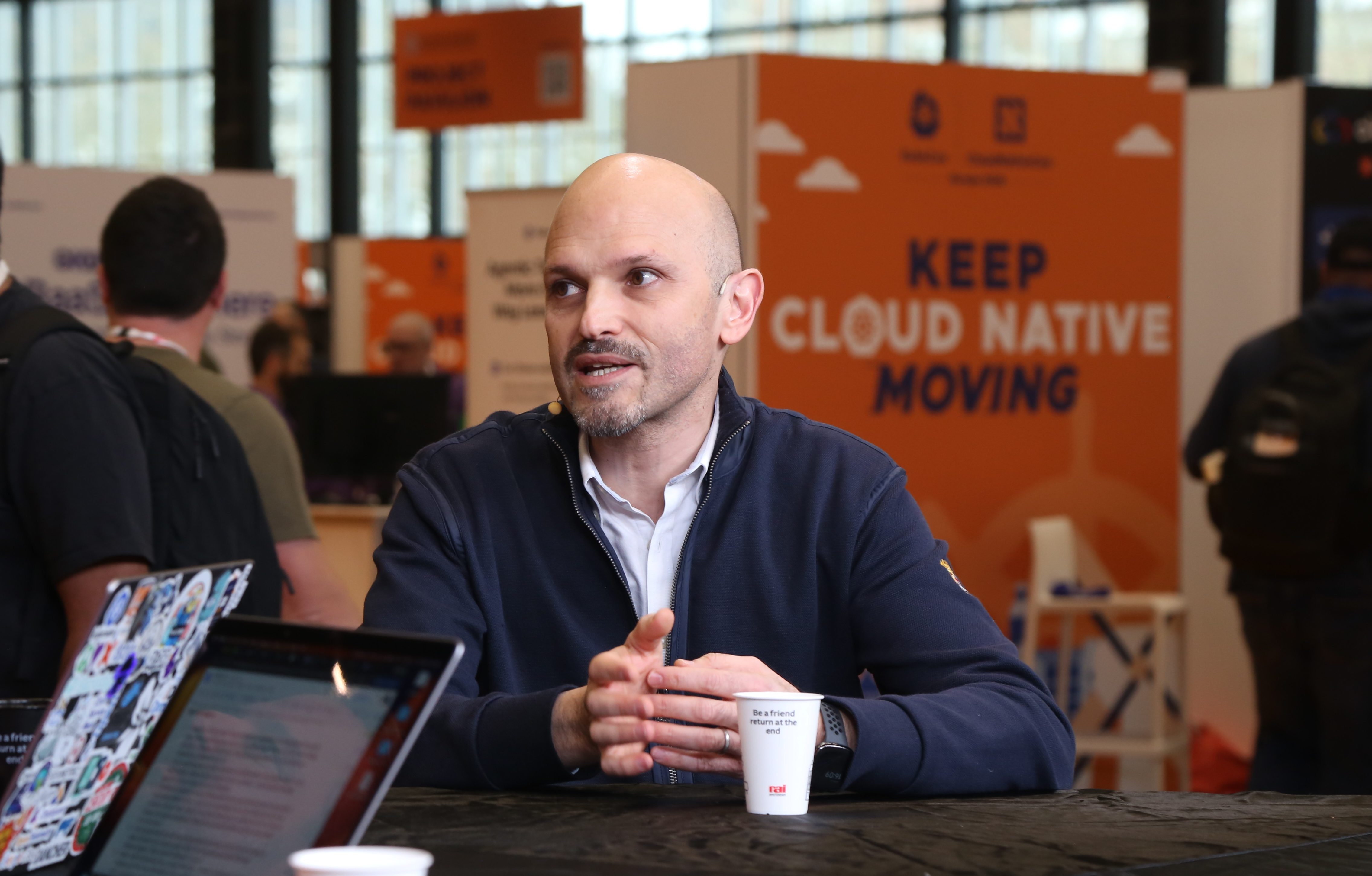
What is at stake is not just operational efficiency, but the confidence with which public health agencies can respond to emerging threats. The challenge is particularly acute for agencies that must run complex workloads such as pathogen genomics and epidemiological modeling while shielding sensitive health data from exposure. Cloud-native platforms offer the scalability scientists need, but only if the underlying complexity is abstracted away, according to Francesco Giannoccaro (pictured), head of high performance computing at the UK Health Security Agency.
“We started, in 2017, providing our scientists — [who] don’t have a software engineering background — a platform where they were able to experiment [and] prototype their application and workload in a very efficient way, trying to simplify the complexity of cloud-native application while not compromising around security or scientific rigor,” Giannoccaro told theCUBE.
Giannoccaro spoke with theCUBE’s Rebecca Knight and Rob Strechay at KubeCon + CloudNativeCon EU, during an exclusive broadcast on theCUBE, SiliconANGLE Media’s livestreaming studio. They discussed how cloud-native scientific computing on Kubernetes is enabling the agency’s public health mission across genomics, modeling and AI-enabled analysis. (* Disclosure below.)
The UK Health Security Agency was formed during the pandemic by merging three government bodies — Public Health England, the Joint Biosecurity Centre and NHS Test and Trace — each with different infrastructure stacks. Standardizing how scientists operate across those environments using Red Hat Inc.’s OpenShift— an enterprise Kubernetes platform for running and managing cloud-native applications — has been essential, Giannoccaro explained. As the agency expanded into machine learning and AI-enabled analysis, it also added Nvidia Corp. hardware to support the high-performance computing needs of those workloads, he added.
“In 2020, when [the] pandemic happened, we moved the application that we were hosting on OpenShift on premise in Azure to allow more resilience and scalability,” he said. “A few year after, we started increasing the workload focus on machine learning and AI-enabled analysis. We have integrated significant hardware specific for that type of workload from Nvidia.”
With genomics labs generating huge volumes of data, the ability to quickly analyze those volumes has traditionally been constrained to high-performance computing environments with steep learning curves, Giannoccaro noted. Kubernetes has narrowed that gap by working more closely with the scientific community on scheduling, auto-scaling and workload distribution.
“I hope that in the next year, we will be able to provide a catalog of AI models — open models — that have the same level of maturity and trust where our scientists can confidently assess accuracy, perform fine-tuning, and build the new … applications in the space of public health science,” Giannoccaro said.
Here’s the complete video interview, part of SiliconANGLE’s and theCUBE’s coverage of KubeCon + CloudNativeCon EU:
(* Disclosure: TheCUBE is a paid media partner for the KubeCon + CloudNativeCon NA event. Neither Red Hat, the primary sponsor of theCUBE’s event coverage, nor other sponsors have editorial control over content on theCUBE or SiliconANGLE.)
Support our mission to keep content open and free by engaging with theCUBE community. Join theCUBE’s Alumni Trust Network, where technology leaders connect, share intelligence and create opportunities.
Founded by tech visionaries John Furrier and Dave Vellante, SiliconANGLE Media has built a dynamic ecosystem of industry-leading digital media brands that reach 15+ million elite tech professionals. Our new proprietary theCUBE AI Video Cloud is breaking ground in audience interaction, leveraging theCUBEai.com neural network to help technology companies make data-driven decisions and stay at the forefront of industry conversations.