

 AI
AI
AI
AI
AI

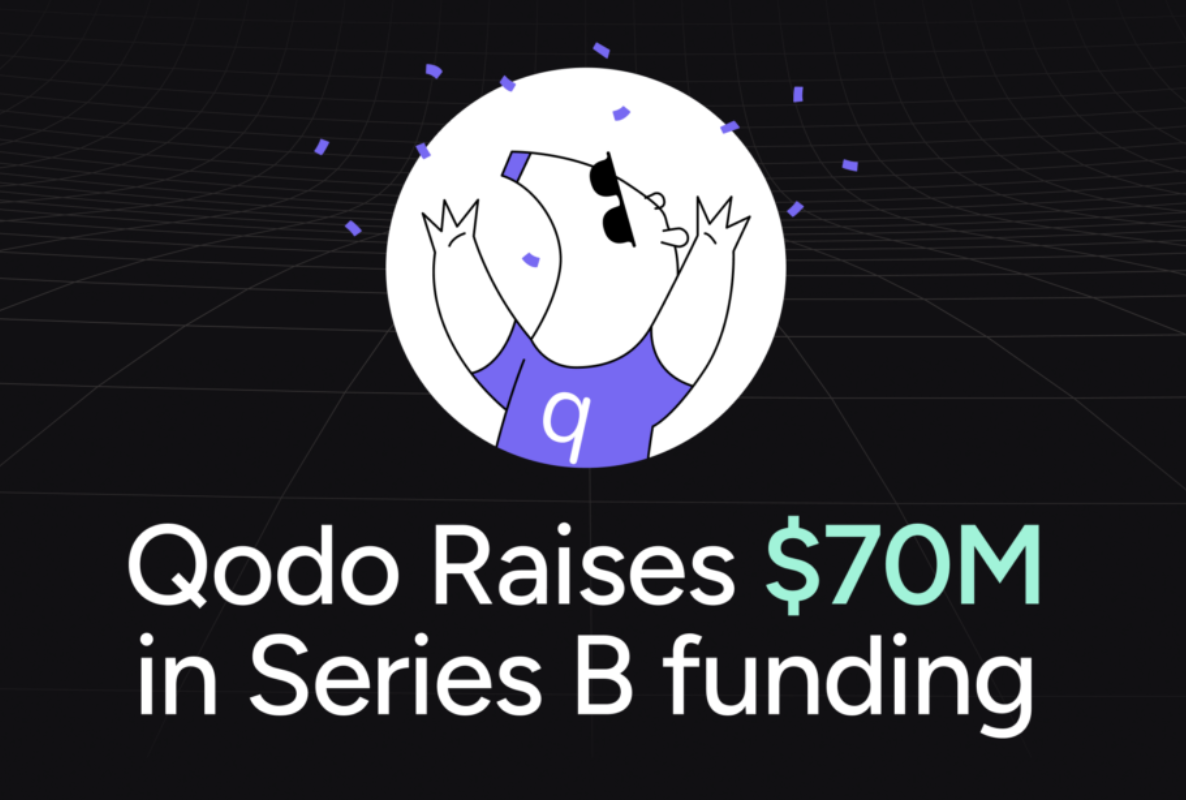
A startup called Qodo, officially known as Codium Ltd., today said it has raised $70 billion in a Series B funding round that brings its total funding to date to $120 million.
Few areas have felt the impact of generative artificial intelligence as much as software development. Tools such as Anthropic PBC’s Claude Code and OpenAI Group PBC’s Codex have dramatically accelerated code creation, but that speed comes with a tradeoff: namely, the need to verify that code.
Qodo believes code generation is no longer the bottleneck in code development. Rather, trust has become the new logjam. Traditionally, code verification has been done by humans, but they’re simply unable to keep up with the immense volumes of AI-generated code being produced by enterprises today.
But it’s not just volume that’s causing problems. Engineering teams tend to treat AI-generated code differently, Qodo says. They’re much more wary of bugs and things slipping through the net, and so they apply more rigorous validation steps before that code is deployed. The result is that code is being generated by AI much faster than it can be shipped.
This is where Qodo comes in. It’s not another coding assistant, but instead acts as a dedicated code review and governance layer that slots into the software development lifecycle.
The company integrates its software within development environments, pull requests and continuous integration/continuous development pipelines, where it applies automated, context-aware analysis to every line of code. Whereas traditional verification tools focus on isolated differences, Qodo tries to evaluate how changes to the code ripple across the entire codebase, taking into account any architectural dependencies and historical decisions.
To do this, Qodo relies on a multiagent architecture, with specialized AI agents that handle each aspect of the code review process, including bug detection, compliance checks and architectural validation. There’s also a coordinating layer that filters and prioritizes the findings of these agents. It reflects a broader change in AI systems, where multiple specialized agents orchestrated as teams have proven themselves more effective than a single, all-powerful model that tries to do everything.
Today, we’re announcing that we’ve raised $70 million in Series B funding to fight AI slop and be the independent verification layer for AI-assisted software development.
Series B was led by Qumra Capital. $120M total raised. Backed by investors from @OpenAI and @Meta. pic.twitter.com/L6EVD1qYeG
— Qodo (@QodoAI) March 30, 2026
Qodo’s raise hints at a change of focus in the AI coding industry. Over the last couple of years, most of the major players have focused specifically on code generation, building copilots, autocomplete systems and even full-fledged AI developers that can create entire applications from scratch.
But Qodo wants to put more emphasis on code governance at a time when enterprises are beginning to realize that ramping up productivity alone won’t accelerate software development. Without strong guardrails, AI-generated code is simply too risky to be deployed without sitting in a queue until after it has been reviewed for vulnerabilities, logic errors and consistency issues.
Of course, Qodo isn’t the only AI code review tool in town. It faces competition from rivals including Greptile, Augment and Devin, as well as Anthropic’s newly released Claude Code Review. But the company has an edge over its rivals in terms of performance. It was recently ranked No. 1 on Martian’s Code Review Bench with a 64.3% score. That’s one of the industry’s most popular benchmarks for assessing AI code review tools, and it highlights Qodo’s strong ability to find the trickiest logic bugs and cross-file issues without creating too many false positives.
Qodo has also won the confidence of major enterprises such as Nvidia Corp., Walmart Inc., Red Hat Inc., Intuit Inc., JFrog Ltd. and Texas Instruments Inc.
Today’s round was led by Qumra Capital and saw participation from Maor Ventures, Phoenix Capital Partners, S Ventures, Square Peg, Susa Ventures, TLV Partners, Vine Ventures and others. The funding will help Qodo to scale its operations globally, it said, by expanding its product and engineering teams and developing additional AI-powered governance capabilities. Its goal is to allow companies to adopt AI coding tools confidently at scale while maintaining rigorous standards for code quality.
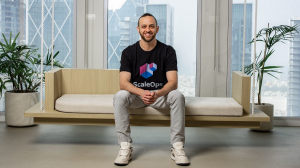
Co-founder and Chief Executive Itamar Friedman said the days of unverified AI software development will soon be a thing of the past. “We’re building a system of record for code quality and trust as enterprises shift from experimental AI to mission-critical automation,” he said. “With this new financing we can empower organizations to move fast with confidence, knowing every line of code is safe, reliable and aligned with their standards.”
Support our mission to keep content open and free by engaging with theCUBE community. Join theCUBE’s Alumni Trust Network, where technology leaders connect, share intelligence and create opportunities.
Founded by tech visionaries John Furrier and Dave Vellante, SiliconANGLE Media has built a dynamic ecosystem of industry-leading digital media brands that reach 15+ million elite tech professionals. Our new proprietary theCUBE AI Video Cloud is breaking ground in audience interaction, leveraging theCUBEai.com neural network to help technology companies make data-driven decisions and stay at the forefront of industry conversations.