 AI
AI
AI
AI






AI

Enterprises are under mounting pressure to manage infrastructure more efficiently as AI and distributed applications drive up cost and complexity. As a result, the industry is moving toward more adaptive systems that use intelligent data placement to respond automatically as demands change.
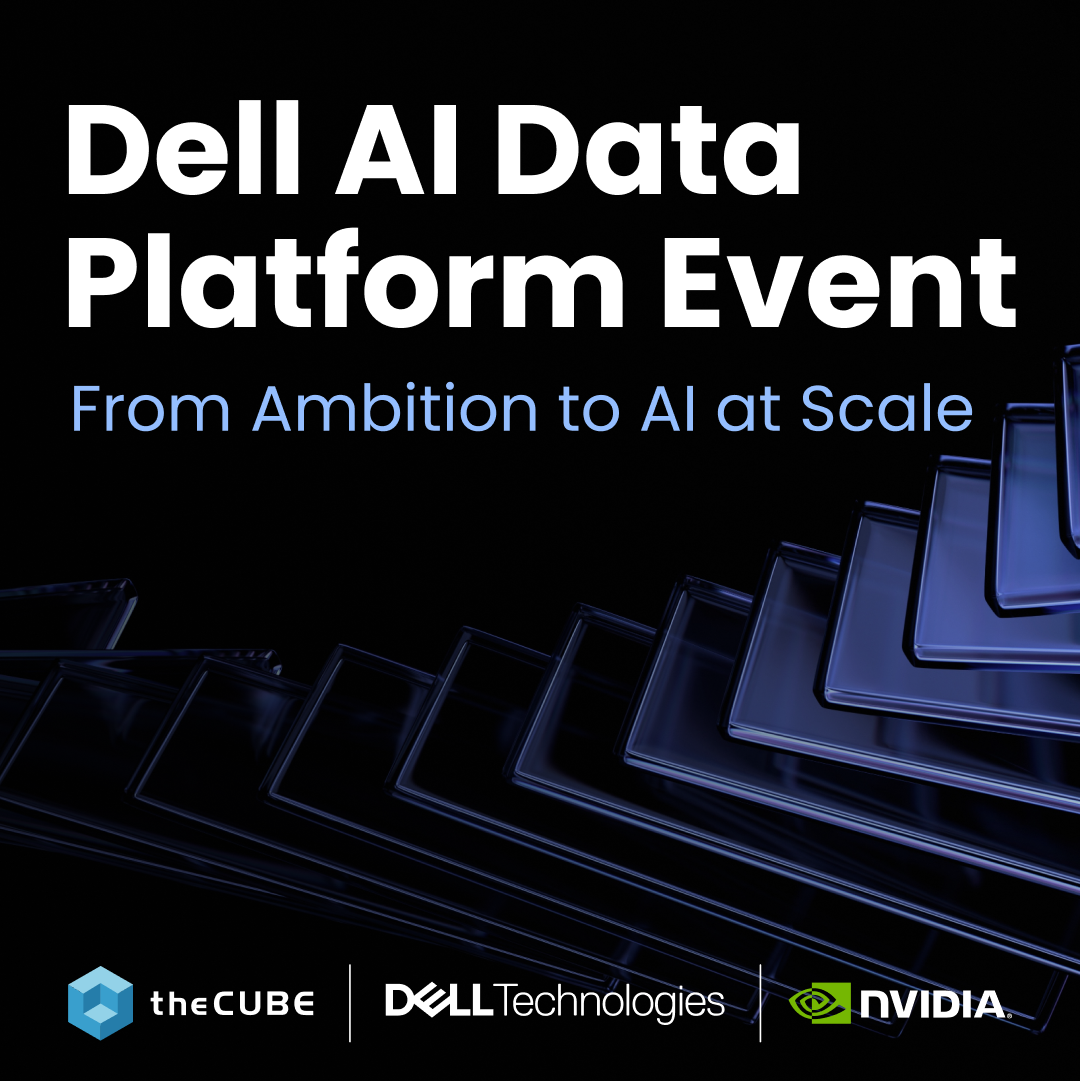
Auto-tiering is often mistaken for older hierarchical storage management, but the newer approach is far more dynamic. As workload demands rise, the system automatically scales resources for that specific workload without disrupting neighboring workloads, according to Phil Trickovic (pictured), senior vice president of Tintri by DataDirect Networks Inc.
“That’s the trick with the HSM strategy, right? It’s not aware of what ‘X’ workload next to it is consuming,” Trickovic said. “We’ve been aware of that since day one. That’s what our special sauce is.”
Trickovic spoke with theCUBE’s Rebecca Knight and Paul Nashawaty at KubeCon + CloudNativeCon EU, during two exclusive broadcasts on theCUBE, SiliconANGLE Media’s livestreaming studio. They discussed the growing need for intelligent data placement and the push toward more adaptive infrastructure as AI drives new cost and performance demands. (* Disclosure below.)
When first launched in 2011, tiering was limited to moving data between SSDs and spinning disks. Tintri’s new functionality tiers between high-cost, high-performance NVMe and SSD, so workloads do not have to be pushed down to spinning disk or other lower-tier media, according to Trickovic.
“Where you’ve got evolution of this magnificence that’s happening with this, with AI, the amount of data that these things generate is being overlooked,” he said. “We can clear that up for people and make sure that those datasets that you’re going to need for additional trainings … are kept on the most cost-effective media, period, as well as enhance your x86 compute stack.”
Those x86 environments are especially prone to inefficient infrastructure planning. Instead of relying on what someone says an enterprise needs, it analyzes what a workload is doing, retains the history and predicts what will be needed for future use, according to Trickovic.
“That’s where you can come in and go, ‘I want to grow my business 7%,’ or, ‘I want to grow my workload farm 2%,’ hit enter,” he said. “It’ll tell you exactly what you need from networking, x86 stack and storage stack on the backend.”
Over the last 18 months, Tintri has worked closely with Platform9 Systems Inc. to develop an integrated stack. The partnership is intended to bring hyperconverged infrastructure technology to market in a more efficient way, according to Trickovic.
“We’re bringing HCI stack to market with both [Intel Corp.] and [Advanced Micro Devices Inc.] chip sets,” he said. “Bolted, validated, certified and supported by both companies — jointly.”
Here’s the complete video interview, part of SiliconANGLE’s and theCUBE’s coverage of the KubeCon + CloudNativeCon EU event:
At the end of the day, it all comes down to ones and zeros, and if you know what they are doing, you can solve for the problem, according to Trickovic. But that depends on visibility into each application and business requirement, with the flexibility to place data wherever it makes the most sense, he added.
“The cloud spends with [Amazon Web Services Inc.] and these things, I can’t tell you how many meetings I go in where [I hear] ‘This was supposed to cost us X a month and it ended up being 200,’” he said. “There’s no hyperbole there. ‘200%, 300%, 400% of what we had planned for — oops.’”
That is where intelligent data placement comes in. By analyzing data across blocks, files and objects to understand how it connects, Tintri can automatically place workloads on the most appropriate infrastructure tier. For AI workloads in particular, that matters because not every application needs top-tier performance all the time.
“I’ve been in storage and compute for a long time, and the last, I’d say even five years, compute and storage was, ‘Eh, it’s not necessary. Yeah, whatever. We don’t need to pay attention to it,’ because it was so cheap,” Trickovic said. “Well, now we’ve consumed all that’s available, and now it’s not cheap. Now we really need to go ‘oops’, and go back and look at how do we get this under control.”
With Tintri, users can let the system run for a few days or weeks and then get a profile of what the workload needs. From there, it can show whether to shrink, grow or expand resources and automatically place the workload accordingly, according to Trickovic.
“Being that we’re aware, if that becomes hotter, if that workload becomes warmer, we’ll move it back up before you’ve even requested it. That’s the power engine behind everything else,” he said.
Here’s the complete video interview, part of SiliconANGLE’s and theCUBE’s coverage of the KubeCon + CloudNativeCon EU event:
(* Disclosure: Tintri by DataDirect Networks sponsored this segment of theCUBE. Neither Tintri by DataDirect Networks nor other sponsors have editorial control over content on theCUBE or SiliconANGLE.)
Support our mission to keep content open and free by engaging with theCUBE community. Join theCUBE’s Alumni Trust Network, where technology leaders connect, share intelligence and create opportunities.
Founded by tech visionaries John Furrier and Dave Vellante, SiliconANGLE Media has built a dynamic ecosystem of industry-leading digital media brands that reach 15+ million elite tech professionals. Our new proprietary theCUBE AI Video Cloud is breaking ground in audience interaction, leveraging theCUBEai.com neural network to help technology companies make data-driven decisions and stay at the forefront of industry conversations.