

 AI
AI
AI
AI
AI

Sycamore Labs, a Palo Alto-based startup led by former Atlassian Group Corp. Chief Technology Officer Sri Viswanath, said today it has raised $65 million in seed funding to build the “agentic operating system” for the enterprise.
The round was led by heavy hitters, including Coatue, whom Viswanath previously worked for, and Lightspeed Venture Partners. Other investors, including Abstract Ventures, Dell Technologies Capital and 8VC also participated, as did a veritable “who’s who” of Silicon Valley angels: Databricks Inc. Chief Executive Ali Ghodsi, former OpenAI Group PBC Chief Scientist Bob McGrew, Intel CEO Lip Bu-Tan, Palo Alto Networks Inc. President BJ Jenkins and the respected artificial intelligence researcher François Chollet.
Sycamore is building a “trusted agent operating system” that’s designed to bring AI agents to the next level. While AI models have already shown an ability to reason and act autonomously, most enterprises remain hesitant to let them loose due to the lack of infrastructure needed to do that safely at scale. What’s needed is a way for AI agents to be deployed without constant human hand-holding, and that’s exactly what Sycamore says it’s delivering.
With Sycamore’s operating system, enterprises will be able to discover, build, deploy and observe fleets of AI agents at scale within a secure, governed environment.
The startup says it’s trying to tackle the problem of “operational gravity.” Many enterprises have already gotten pretty far with AI agents, experimenting with them in siloed environments and getting them to do some impressive things. But while these agents work fine in demo environments, they lack a centralized portal that allows humans to make sure they’re following company policies, staying within security boundaries and learning from their mistakes. Without a foundational operating system to guide them, AI agents are still too risky to deploy at scale.
Viswanath said part of the problem is that enterprise software is designed for humans to do the work. “The next generation of enterprise software will be autonomous, continuously learning and adaptive,” he said. “Sycamore is building the operating system for that future, with a foundation of trust, security and control.”
Sycamore’s platform is based on the idea that it’s not really possible to trust anything without evidence. So instead of giving AI agents full autonomy from day one, it uses a tiered system that allows agents to “earn” trust and slowly be granted more autonomy as they prove their reliability. When an AI agent is first deployed, it will be heavily monitored to ensure it does as it’s supposed to, and slowly gain more freedom as it proves itself.
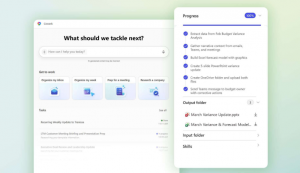
The platform allows human workers to utilize agents by describing what it is they want them to do in natural language. The user simply tells it what needs to be done and the agent will create the necessary applications and integrations to make it happen. Sycamore’s agents aren’t static. They capture institutional knowledge as they progress, meaning they get smarter the more they interact with a company’s data and workflows.
This concept of an “agentic operating system” is not new, but the difference with Sycamore is that Viswanath has both the experience and the backing required to pull it off. Having served as CTO at Atlassian and Groupon Inc. before that, he brings a wealth of knowledge about enterprise systems. He understands that it’s not only the cool features that count, but also the boring stuff like uptime, security and governance.
If Sycamore can deliver that operational infrastructure, it could unlock a wave of enterprise automation, and the pedigree of its backers suggests it’s onto something. If it succeeds, the future of work will be less about humans performing repetitive tasks, and more about acting as coordinators of highly efficient, autonomous AI agents that can get things done much more rapidly. The biggest challenge is likely integration, ensuring that those AI agents play nicely with the legacy systems that modern enterprises run on.
Viswanath said the funding will enable Sycamore to scale its engineering and applied AI teams and start moving its agents out of the lab and into production. It’s focused on building “trust architectures” and multi-agent coordination systems to ensure that multiple agents all running simultaneously don’t collide and create digital chaos.
Coatue co-founder Thomas Laffont said enterprises need a trust and governance layer that can enable autonomy to scale. “We call this a “Big F Idea” – a market that expands the entire category,” he said. “We see Sycamore as that foundational platform.”
Support our mission to keep content open and free by engaging with theCUBE community. Join theCUBE’s Alumni Trust Network, where technology leaders connect, share intelligence and create opportunities.
Founded by tech visionaries John Furrier and Dave Vellante, SiliconANGLE Media has built a dynamic ecosystem of industry-leading digital media brands that reach 15+ million elite tech professionals. Our new proprietary theCUBE AI Video Cloud is breaking ground in audience interaction, leveraging theCUBEai.com neural network to help technology companies make data-driven decisions and stay at the forefront of industry conversations.