

 AI
AI
AI
AI
AI

Cloud software giant Salesforce Inc. has been trying to rebuild its customer relationship management business with artificial intelligence at its core, and its latest announcement provides the clearest vision of where it’s heading: The company has just revealed a massive update to its collaboration platform Slack, positioning it as the new interface for enterprise work.
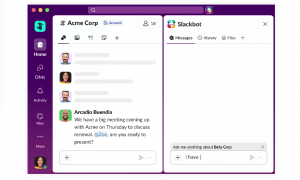
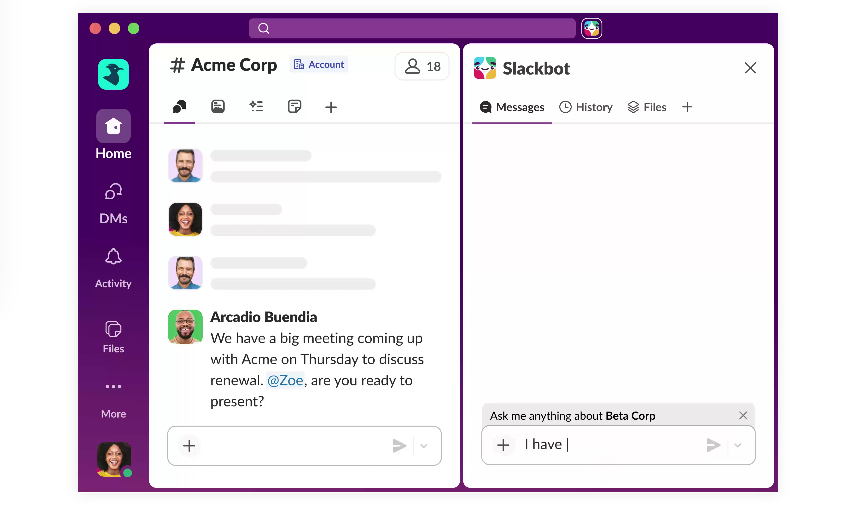
The focus of today’s updates is on Slackbot, the autonomous AI agent that lives within Slack and acts as a digital assistant, helper and now teammate, all rolled into one.
Today’s announcement suggests that Salesforce no longer sees Slackbot as a simple assistant for Slack users. Thanks to its deep integration with Agentforce and the company’s CRM platform, it can now orchestrate more complex workflows, manage customer relationships automatically and follow users across their desktops to provide real-time assistance at any moment.
Co-founder and Chief Technology Officer Parker Harris made it clear that the company sees Slackbot as the primary way that people will get business done. “We see it as the future interface for work,” he told SiliconANGLE. “Slack is where you can get the work done.”
Slackbot is gaining 30 new features, with many of them set to roll out in the coming months. The update comes after Slackbot added its first agentic capabilities, such as the ability to draft emails, find information within someone’s email inbox and schedule meetings.
The new features build on those early capabilities, with one of the most significant being what Salesforce calls “reusable AI skills.” They allow users to design specific tasks for Slackbot that can then be reused in other scenarios and contexts. The company has created a library of default AI skills, but companies will be able to customize them and create their own.
Employees will have to tinker with Slackbot in order to set up these AI skills, but once they’re done, it should significantly lighten their workload. Users will be able to trigger these skills with a simple command in Slack.
For instance, they can tell Slackbot to “create a budget” for an upcoming event or product launch, and the agent will gather all of the necessary data from various corporate Slack channels and any connected applications and databases, before creating an actionable plan. It can also set up a meeting for relevant team members to discuss the plan, and users are free to adjust it as required.
A second update pertains to the Model Context Protocol, which is a framework for agents to connect with and use third-party software tools. Slackbot can now function as an MCP client and connect to services, including Agentforce, which is a platform for developing AI agents. This means it can automatically send work requests and other prompts to Agentforce and other AI agents. Based on the user’s request, it will identify the most relevant agent and perform whatever work needs to be done, with no human intervention required, the company said.
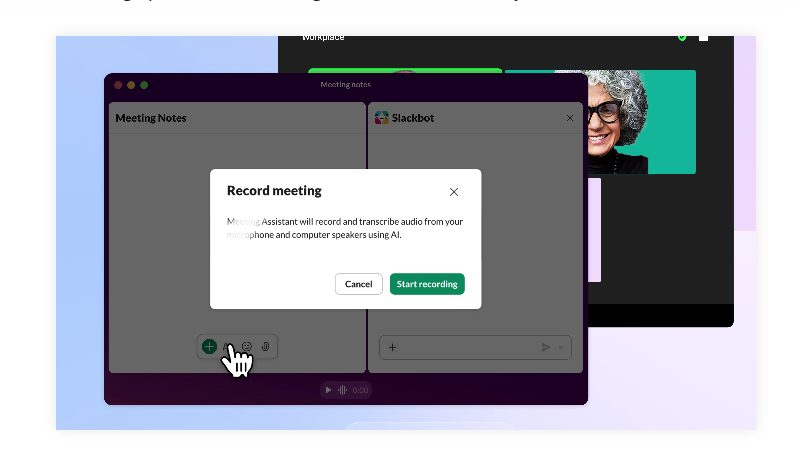
At an event today in San Francisco, Salesforce Executive Vice President and Slack General Manager Rob Seaman said Slackbot has also gained the ability to transcribe and summarize meetings. Should someone at the meeting “zone out,” and miss something important that was said, they can just ask Slackbot to fill them in later. It can also create a full recap of the meeting together with a detailed list of action items and who they were assigned to. “Slackbot is the ultimate teammate,” Seaman declared.
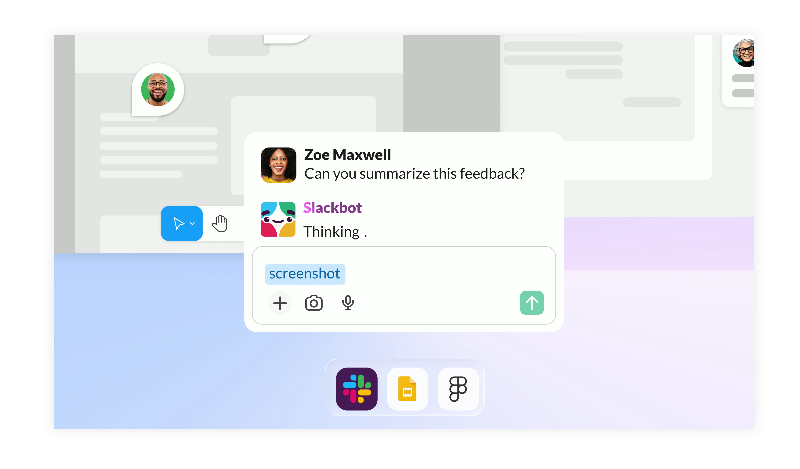
For the first time, Slackbot gains the ability to operate outside of the Slack interface and follow users across their entire desktop. This means it will be aware of whatever they’re doing on their computer, and draw upon things such as “you deals, your conversations, your calendar and your habits,” giving it the context it needs to generate answers and complete tasks whenever it’s asked to do so. The bot will also be proactive, offering “actionable suggestions” as users go about their work.
Seaman stressed that Salesforce has built in multiple privacy and safety guardrails into Slackbot to ensure that no sensitive data or personal information is leaked, and users will be able to adjust its permissions to control what it can and cannot access.
These updates aren’t just targeted at large enterprises. Seaman also discussed how they can benefit smaller businesses that don’t have sales departments. In many cases, the business owner is the sales department, which is why Slackbot intends to make everything much easier by integrating Salesforce’s CRM capabilities directly into Slack.
Most customer conversations happen in Slack already, but smaller businesses may not have time to organize those interactions into proper records and easily retrieve important information that was discussed. Slackbot’s native CRM capabilities allow it to read various Slack channels, understand what was said and update the deals, contacts and call notes for each customer and sales prospect automatically.
If a user promises to follow up at a later date, Slackbot will make sure that gets logged, and remind them about it later. Or if a new contract is uploaded, it will be added to the relevant client files. Users will be able to access their full customer histories, update deals and perform any other associated tasks directly within Slack.
With Slackbot, Salesforce is moving toward a future where people may not even need to interact with its core CRM platform or other enterprise applications ever again. It’s a future where everything will be conversational: Users will just tell Slackbot what they need to happen or what they need to know, and it will do the legwork all by itself.
“We’re basically saying, ‘Why should I log into Salesforce at all?’” Harris said. “Slack is that new engagement layer for enterprise software.”
With reporting from Robert Hof
Support our mission to keep content open and free by engaging with theCUBE community. Join theCUBE’s Alumni Trust Network, where technology leaders connect, share intelligence and create opportunities.
Founded by tech visionaries John Furrier and Dave Vellante, SiliconANGLE Media has built a dynamic ecosystem of industry-leading digital media brands that reach 15+ million elite tech professionals. Our new proprietary theCUBE AI Video Cloud is breaking ground in audience interaction, leveraging theCUBEai.com neural network to help technology companies make data-driven decisions and stay at the forefront of industry conversations.