









 INFRA
INFRA
INFRA
INFRA
INFRA

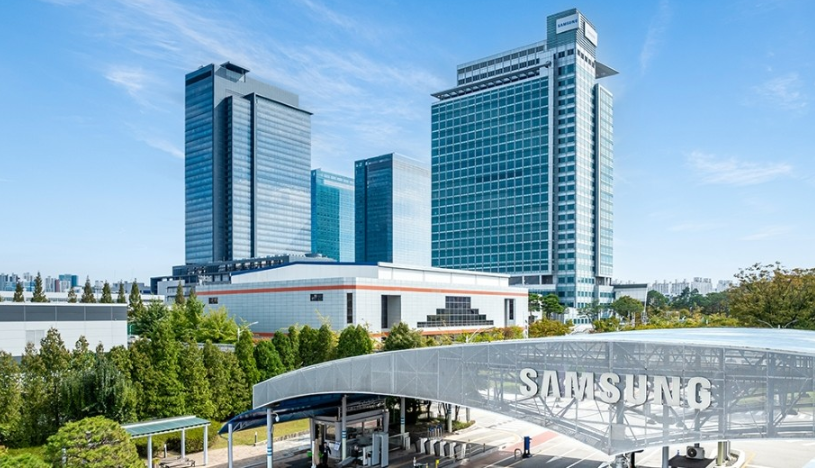
Samsung Electronics Co. Ltd. forecast record quarterly profit thanks to rising demand for its memory chips to support artificial intelligence workloads, sending its stock up as much as 5% during today’s market session before it settled down to a 2% gain.
The company, which is the world’s largest supplier of memory chips, forecast a first-quarter operating profit of 57.2 trillion won ($37.9 billion), crushing the analyst estimate of 40.6 trillion won. That figure is up more than eightfold from the 6.69 trillion won profit it recorded in the year-ago quarter. It’s also triple the amount of its previous record operating profit of 20 trillion won, which was racked up just three months earlier.
Samsung has emerged as one of the top beneficiaries of the AI boom, thanks to demand for its memory chips outstripping the available supply. Its memory chips are not only used in AI servers in data centers, but also in personal computers, smartphones and many other computing devices.
TrendForce expects prices for dynamic random-access memory chips to rise more than 50% in the current quarter due to the ongoing shortages. Meanwhile, Meritz Securities analyst Kim Sunwoo told Reuters that actual contract prices are sometimes even higher than market estimates. In addition, Samsung has benefited from the dwindling value of the South Korean won, which recently fell to a 17-year low against the U.S. dollar, boosting its foreign earnings.
Though Samsung did not break down its profit numbers in its earnings forecast, Kim said the company’s chip division likely accounted for around 54 trillion won, or 95% of the total. In contrast, its smartphone business is expected to have generated a profit of just 4 trillion won, down slightly from the same period a year earlier but above the analyst forecast.
The company has made real progress in the high-bandwidth memory chip segment, having previously struggled to bring its most advanced chips to market. Last year, the HBM chip segment was dominated by its rival SK Hynix Inc., but Samsung has since shipped its latest HBM4 chips to customers, helping it to claw back market share.
However, most of Samsung’s profit comes from the surging price of traditional memory chips, which are needed for AI inference. HBM chips are primarily used for AI training workloads. All told, they accounted for around 5% of the company’s chip revenue, analysts said.
Kim said Samsung’s smartphone business was boosted thanks to its low-cost component inventory. However, as that inventory runs low, it’s likely to suffer from lower margins in the second quarter, as it will have to shell out for new supplies at much higher prices.
Samsung also provided a forecast for its total revenue, saying it expects this to grow to 133 trillion won, up 68% from a year earlier. The company will publish its results in full on April 30.
Still, there are some headwinds on the horizon that could cloud Samsung’s prospects in the coming quarters. Rising energy costs as a result of the U.S.-Iran war have sparked fears that the demand for memory chips for AI data centers might weaken. In addition, the Middle East conflict might cause some disruption to chipmaking supply chains, slowing its momentum.
Ryu Young-ho of NH Investment & Securities told Reuters that Samsung will try to restructure its long-term contracts to sustain growth in the semiconductor business, but despite this, “there are concerns about a peak-out in memory price increases.” Signs of this have already emerged, with spot prices for DRAM tailing off last week as end-users struggle to absorb the elevated prices, analysts said.
Samsung’s stock was briefly rocked last month when Google LLC introduced a new technology called TurboQuant, which enables AI workloads to run on chips with reduced memory. But even so, the stock quickly rebounded and it’s up 61% in the year to date.
Constellation Research analyst Holger Mueller said Samsung has once again shown the benefits of diversification and having multiple business lines. “While its smartphone business is in a lull, its memory chips are on a tear,” he said. “Nobody could have foreseen the ferocity of AI’s memory appetite, but it’s still a great advertisement for Samsung’s strategy of targeting multiple sectors. The question is, what does the management do with its current windfall? Samsung’s executives will be aware that the good times in the cyclical chip markets don’t last forever.”
Support our mission to keep content open and free by engaging with theCUBE community. Join theCUBE’s Alumni Trust Network, where technology leaders connect, share intelligence and create opportunities.
Founded by tech visionaries John Furrier and Dave Vellante, SiliconANGLE Media has built a dynamic ecosystem of industry-leading digital media brands that reach 15+ million elite tech professionals. Our new proprietary theCUBE AI Video Cloud is breaking ground in audience interaction, leveraging theCUBEai.com neural network to help technology companies make data-driven decisions and stay at the forefront of industry conversations.