 AI
AI
AI
AI






AI

There are moments in tech when the stack shifts. And then there are moments when everything shifts.
This is the latter.
After three decades in Silicon Valley — and now building a bridge between Palo Alto and the New York Stock Exchange — one thing is clear: this AI cycle isn’t another wave like cloud or mobile. It’s a full-system rewrite — of infrastructure, applications, operating models and now leadership.
The real disruption isn’t just in the stack. It’s in who runs it.
And right now, the biggest risk for enterprise leaders — especially chief financial officers — isn’t taking risk. It’s over-optimizing for stability.
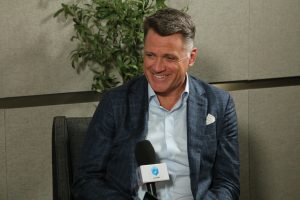
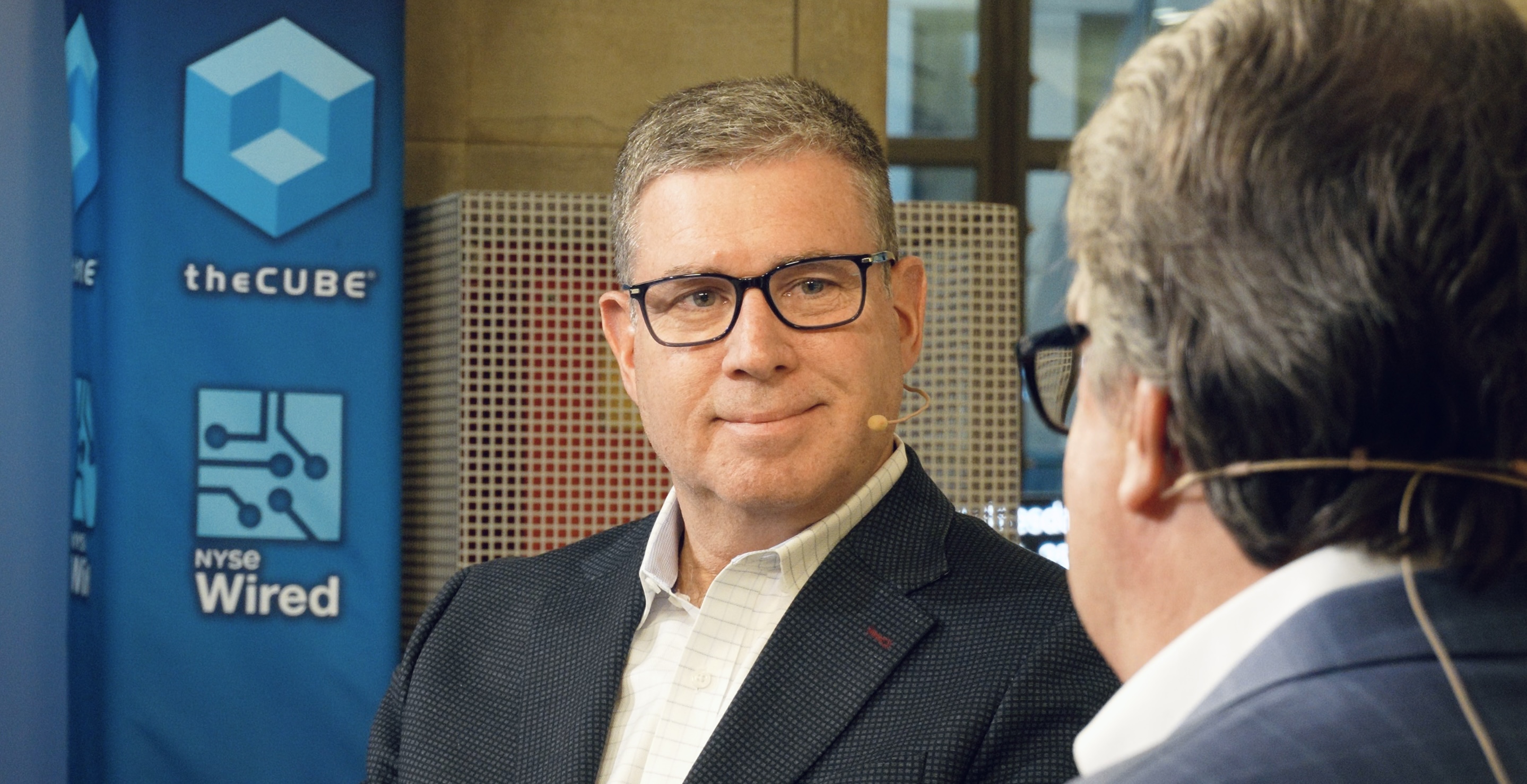
We kicked off The Transformation Edge — our C-suite series with IBM — inside the NYSE with CFO Jim Kavanaugh (pictured). (* Disclosure below.)
The conversation landed fast: The CFO is no longer the guardian of the numbers; the CFO is becoming the architect of the enterprise.
That model is breaking.
For decades, the CFO’s job was to protect the balance sheet, manage risk and deliver predictability. In an AI-driven economy, that instinct — optimizing for stability — can destroy value. Today’s CFO must be an agent of transformation.
Kavanaugh frames this shift across three core mandates that redefine the role. First, the CFO must help re-architect the company’s vision, identifying new growth vectors and market opportunities rather than simply tracking performance. Second, the CFO must reinvent the business model itself, treating capital allocation and ecosystem participation as strategic levers for advantage. Third, the CFO must drive organizational agility, enabling speed and execution at scale across the enterprise.
This isn’t theoretical — it’s operational. The modern CFO is now responsible for driving growth instead of just reporting it, allocating capital as a competitive weapon rather than managing budgets and enabling speed rather than acting as a brake. The reason is simple: Intelligence is no longer a layer on top of the business — it is becoming the system itself. And when the system changes, the operator has to change with it.
Here’s the new reality: If the AI can’t see your business, it can’t optimize it.
That’s why companies are racing to centralize their data, instrument their workflows and make decisions machine-readable. This is not traditional IT modernization — it’s a fundamental rewiring of how the business operates. And the CFO sits directly at the center of that shift, connecting strategy, data and financial outcomes into a single system of execution.
We’re not moving into a world of AI-plus. We’re moving into a world of plus AI.
This is not a feature shift — it’s a foundation shift. AI is no longer being layered onto the enterprise; it is becoming native to it. At IBM, they call this “teamship” — a model where humans bring judgment and domain expertise, AI brings scale and acceleration, and leaders orchestrate both.
That orchestration is now the job. And the CFO is increasingly co-architecting that system alongside the CEO.
In the old model, capital allocation was about efficiency. In this new model, it’s about advantage.
Every dollar becomes more powerful because it compounds. Productivity gains are reinvested into growth, compressing time to value and allowing leading companies to scale faster than their competitors. What emerges is a flywheel: Drive productivity aggressively, reinvest those gains into innovation and growth, and compound the results over time.
This is how AI transforms from a cost-saving tool into a market-creation engine.
Most companies are still thinking about AI through the wrong lens. They see it primarily as a way to cut costs.
But the real opportunity is much larger. Roughly 20% of AI’s value will come from productivity gains, while 80% will come from entirely new markets and revenue streams. This isn’t about doing existing work more efficiently — it’s about doing new things that weren’t previously possible.
That shift — from efficiency to growth — is exactly why the CFO’s role is expanding so quickly.
At IBM, this isn’t theoretical. It applies it internally first through what they call “Client Zero,” operating as the first customer of their own AI strategy.
With 280,000 employees across 175 countries, it is embedding AI across workflows and functions before bringing those solutions to market. The lesson is clear: Deploying AI is relatively easy, but getting value at scale is hard. That’s where most organizations struggle — and where execution becomes the differentiator.
This transformation doesn’t stop at strategy — it extends deep into the workforce.
Inside IBM, this shows up as a shift in how work itself is structured, blending domain expertise, technology and leadership into a unified operating model. Humans and AI systems are designed to work together from the start, not bolted together after the fact. This is what it takes to move from simply deploying AI to actually scaling it across the enterprise.
Kavanaugh puts it bluntly: Managers control, but leaders enable.
In an AI-native enterprise, leadership is no longer about oversight — it’s about building systems where humans and machines collaborate effectively, where teams move faster, and where innovation compounds over time. That is the real shift underway.
This isn’t just another technology cycle. It’s a power shift inside the enterprise.
The CFO is moving from reporting to driving, from protecting to building, and from managing finance to designing full systems of execution. The companies that get this right won’t just adopt AI faster — they’ll out-execute, out-scale and outgrow their competition.
That’s what’s emerging inside the New York Stock Exchange among the early leaders of AI transformation.
And most companies are still playing by the old rules.
Here’s the complete video interview, part of SiliconANGLE’s and theCUBE’s coverage of The Transformation Edge Series:
(* Disclosure: TheCUBE is a paid media partner for The Transformation Edge Series. Neither IBM, the sponsor of theCUBE’s event coverage, nor other sponsors have editorial control over content on theCUBE or SiliconANGLE.)
Support our mission to keep content open and free by engaging with theCUBE community. Join theCUBE’s Alumni Trust Network, where technology leaders connect, share intelligence and create opportunities.
Founded by tech visionaries John Furrier and Dave Vellante, SiliconANGLE Media has built a dynamic ecosystem of industry-leading digital media brands that reach 15+ million elite tech professionals. Our new proprietary theCUBE AI Video Cloud is breaking ground in audience interaction, leveraging theCUBEai.com neural network to help technology companies make data-driven decisions and stay at the forefront of industry conversations.