 AI
AI
AI
AI



AI

Agentic transformation is reshaping how enterprises operate, moving beyond basic automation to AI systems that can manage entire business processes on their own.
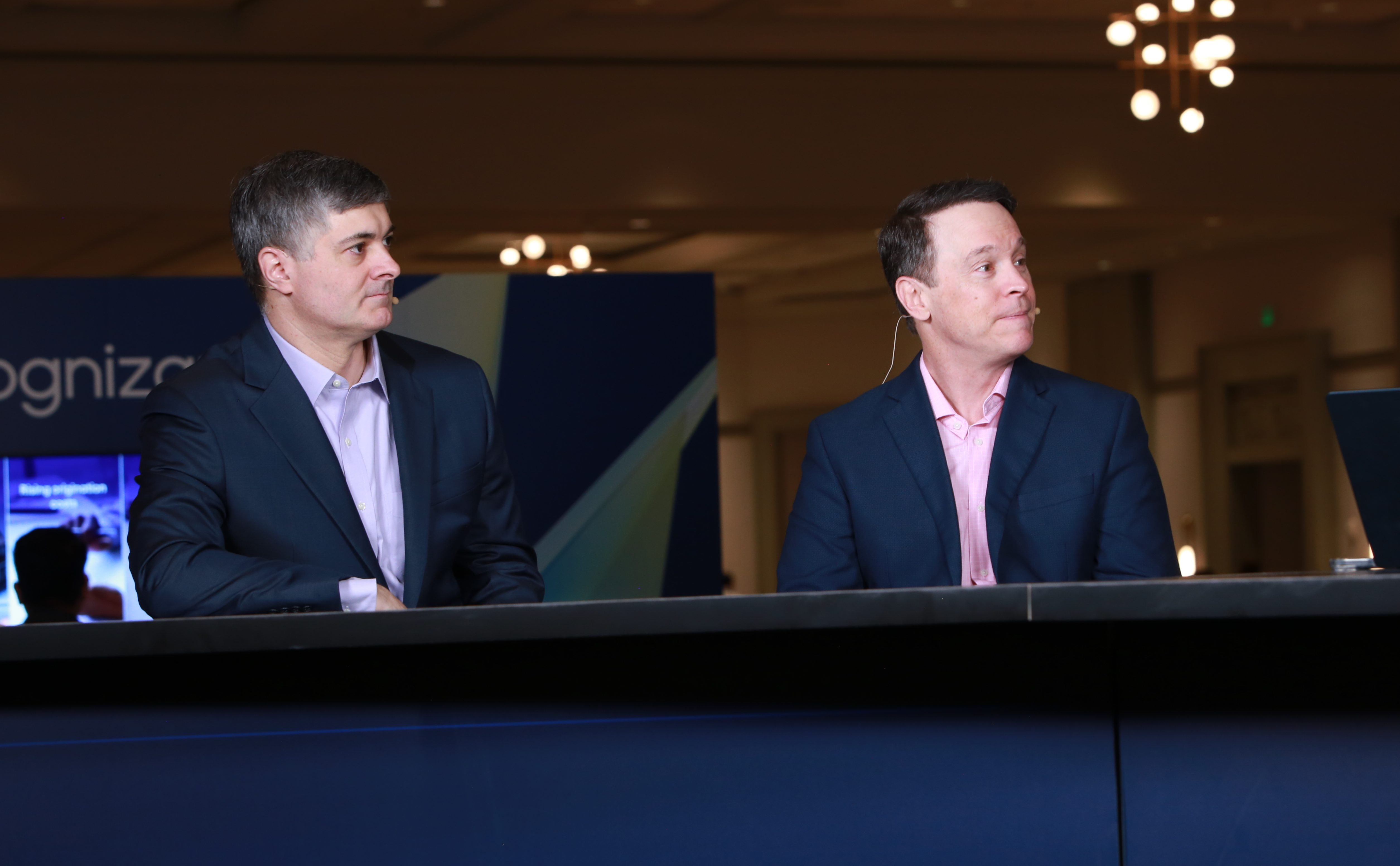
But unlocking the full potential of the agentic moment demands more than deploying AI. Instead, it requires embedding it within a secure, structured environment, according to Scott Van Valkenburgh (pictured, right), senior vice president of global partners and alliances at Appian Corp. For enterprises, that framing has become the defining question: the difference between AI that moves fast and AI that moves fast safely.
“What we found was, if you can put in governance framework controls, you can have AI do the right things that AI is good for — you can scale,” Van Valkenburgh said. “It’s really going to take and unlock the value, not only for productivity, but innovation.”
Van Valkenburgh and Dan Scott (left), principal at PricewaterhouseCoopers LLP, spoke with theCUBE’s Dave Vellante and Alison Kosik at Appian World 2026, during an exclusive interview on theCUBE, SiliconANGLE Media’s livestreaming studio. They discussed the power of strategic alliances and the evolution of agentic transformation in the enterprise. (* Disclosure below.)
The alliance between Appian and PwC is designed to bridge the gap between enterprise technology and industry domain expertise — but modernizing legacy operations means more than swapping old tools for new ones. It means moving beyond people-based controls and embedding governance directly into the digital process, in a way that holds up to scrutiny, Scott explained.
“If you actually think about a lot of controls today that are people-based, they rely on people being concerned about violating company policies. Agents and some of the AI don’t have that, so you need to build controls elsewhere,” Scott said. “Previously, where you could rely on a person doing something, you really need to move that control into the process, so that the process itself takes that, provides the appropriate governance and still has the safety at a speed that actually [makes] sense.”
Organizations are moving through that transition in stages, graduating from cautious pilots to real production deployments with humans still in the loop, growing more confident in what AI can handle on its own, according to Scott. Multi-agent deployments remain the frontier, still emerging, but the platform is designed to meet organizations there when they’re ready.
“They’re coming out of the [phase of saying], ‘Hey, I’m testing this out’ and into ‘Actually, I’m doing this, but I’m putting guardrails on it. I need to have a human in the loop still at the end to take a review of this. I want to make sure that the quality is good,'” Scott said. “They’re then getting comfortable with, ‘The quality is actually better than what I had before. The speed is actually better than what I had before.'”
The efficiency gains can be dramatic. Financial institutions automating high-stakes compliance tasks like anti-money laundering are seeing results that would have seemed implausible just a few years ago, Van Valkenburgh noted.
“What an application like Appian does is it bridges the gap,” Van Valkenburgh said. “In some of our clients … we’ve taken them from four hours to look at a suspicious activity to 38 seconds.”
Modernizing legacy software starts with a problem most organizations underestimate: decades of business logic trapped in old code that nobody fully understands anymore, but nobody wants to switch off either. The goal is to extract that logic, make sense of it and repurpose it within a more agile, AI-ready environment. That process also demands the right mindset from the outset — organizations that chase token costs and technical metrics before identifying their core business problems tend to end up with expensive subscriptions and little to show for them, Scott explained. The companies seeing real returns are the ones that start with the opportunity, not the overhead.
“Usually when we start the conversation with the price of tokens, I would tell you that we’re probably starting the conversation in the wrong spot,” Scott said. “If you go in looking for the value instead of thinking about the token count, I think you’ll have a much better experience.”
Here’s the complete video interview, part of SiliconANGLE’s and theCUBE’s coverage of Appian World 2026:
(* Disclosure: TheCUBE is a paid media partner for Appian World. Neither Appian, the sponsor of theCUBE’s event coverage, nor other sponsors have editorial control over content on theCUBE or SiliconANGLE.)
Support our mission to keep content open and free by engaging with theCUBE community. Join theCUBE’s Alumni Trust Network, where technology leaders connect, share intelligence and create opportunities.
Founded by tech visionaries John Furrier and Dave Vellante, SiliconANGLE Media has built a dynamic ecosystem of industry-leading digital media brands that reach 15+ million elite tech professionals. Our new proprietary theCUBE AI Video Cloud is breaking ground in audience interaction, leveraging theCUBEai.com neural network to help technology companies make data-driven decisions and stay at the forefront of industry conversations.