 AI
AI
AI
AI






AI

Enterprise AI adoption has crossed a threshold: The question is no longer whether to invest, but how to do it wisely. As agentic workloads multiply and inference costs rise, AI choice — the ability to match workloads to the right compute rather than defaulting to the most powerful infrastructure available — has become a growing priority for large organizations.
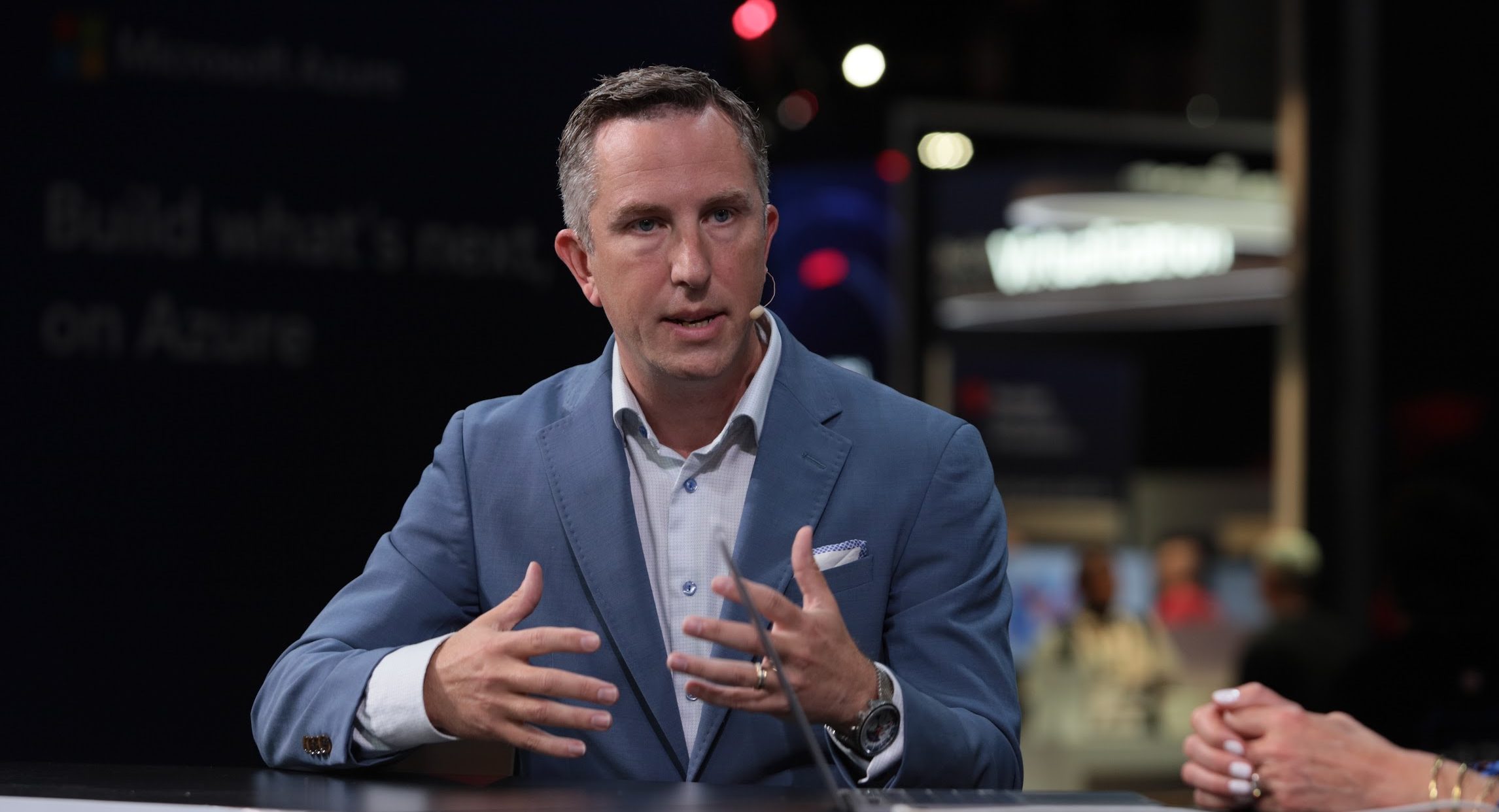
The Advanced Micro Devices Inc. and Red Hat Inc. partnership has long centered on giving enterprises flexibility across hybrid environments, but that mission has taken on new urgency as AI budgets threaten to buckle. The range of compute options now available across CPUs, cost-effective GPUs and high-end accelerators is changing how enterprises think about total cost of ownership, according to John Hampton (pictured), corporate vice president of global enterprise technical sales at AMD.
“Every day I’m hearing: I need an alternative — I need choice. With Red Hat, we’re bringing that choice in a very open environment versus a proprietary, closed approach,” he said. “Imagine being able to map these AI use cases to CPUs, or lower-power, lower-cost GPUs. The good news for AMD is that we have a full spectrum of solutions across that inferencing that enterprises are focused on now so we can map them to the most optimal solution for them.”
Hampton spoke with theCUBE’s Rebecca Knight at Red Hat Summit 2026, during an exclusive broadcast on theCUBE, SiliconANGLE Media’s livestreaming studio. They discussed how AMD and Red Hat are helping enterprises modernize infrastructure, control AI costs and make smarter compute decisions across hybrid environments. (* Disclosure below.)
The AI choice conversation is gaining urgency. Many enterprises made early infrastructure bets that are now proving costly at scale, Hampton noted. Now those clusters are generating costs that few budgets anticipated — a problem the industry has come to call tokenomics, where every AI query carries a measurable, cumulative price tag.
“So many of these enterprises just ran out and bought big GPU clusters because they knew they had to solve for AI,” Hampton said. “Enterprises are coming to us and saying, ‘This is exploding. It’s good that we’re using AI, but we can’t afford this anymore.'”
AMD’s answer is a full-spectrum compute portfolio backed by Red Hat’s open software stack. AMD Instinct MI350P — a PCIe-based GPU designed as a cost-effective, air-cooled drop-in for existing servers — now rounds out that inferencing range, while Red Hat AI provides an enterprise platform for deploying and scaling AI agents across hybrid cloud environments. Meanwhile, server consolidation enabled by AMD’s EPYC CPUs and Red Hat’s virtualization tools can shrink a data center footprint dramatically. Advancements such as these free the budget and power capacity needed to fund AI initiatives, Hampton explained. Looking ahead, the next chapter of the emergent AI narrative is one likely defined by choice and concrete results.
“I think that the story is all about choice,” Hampton said. “[AMD] wants to be there as a trusted advisor to work through all these challenging topics, all this complexity. Let’s go and run a proof of concept together. Let’s figure out what it can do for you, the financial impact it brings to your enterprise and the technology impact that it brings as well.”
Here’s the complete video interview, part of SiliconANGLE’s and theCUBE’s coverage of Red Hat Summit 2026:
(* Disclosure: AMD sponsored this segment of theCUBE. Neither AMD nor other sponsors have editorial control over content on theCUBE or SiliconANGLE.)
Support our mission to keep content open and free by engaging with theCUBE community. Join theCUBE’s Alumni Trust Network, where technology leaders connect, share intelligence and create opportunities.
Founded by tech visionaries John Furrier and Dave Vellante, SiliconANGLE Media has built a dynamic ecosystem of industry-leading digital media brands that reach 15+ million elite tech professionals. Our new proprietary theCUBE AI Video Cloud is breaking ground in audience interaction, leveraging theCUBEai.com neural network to help technology companies make data-driven decisions and stay at the forefront of industry conversations.