 AI
AI
AI
AI





AI

AI adoption is maturing past the pilot phase, but organizations that treat the transition as a single-gear shift risk stalling before they reach production. The real challenge is navigating multi-speed transformation — knowing which workflows demand a deliberate redesign and which need rapid, iterative experimentation to stay competitive.
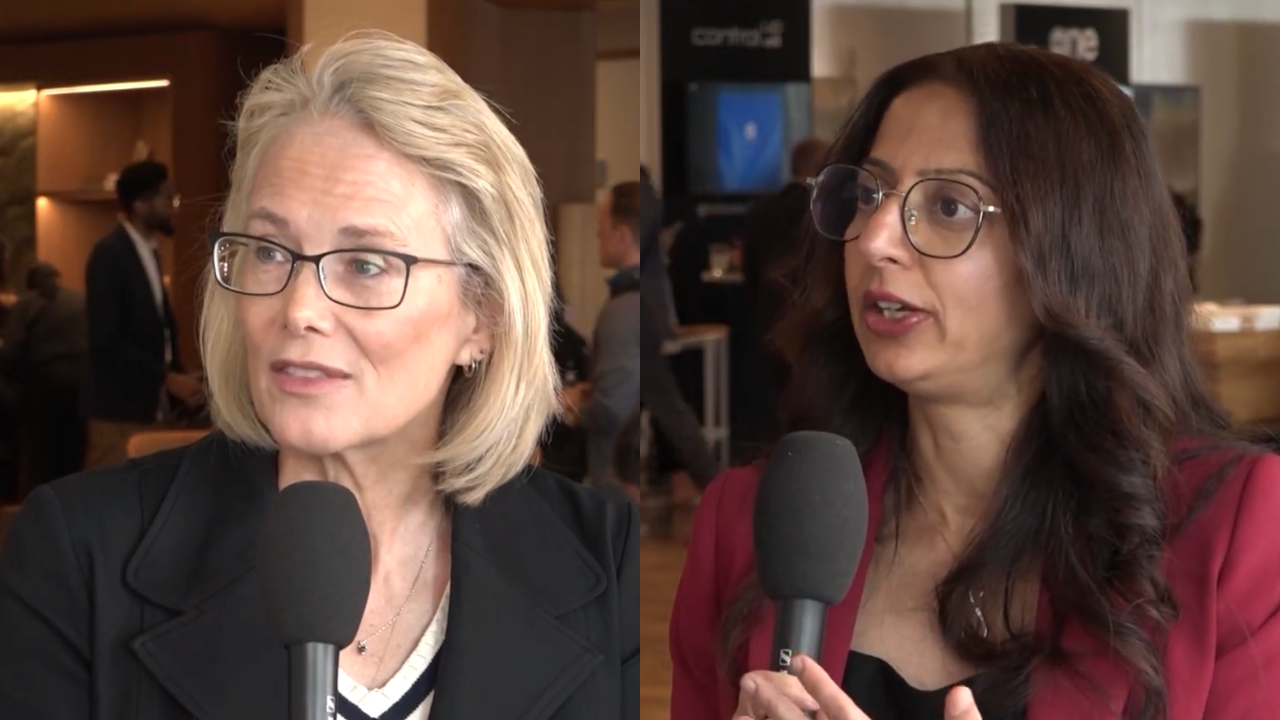
As service management platforms evolve beyond traditional IT frameworks, the growing consensus is that measuring success by ticket closure rates no longer reflects how AI-era employees actually experience support. As a consequence, organizations are rethinking the metrics — and the architecture — behind every service interaction, according to Kady Srinivasan (pictured, right), chief marketing officer of Freshworks Inc.
“A lot of the CIOs that I talk to have this lens of, ‘I’m not here to run IT software, I’m here to help become the engine of the company’s growth,'” Srinivasan said. “They really think of themselves as the backbone of how they can get their customers, their employees, back to doing the work that they’re supposed to be doing faster.”
Srinivasan and Julie Mohr (left), principal analyst at Forrester Research Inc., spoke with theCUBE’s Bob Laliberte at the Freshworks Refresh event, during an exclusive broadcast on theCUBE, SiliconANGLE Media’s livestreaming studio. They discussed multi-speed transformation, the shift from SLAs to experience level agreements and how agentic AI is reshaping knowledge management and employee experience. (* Disclosure below.)
The pressure to move from pilot to production is intensifying. Forrester research on experience-level agreements shows that companies using outdated service-level agreements to measure AI-era deployments are misaligning effort with outcome, Mohr noted. Too many organizations are stuck in non-production environments, unable to prove business value to leadership because they never established outcome-based metrics in the first place.
“The danger is that you just start implementing AI across the organization without intent,” Mohr said. “You want to have a purposeful way to replace the repetitive work that’s happening within organizations in a way that provides value, but also manages the cost associated with these technologies.”
On the measurement side, Freshworks is moving customers toward those experience level agreements, or XLAs, which connect service performance to employee sentiment rather than ticket throughput. SLAs reward closing a ticket quickly while leaving the underlying employee problem unsolved, Srinivasan explained. XLAs change that calculus by weaving deflection rates and employee sentiment together into a single performance signal.
“SLAs have played their part so far in getting us to where we are right now,” Srinivasan said. “But the problem with SLAs is they don’t go far enough to really think about employee productivity or experience.”
Of course, the architecture supporting that shift matters as much as the metrics. Freshworks is building a context graph that consolidates asset, incident and employee data into a single canonical layer — feeding hundreds of millions of data points into a unified foundation that agents can act on at production scale, Srinivasan noted. Freshworks’ recently announced MCP Gateway extends that foundation by letting customers pull context from third-party tools without custom code. For organizations still weighing when to accelerate and when to slow down, the answer lies in mastering two speeds at once.
“You’ve got to be able to operate at two different speeds — there’s a little bit of a more deliberate speed [for reimagining core processes],” Srinivasan said. “But at the same time, there needs to be a fast agile speedboat type of a speed where you’re learning quickly, you’re trying things, because the only way, sometimes, you can do things or learn things is actually by practicing it in the wild.”
Here’s the complete video interview, part of SiliconANGLE’s and theCUBE’s coverage of the Freshworks Refresh event:
(* Disclosure: TheCUBE is a paid media partner for the Freshworks Refresh event. Neither Freshworks, the sponsor of theCUBE’s event coverage, nor other sponsors have editorial control over content on theCUBE or SiliconANGLE.)
Support our mission to keep content open and free by engaging with theCUBE community. Join theCUBE’s Alumni Trust Network, where technology leaders connect, share intelligence and create opportunities.
Founded by tech visionaries John Furrier and Dave Vellante, SiliconANGLE Media has built a dynamic ecosystem of industry-leading digital media brands that reach 15+ million elite tech professionals. Our new proprietary theCUBE AI Video Cloud is breaking ground in audience interaction, leveraging theCUBEai.com neural network to help technology companies make data-driven decisions and stay at the forefront of industry conversations.