 EMERGING TECH
EMERGING TECH
EMERGING TECH










EMERGING TECH

French quantum computing startup Quobly SAS today announced that it has raised €115 million, or about $133 million, to commercialize its technology.
The Series A round was led by publicly traded chipmaker STMicroelectronics NV, Bpifrance, SEALSQ and Isalt. Quobly previously raised €40 million. The company used that capital to demonstrate that its technology works.
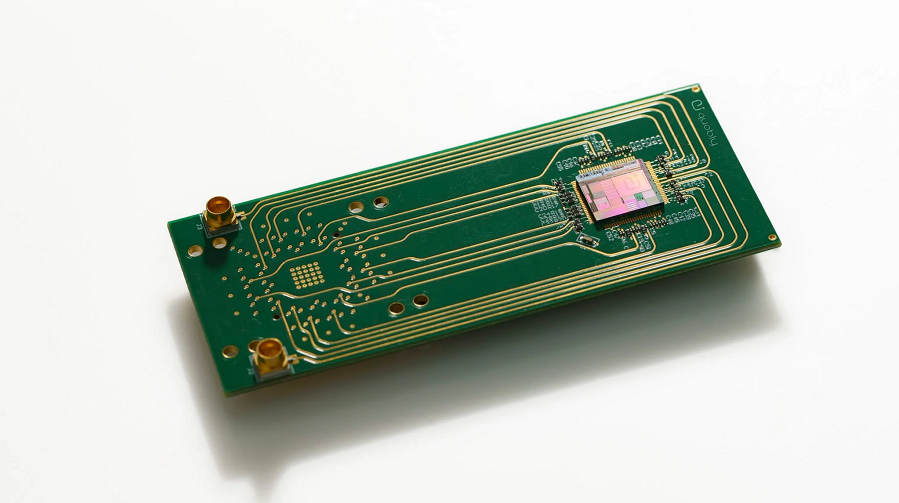
Quobly is developing quantum chips based on a design known as a silicon spin qubit architecture. The technology is powered by quantum dots, tiny semiconducting crystals that measure a few nanometers across. Each crystal contains an electron that functions as a qubit. Data is encoded into the electrons’ spin, a property that influences their magnetic field.
There are several obstacles to building large-scale quantum computers based on a spin qubit design. One is that it’s difficult to reliably coordinate a large number of electrons placed in quantum dots. Reading the results of the calculations that those electrons perform also poses a challenge. According to Quobly, its technology addresses both limitations.
The difficulty of coordinating spin electrons partly stems from a phenomenon called capacitive coupling. It causes neighboring quantum dots to exchange energy, which decreases the accuracy of calculations. A quantum computer’s reservoir, a component that supplies electrons to quantum dots, can also cause interference.
Quobly’s chip design addresses the challenge by isolating quantum dots from the reservoir. For added measure, it organizes quantum dots in small clusters, or arrays, that are simpler than traditional spin qubit circuits. That reduced complexity further eases the task of coordinating qubits.
Reading calculation results, the other challenge involved in building spin qubit computers, is difficult because it requires devices called charge sensors. Such devices have limited sensitivity, which means that they miss some of the data produced by computations. They’re also relatively large. Placing a charge sensor in a quantum computer reduces the amount of space available for qubits.
Quobly’s technology replaces charge sensors with a more efficient sensing approach called gate-based reflectometry. It makes it possible to deduce calculation results from the light generated by quantum dots. According to Quobly, its reflectometry equipment takes up less space than charge sensors and can more quickly read the contents of a qubit.
The core building blocks of the company’s technology were developed at CEA-Leti, an electronics research institution from which it spun off in 2022. Two years later, it teamed up with STMicroelectronics to manufacture its chips. The companies plans to expand their collaboration following today’s investment.
STMicroelectronics will produce Quobly’s chips using 300-millimeter silicon wafers. Standard 300-millimeter wafers are made of multiple silicon isotopes, which are variants of the material that each have a different number of neutrons in their atomic nuclei. Quobly, in contrast, will use a single isotope called silicon-28. The company says that the material will help reduce noise in its quantum chips.
Quobly plans to use a manufacturing process called FD-SOI, or fully depleted silicon on insulator. The technology places a thin layer of insulating material between a silicon wafer and the circuits that it hosts. That insulator, which is not added by other manufacturing processes, significantly improves power efficiency.
Quobly expects to ship its first commercial quantum computer by the end of 2026. Next year, it will work with STMicroelectronics to develop an upgraded version of the system with 100 qubits. The company hopes to build a quantum computer with a million qubits by 2032.
“This financing marks a transition from technology validation to industrial execution,” said Quobly co-founder and Chief Executive Officer Maud Vinet. “With this Series A, we are continuing our R&D efforts, ensuring industrialization and expanding our international commercial presence.”
Support our mission to keep content open and free by engaging with theCUBE community. Join theCUBE’s Alumni Trust Network, where technology leaders connect, share intelligence and create opportunities.
Founded by tech visionaries John Furrier and Dave Vellante, SiliconANGLE Media has built a dynamic ecosystem of industry-leading digital media brands that reach 15+ million elite tech professionals. Our new proprietary theCUBE AI Video Cloud is breaking ground in audience interaction, leveraging theCUBEai.com neural network to help technology companies make data-driven decisions and stay at the forefront of industry conversations.