 AI
AI
AI
AI








AI

Artificial intelligence startup Generalist AI Inc., a startup building embodied robotics intelligence, said today it has raised $400 million in new funding, bringing the company’s valuation to $2 billion.
Radical Ventures led the round. Additional investors included 8VC, Union Square Ventures and Hanabi Capital, with existing supporters Nvidia Corp.’s NVentures and Bezos Expeditions joining the round as well. Nvidia’s participation reflects the company’s continued interest in robotics and the physical infrastructure of artificial intelligence, which it claims will be the next trillion-dollar industry.
The company was founded by Pete Florence, a former DeepMind senior scientist who helped create RT-2, a robotic control system for vision-language-action models that transfers knowledge from real-world actions, and PaLM-E, an early AI model for robotics that provides a framework for AI-powered vision- and language-based instruction. On the founding team, Florence is joined by Chief Scientist Andy Zeng and Chief Technology Officer Andrew Barry, formerly a roboticist with Boston Dynamics Inc.
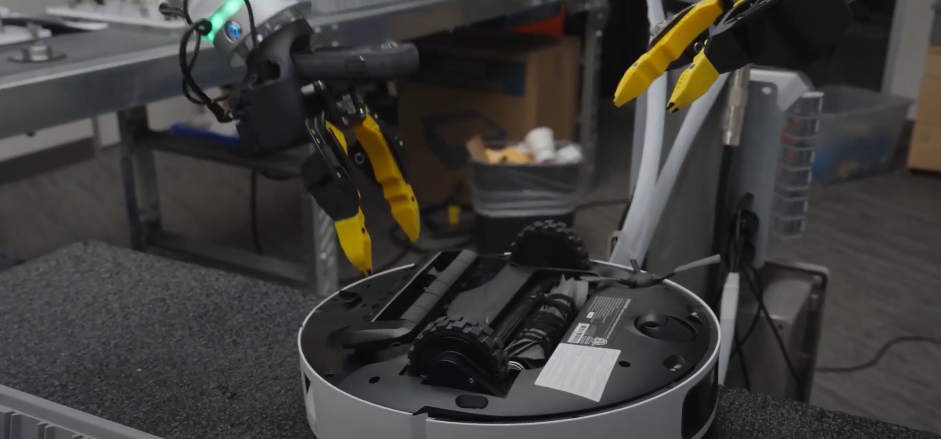
Generalist AI’s most recent contribution to that industry is GEN-1, released in April, a highly capable AI foundation model for robot learning showing mastery of physical tasks.
Physical AI is the layer of artificial intelligence that operates and interacts with the physical world by combining AI models with sensors, actuators and control systems. At the ground level, this is robotics, autonomous cars, drones and other systems that derive intelligence-to-action. This can also include smart buildings, cameras that operate inside retail stores and on campuses that track people, lock and unlock doors, operate environmental systems, electrical distribution and other machinery.
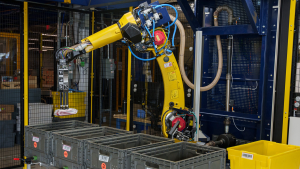
GEN-1 embodies a trend that is rapidly growing in robotics, the ability to translate physical human skills from the real world into robotic arms and other appendages and do them with speed and intelligence. Numerous robotic intelligence companies have attempted to tackle this capability, including models from Physical Intelligence, with pi-0, which GEN-1 exceeded by doing tasks even faster.
Generalist AI’s models go a step further than the current robotics models by layering in additional adaptivity. Sometimes when a robotic arm is working, objects don’t always grip the same way. A part might deform because it’s soft, or it could spring away from a gripper. It might not fit correctly in a hole, or lighting might change abruptly, or a box misses its mark.
In all of these cases, a human would simply adjust and try again. A robot with a rigid set of rules would malfunction, but an AI system with adaptive intelligence, such as GEN-1, can work from a learning system to adapt and retry, the company says.
The go-to example is folding a shirt, which doesn’t always end up in the same form when someone grabs it. The same thing might happen with a box or a small part or anything else in a warehouse or a factory setting.
Building smarter, more adaptable AI models for industrial, retail and domestic settings that operate quickly, Generalist AI says, it’s paving the way for robotics that can work alongside humans.
Support our mission to keep content open and free by engaging with theCUBE community. Join theCUBE’s Alumni Trust Network, where technology leaders connect, share intelligence and create opportunities.
Founded by tech visionaries John Furrier and Dave Vellante, SiliconANGLE Media has built a dynamic ecosystem of industry-leading digital media brands that reach 15+ million elite tech professionals. Our new proprietary theCUBE AI Video Cloud is breaking ground in audience interaction, leveraging theCUBEai.com neural network to help technology companies make data-driven decisions and stay at the forefront of industry conversations.