 AI
AI
AI
AI








AI

Apple Inc. stepped onto the stage today at WWDC 2026 to put Siri back at the center of its artificial intelligence strategy by introducing Siri AI as a rebuilt version of the company’s long-running digital assistant.
In addition, the company also reintroduced Apple Intelligence as a significant underlying architecture that augments everything within its operating systems across macOS, iOS, iPadOS and visionOS. Generative AI has continued as a thread that winds throughout the company’s operating systems – powering a multitude of experiences, including the new Siri.
In particular, Apple focused on positioning Siri as no longer a simple voice command assistant but a fully conversational, systemwide agent that can understand what’s on the screen, access the user’s personal context and activate apps. This means that users can dive deep into email, messages, web search, world knowledge and more with Siri the same way that they can with ChatGPT, Gemini or any other generative AI chatbot on the market without needing to launch a third-party app.
In essence, this is Apple’s answer to the rise of generative AI assistants from OpenAI PBC, Google LLC and others.
Although Siri AI was the headline, Apple framed the assistant as only the most visible expression of a broader Apple Intelligence interface spreading across its apps.
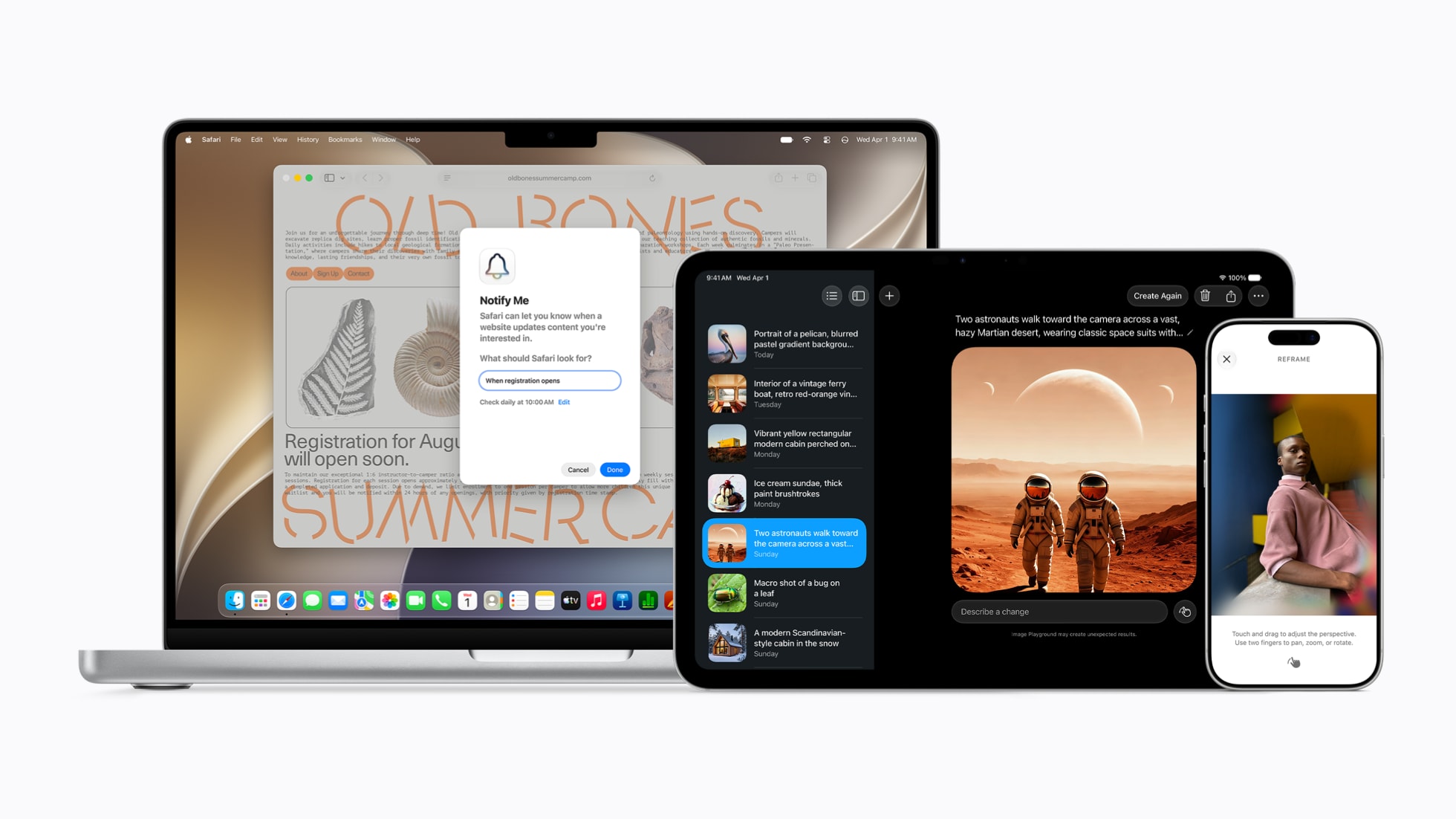
Under the hood, Apple Intelligence has become a major focal point for the company’s infrastructure. Every app is becoming smarter, not just because Siri is part of it, but because intelligence is deeply baked in. Entering titles into Calendar pulls information from personal context; Messages builds on history to find images; Safari uses AI to organize tabs better behind the scenes. The entire OS is working to both stay out of the way and tailor a more personalized experience.
Apple Intelligence and Siri AI also built in a lot more visual intelligence. This means multimodal and voice experiences. Users can use devices to generate images and use visual understanding, for example, showing images to receive information about them, such as asking questions about photos, such as determining where a location is and getting a map to a place where they’ve forgotten a picture was taken. In one demo example, a user could ask the AI if they could fit a set of items – like shoes, a shirt and some other assorted bric-a-brac – into a backpack for a trip.
The company also leaned hard into its privacy-first messaging. Apple said that the new Siri AI uses on-device processing and Private Cloud Compute, with specialized personal data used to complete a request rather than to train or build profiles around the user. Apple stressed that privacy-first framing allows the company to contrast its approach to other companies that require opt-in for consumers to receive the first-class citizen treatment when it comes to their personal data.
“Truly helpful AI must be centered on our users’ needs, deeply integrated into the products they rely on every day, grounded in personal context, and built with privacy at every step,” said Senior Vice President of Software Engineering Craig Federighi. “That is our vision for Apple Intelligence.”
At the same time, Apple announced the company’s full partnership with Google since the first rollout of Apple Intelligence in 2024 to bring Apple Intelligence onto Google’s foundation models. This turns Siri AI into a hybrid of Apple’s platform strategy, Google’s model technology and Apple’s privacy infrastructure.
Developers in the United States can expect to get their hands on the Siri AI and Apple Intelligence updates starting today and to consumers as a beta test later this year.
Although consumers and developers in the European Union will have to wait, Apple said that Siri AI will not be available on iOS 27 or iPadOS 27 at launch. That’s because of the Digital Markets Act and a clash between Apple and European regulators over the past months. The DMA requires that gatekeepers — such as Apple and Google — provide access to OS features, hardware and software on equal terms to AI competitors.
Support our mission to keep content open and free by engaging with theCUBE community. Join theCUBE’s Alumni Trust Network, where technology leaders connect, share intelligence and create opportunities.
Founded by tech visionaries John Furrier and Dave Vellante, SiliconANGLE Media has built a dynamic ecosystem of industry-leading digital media brands that reach 15+ million elite tech professionals. Our new proprietary theCUBE AI Video Cloud is breaking ground in audience interaction, leveraging theCUBEai.com neural network to help technology companies make data-driven decisions and stay at the forefront of industry conversations.