 AI
AI
AI
AI


AI

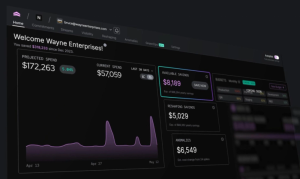
Artificial intelligence chip startup SiMa Technologies Inc. today launched Palette Neat, a purpose-built agentic AI development environment for creating applications that connect the physical world to AI models.
The new tool can be paired readily with the company’s Modalix MLSoC system-on-module or the company’s new PCIe companion card, allowing developers to rapidly build apps that can see, learn, adapt and interact with the real world. This is the vision of physical AI, where artificial intelligence models are used to power robotics, autonomous cars, drones, industrial machines, aerospace platforms, smart vision and more.
“SiMa.ai is an AI software company that builds its own silicon,” said founder and Chief Executive Krishna Rangasayee. “Today, we are delivering the industry’s first agentic development environment for Physical AI.”
Rangasayee explained that using Palette Neat, today’s developers will be able to take their knowledge and simply speak or type their ideas directly to the AI agent, which will take their abstract thoughts and build them directly into low-level compute code. This eliminates months of labor traditionally spent wiring up or porting and integrating applications onto new silicon.
Often, developers spend months or weeks attempting to take new ideas and map them onto new silicon every time a company upgrades or offers a new form factor. Neat is designed to do away with this pain point by allowing developers to write what they need in natural language commands and build entire systems, enabling engineers to focus on system-level differentiation and cleaning up nuance.
The agentic environment handles the heavy lifting by mapping application code directly to silicon, shrinking the development cycle time. SiMa said this lets them reuse application code and preserve 90% of their legacy software investment from other platforms without needing to rewire everything.
The company’s Modalix SoM can run multiple large language models concurrently alongside vision and sensor models, all under 10 watts. This provides it the power to provide edge-AI for physical AI deployments in situations where it can act as a drop-in replacement for similar Nvidia Corp. system-on-module form factors and does not require a board redesign.
Rangasayee argues that using Neat and Modalix could help developers break free from the market chokehold that graphics processing units have on the physical AI inference development market when scaling physical AI. Most developers learn to build for the Nvidia ecosystem because most cloud-based GPU hardware is CUDA-based, and Nvidia already holds almost 39% of edge AI, and Qualcomm Inc. is second at roughly 20%.
Developers tend to gravitate towards the tooling that they already know and what they have on hand. Providing them with agentic platforms that allow them to migrate to a new system without needing to sit down and learn something altogether new allows them to prototype and experiment without spending years or months to train themselves to see benefits.
“Until now, developers lacked a seamless alternative optimized for Physical AI performance,” Rangasayee said. That’s why Modalix was designed “pin-for-pin” to match Nvidia’s Orin SoM. “Rather than trying to retrofit a power-hungry data center GPU for the edge, we deliver energy-efficient performance in stark contrast to the incumbent.”
SiMa is betting that developers will want the opportunity to have their software and models run on different hardware that can manage different opportunities for scalability, performance-per-watt, thermal envelopes and dynamic demands. By providing a different option from the incumbents, when the market is heavily dominated by Nvidia, the company is hoping to carve out some of the customer base by providing the tools that allow them to migrate.
Support our mission to keep content open and free by engaging with theCUBE community. Join theCUBE’s Alumni Trust Network, where technology leaders connect, share intelligence and create opportunities.
Founded by tech visionaries John Furrier and Dave Vellante, SiliconANGLE Media has built a dynamic ecosystem of industry-leading digital media brands that reach 15+ million elite tech professionals. Our new proprietary theCUBE AI Video Cloud is breaking ground in audience interaction, leveraging theCUBEai.com neural network to help technology companies make data-driven decisions and stay at the forefront of industry conversations.