 EMERGING TECH
EMERGING TECH
EMERGING TECH







EMERGING TECH

Nivida Corp. today announced Halos for Robotics, the industry’s first full framework for robotic safety systems that encompasses building, testing and managing complete artificial intelligence robotics applications.
Automation has been part of industrial and manufacturing environments for decades, but for much of that time, robots have operated within rigid rules, rails and repeatable workflows. That is beginning to change as more intelligent systems emerge that can move through dynamic spaces, make decisions and work more directly alongside humans.
The promise is a new class of robotic teammate that can take on more complex work with greater autonomy. But the challenge is that the closer these systems get to people, the higher the safety bar becomes. That leaves companies with a central question: How do they scale intelligent robotics without putting human workers at greater risk?
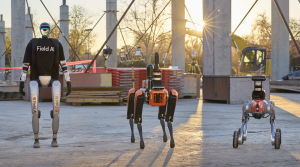
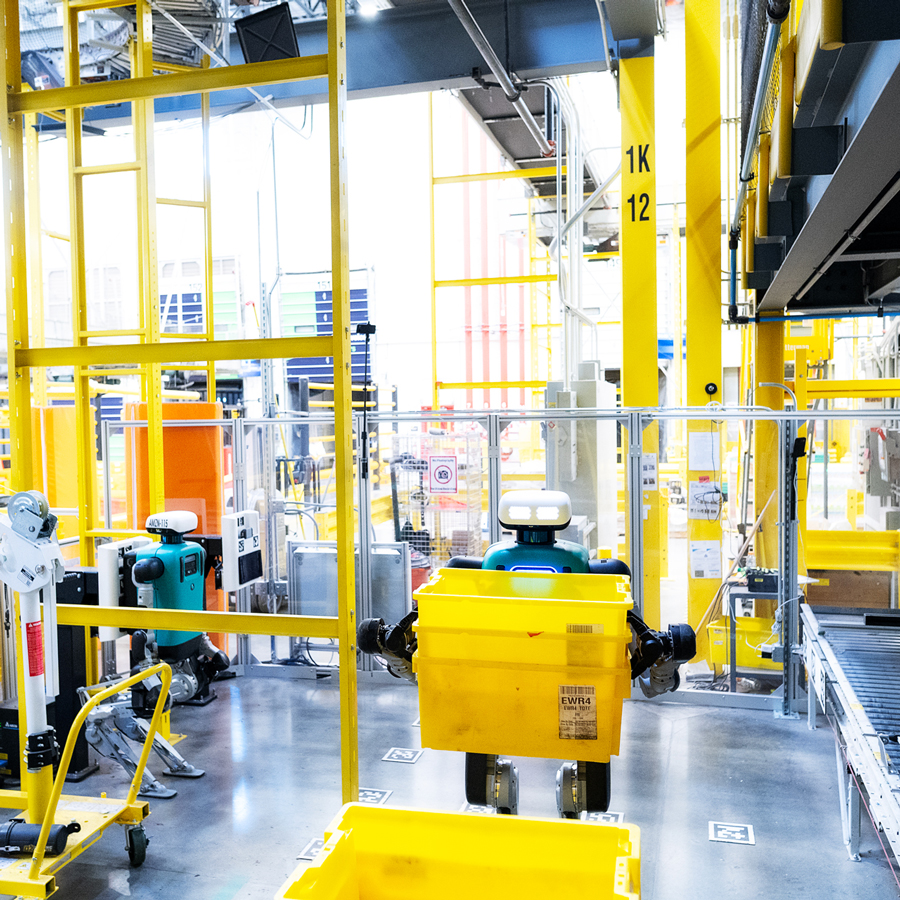
Agility Robotics Inc., a leading humanoid robotics and physical AI company, became the first to use Nvidia Halos to build safety into its robots working in factories and warehouses for customers including Amazon.com Inc., GXO, Schaeffler and Toyota Motor Manufacturing Canada.
“For humanoids to deliver value at scale, safety has to be built into the robot and validated across the entire system,” said Agility Chief Executive Peggy Johnson. “The Halos for Robotics system extends our leadership in responsible automation, which is a nonnegotiable requirement for bringing humanoids safely into industrial workflows.”
The new system spans a few key layers needed for robot safety. It brings the IGX Thor and Holoscan Sensor bridge to aid with industrial-grade AI compute building in safety and sensor connectivity for real-time robotics. Halos OS provides safety software support under the hood and includes Halos Core to support safety-related operating functions and safety applications (pluggable blueprints to extend robot perception using external cameras and AI agents to adjust robot behavior).
Halos AI Systems Inspection Lab, the world’s first American National Standards Institute National Accreditation Board for physical AI and AI safety. It will help partners prepare for Halos integration and third-party certifications by leading safety bodies including TÜV Rheinland, UL Solutions, TÜV SÜD, Exida, SGS and CertX.
Throughout 2025, robotics and AI were still coming together. Humanoids make the best headlines, but physical AI represents a broad tapestry of smart machines.
Advanced hardware that can connect AI models to the real world through video, audio and sensor arrays, enabling intelligence to control everything from autonomous pallet jacks to robotic arms, automatic doors to air conditioning. The tangible effect of this is that these systems are coming closer to humans, from autonomous cars to robots in retail and domestic spaces.
A year ago, “robots need safety” was a caveat in conversations about commercial momentum as these form factors came to the factory floor. In 2025, many of these designs were pilots, being battle-tested on assembly lines and scaled to operate in working conditions. This year, robots-as-a-service agreements brought humanoids such as Agility’s Digit out of pilots and into facilities such as Toyota Motor Manufacturing Canada’s Woodstock facility in Ontario, putting them in manufacturing supply chains.
Now Nvidia is operating in those conditions to formulate the standards, cybersecurity and safety-related software to meet the rigorous needs to future-proof the road ahead. This includes systems such as safe human detection, avoidance, slowing and freezing when necessary to prevent actuators that move with force from inflicting injury.
A report from Deloitte Touche Tohmatsu Ltd. noted that one of the roadblocks holding back broad adoption of physical AI has been safety. AI-powered machines offer great opportunities on one hand, but they also present tremendous risks: They can behave unpredictably even after extensive safety testing. To deploy them safely in public, or even industrial environments, they must integrate comprehensive safety strategies, regulatory compliance and risk assessments.
Policymakers still have yet to converge on safety standards to govern this emerging trend. The European Union Machinery Regulation of 2027 is the closest, coming into effect on Jan. 20, 2027. For the first time, it will require conformity for machines with “self-evolving behavior,” which could capture any machine running on an AI foundation model. However, the regulation doesn’t clearly define its requirements and doesn’t describe how to certify systems that trigger its regulatory flavor; it also interacts closely with the EU AI Act.
Nvidia is positioning Halos as the next “Intel Inside” for AI safety as more robots flow into everyday environments. The certification is a platform play, a sticker that vendors and distributors can slap onto a chassis showing that the software and wiring have been vetted.
Support our mission to keep content open and free by engaging with theCUBE community. Join theCUBE’s Alumni Trust Network, where technology leaders connect, share intelligence and create opportunities.
Founded by tech visionaries John Furrier and Dave Vellante, SiliconANGLE Media has built a dynamic ecosystem of industry-leading digital media brands that reach 15+ million elite tech professionals. Our new proprietary theCUBE AI Video Cloud is breaking ground in audience interaction, leveraging theCUBEai.com neural network to help technology companies make data-driven decisions and stay at the forefront of industry conversations.