AI
AI
AI
AI



AI

Enterprise observability is entering a new phase as artificial intelligence changes both the applications companies need to monitor and the way operations teams respond when something goes wrong.
Traditional observability platforms were built around deterministic software and telemetry, such as logs, metrics and traces. But AI applications and agents behave differently, producing outputs that can vary even when given similar inputs. At the same time, enterprises increasingly expect observability platforms to move beyond identifying problems and provide enough context for humans and AI agents to diagnose, remediate and potentially act on those problems.
That transition provides the backdrop for Dynatrace’s acquisition of Arize AI, which brings AI observability, evaluation and agent monitoring capabilities into Dynatrace’s broader application observability platform.
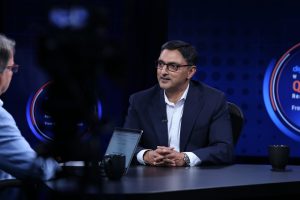
In the latest episode of theCUBE Research’s AppDevANGLE podcast, Practice Lead and Principal Analyst Paul Nashawaty spoke with Steve Tack, chief product officer of Dynatrace, and Aparna Dhinakaran, co-founder and chief product officer of Arize AI, about why application observability and AI observability are converging and what that means for enterprise operations.
“The world has shifted so much,” Tack said. “AI brings new problems, new domains to the space.”
One of the biggest changes is happening inside the applications themselves. Traditional software generally produces predictable outcomes. AI-powered applications, particularly those incorporating large language models and autonomous agents, introduce nondeterministic behavior that can make troubleshooting more difficult.
That means observability can no longer focus only on whether an application is available or whether infrastructure is performing within expected thresholds. Teams must also understand whether an AI system produced the intended response and whether the quality of that response met expectations.
“Evaluating no longer just becomes about is it right or wrong,” Dhinakaran said. “It becomes about actually measuring the quality of the responses, which is just a very fundamentally different problem.”
Arize built its platform around that challenge, providing tools for tracing, evaluating and improving AI applications and agents. Its open-source Phoenix platform is used by more than 4,000 enterprises, according to Dhinakaran, while Arize AX provides a managed environment designed for teams operating AI systems at production scale.
For Dynatrace, those capabilities expand observability into an application layer that is becoming increasingly important as enterprises move AI projects from experimentation into production.
AI applications rarely operate independently. Agents call application programming interfaces, interact with databases, depend on cloud infrastructure and connect to broader enterprise systems. That creates a troubleshooting challenge when the AI behavior being investigated is only one part of a much larger software stack.
Dhinakaran said Arize customers increasingly wanted stronger connections between AI telemetry and traditional application and production telemetry. Dynatrace customers, meanwhile, were asking for deeper AI observability and evaluation capabilities. Bringing those two environments together could give developers, site reliability engineers, platform teams, AI engineers and data scientists a shared view of what is happening across the application stack.
“The agent systems and the software systems are joined at the hip,” Dhinakaran said. “Having this ability to not only debug agents with AI observability, but also have all the context of the software that they use to call tools or the underlying infra behind the agents … just makes us build better products.”
That shared context could also help address another persistent observability problem: tool sprawl.
According to research cited by Nashawaty during the conversation, 75% of organizations use between six and 15 tools for observability. As enterprises add AI monitoring, evaluation and governance systems, the risk is that AI creates another isolated operational layer rather than reducing that complexity.
Tack argued that combining application and AI observability gives organizations a more complete system-level view rather than forcing teams to piece together information across disconnected platforms.
“The real loss often happens [when] they lose the ability to have a system mindset,” he said. “How can we bring a broader view together? How can we have shared context? How can we take action?”
The larger shift may be less about what observability platforms monitor and more about who — or what — consumes the information.
For years, observability has largely been designed around engineers examining dashboards, responding to alerts and manually troubleshooting incidents. AI agents create the possibility of a different operational model in which telemetry becomes context that software agents themselves can consume.
“Observability is no longer about humans looking at dashboards and metrics and logs,” Dhinakaran said. “It’s about action.”
That changes the value of observability data. Instead of simply explaining what happened, telemetry could become part of the reasoning layer agents use to identify problems, recommend changes or initiate remediation.
The shift also raises the stakes around accuracy and context. Autonomous operations only work if organizations trust the information feeding those decisions.
Tack said the ability to provide precise analytics and trustworthy answers will be essential as enterprises give agents greater responsibility.
“How can we help them act, helping them move faster, creates so much opportunity,” he said.
Dynatrace has already been moving in that direction through its broader AI and automation strategy, including Dynatrace Intelligence and its BlueBox AI offering for agentic development and SRE workflows. Arize adds deeper evaluation and observability around the AI systems participating in those workflows.
The acquisition also reflects a broader change in software development itself. AI agents are increasingly being used not just inside applications but to build, test, troubleshoot and operate those applications. Tack described a future in which architects may spend less time directly working inside development environments and more time coordinating groups of specialized agents.
That makes observability part of the feedback loop between autonomous development and production operations.
“The market’s not just layering another technology on top,” Tack said. “They are changing the way they want humans to work. Where does the agent step in?”
For enterprises, that could ultimately move observability closer to an operational intelligence layer that spans application development, AI evaluation, infrastructure and automated remediation.
The challenge will be ensuring that automation progresses alongside the governance, reliability and confidence enterprises require before handing meaningful operational decisions to agents.
Dynatrace’s acquisition of Arize AI reflects two shifts happening at once: enterprise applications are becoming less deterministic, and observability is becoming more action-oriented.
AI applications require new ways to evaluate behavior and quality, while AI agents increasingly need application and infrastructure context to make useful operational decisions. Bringing those telemetry environments together gives Dynatrace an opportunity to move beyond traditional application monitoring toward a broader model built around shared context, evaluation and automation.
For developers and platform teams, the bigger implication is that observability may increasingly become machine-consumable infrastructure. Dashboards will not disappear, but the next generation of observability platforms will need to serve both the engineers diagnosing systems and the agents increasingly helping operate them.
As Dhinakaran put it: “Every business is going to become an AI company,” and tools for understanding and improving those agents will become “a core part of every stack.”
Here’s the complete conversation with theCUBE Research’s Paul Nashawaty, Dynatrace’s Steve Tack and Arize AI’s Aparna Dhinakaran, part of the AppDevANGLE podcast series:
Support our mission to keep content open and free by engaging with theCUBE community. Join theCUBE’s Alumni Trust Network, where technology leaders connect, share intelligence and create opportunities.
Founded by tech visionaries John Furrier and Dave Vellante, SiliconANGLE Media has built a dynamic ecosystem of industry-leading digital media brands that reach 15+ million elite tech professionals. Our new proprietary theCUBE AI Video Cloud is breaking ground in audience interaction, leveraging theCUBEai.com neural network to help technology companies make data-driven decisions and stay at the forefront of industry conversations.