 AI
AI
AI
AI






AI

AI data infrastructure must support growing GPU clusters while making enterprise data usable for models and agents.
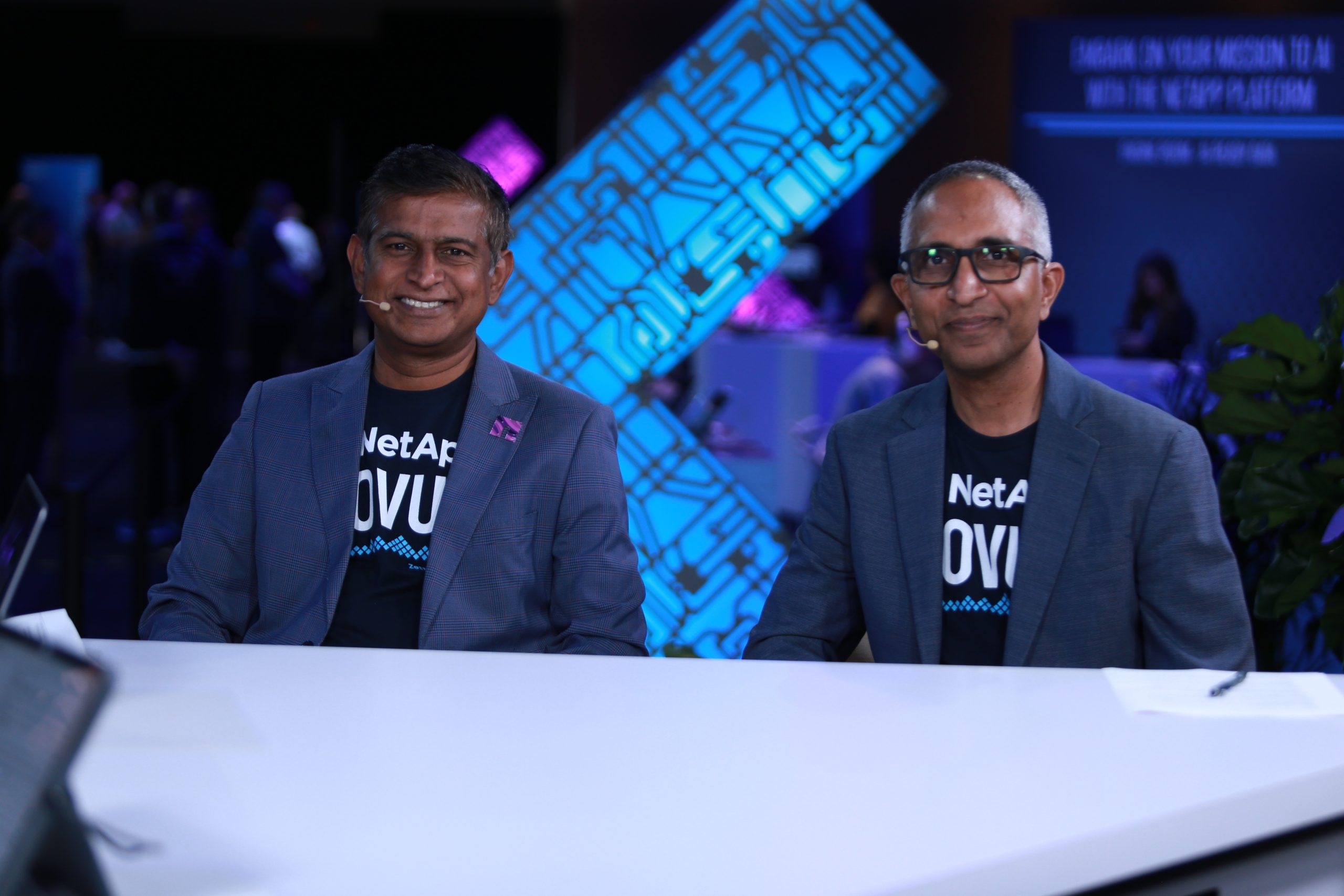
NetApp Inc. is tying intelligent data infrastructure to production AI through a unified approach to storage and data management. Fragmented data and governance designed around manually applied policies can prevent enterprises from realizing returns on AI investments, according to Syam Nair (pictured, left), chief product officer of NetApp.
“There’s a lot of investment happening, lots of data applications are ready, models are ready, but most enterprises don’t get the returns,” he said. “Let’s provide that intelligent data infrastructure where there’s a unified storage that spans the entire ecosystem of wherever the infrastructure is.”
Nair and Gunna Marripudi (right), vice president of product management for Novus at NetApp, spoke with theCUBE Research’s Christophe Bertrand and co-host Rebecca Knight at NetApp INSIGHT, during an exclusive broadcast on theCUBE, SiliconANGLE Media’s livestreaming studio. (* Disclosure below.)
NetApp’s Novus storage architecture exceeds 100TB/s of aggregate throughput, according to the company. Its Data Director manages metadata separately from the stored data, allowing each to scale independently. It also gives applications a unified view of files across multiple ONTAP storage clusters rather than requiring them to access each cluster separately, Marripudi explained.
“The metadata is the key,” he said. “The concurrency of the metadata access is the pillar for an architecture.”
Speed alone does not make data usable for AI agents, however. NetApp’s AI Data Engine discovers, classifies and vectorizes enterprise data, aiming to cut preparation work that typically takes six to nine months of engineering, Nair noted.
“Performance and throughput of accessing the data, that’s a necessity for AI, but that won’t be sufficient for agents to actually act on the data,” he said. “If the data is not ready and it’s not protected, you get fast results. You get compromised results, but they may not be the ones you want.”
NetApp is also leaning on open standards so customers can extend what they already run. The planned acquisition of PEAK:AIO Ltd. is expected to bring parallel file system technology built on the pNFS protocol. Any Linux kernel released after 2018 already carries a pNFS client, Marripudi explained. The goal is AI data infrastructure that slots in alongside existing systems.
“It’s not a storage conversation, it’s not a data platform conversation, it’s a data infrastructure conversation,” Nair said. “The promise that we have is, ‘Customers, you don’t need to rip and replace what you already have.”
Here’s the complete video interview, part of SiliconANGLE’s and theCUBE’s coverage of NetApp INSIGHT:
(* Disclosure: TheCUBE is a paid media partner for NetApp INSIGHT. Neither NetApp Inc., the sponsor of theCUBE’s event coverage, nor other sponsors have editorial control over content on theCUBE or SiliconANGLE.)
Support our mission to keep content open and free by engaging with theCUBE community. Join theCUBE’s Alumni Trust Network, where technology leaders connect, share intelligence and create opportunities.
Founded by tech visionaries John Furrier and Dave Vellante, SiliconANGLE Media has built a dynamic ecosystem of industry-leading digital media brands that reach 15+ million elite tech professionals. Our new proprietary theCUBE AI Video Cloud is breaking ground in audience interaction, leveraging theCUBEai.com neural network to help technology companies make data-driven decisions and stay at the forefront of industry conversations.