 AI
AI
AI
AI






AI

The knowledge graph can give enterprise AI applications context by connecting data with the business relationships needed to support decisions.
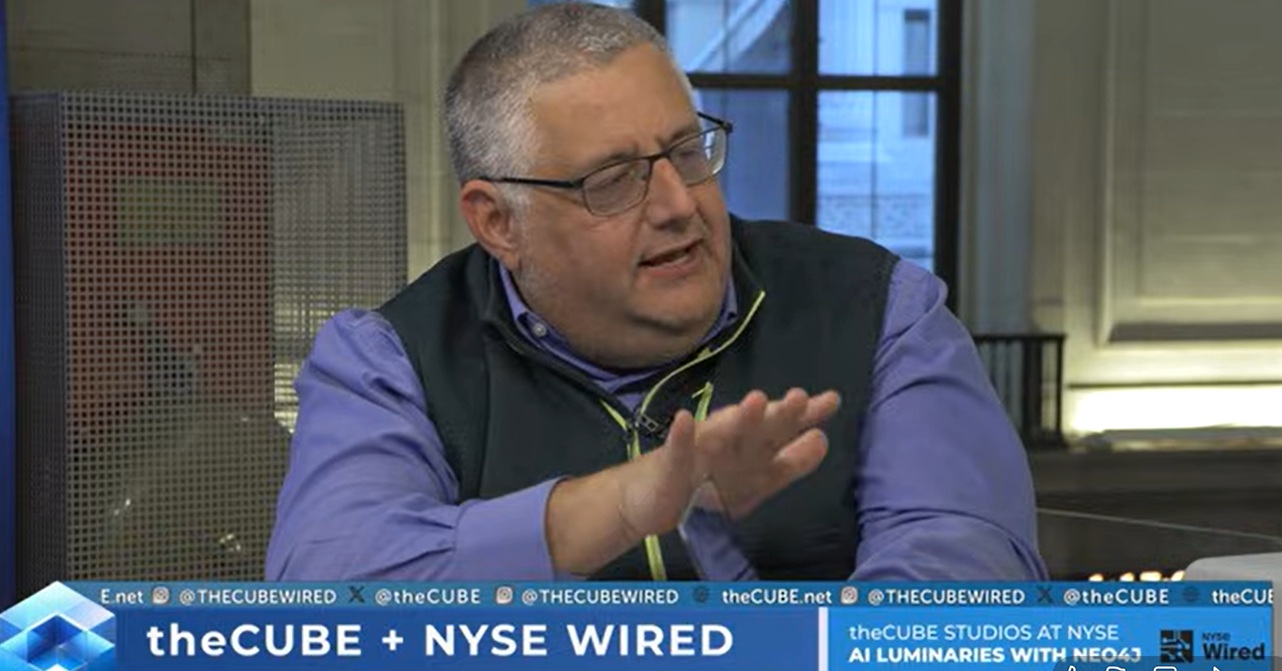
Knowledge graphs can connect enterprise data with the meaning AI applications need. Many people have used graphs for years, nearly every day, though they may not have known it, Many people have used graphs for years, nearly every day, though they may not have known it, according to James Kaplan (pictured), distinguished partner at McKinsey & Company.
“If you’re using LinkedIn, if you’re using Wikipedia, if you’re using any social media, that’s a graph,” he said. “Many of the social media companies have arrived at this and the power of this technology before the enterprise did. It’s much more intuitive than a relational database. We’re all used to massive relational databases, which are wonderful if you’re processing transactional data, and are much less good at ambiguous or complicated data. It’s incredibly insightful to describe a customer or a product or a process or a step in the process in the context of its relationship to other things.”
Kaplan spoke with theCUBE Research’s John Furrier for theCUBE + NYSE Wired: AI Luminaries interview series, during an exclusive broadcast on theCUBE, SiliconANGLE Media’s livestreaming studio. They discussed how knowledge graphs can provide context for enterprise AI applications. (* Disclosure below.)
AI can help turn unstructured information into structured data and business rules that can be stored in a knowledge graph, according to Kaplan. Previously, evaluating that information required time-consuming, expensive and often imperfect work by business analysts or data scientists.
“Now, for the first time, we have the ability to interrogate complicated processes and create deterministic business rules programmatically,” he said. “We have the capability to interrogate messy, uncorrelated, unstructured data and turn it into structured data, often storing it in a graph. That opens up whole new frontiers.”
Business priorities can guide where organizations apply AI improvements, according to Kaplan. Customer experience, for example, may take precedence over productivity.
“What if I pointed these AI improvements at customer experience rather than productivity?” he said. “The richer the interconnections among nodes, the more intelligence you have in the graph and the more things you can determine.”
McKinsey uses AI and knowledge graphs through EcliptOS, an AI operating system designed to connect C-suite strategy with everyday execution through agentic workflows. The system employs a semantic data layer that organizes data and its relationships to support generative AI applications, according to McKinsey.
“What we in effect created was a graph of databases,” he said. “One of the nice things about graphs is they have more flexible data schemas. It’s easier to create a virtual graph that connects many databases. And that to me is incredibly powerful.”
Here’s the complete video interview, part of SiliconANGLE’s and theCUBE’s coverage of theCUBE + NYSE Wired: AI Luminaries interview series:
(* Disclosure: TheCUBE is a paid media partner for theCUBE + NYSE Wired: AI Luminaries interview series. Neither Neo4j, the sponsor of theCUBE’s event coverage, nor other sponsors have editorial control over content on theCUBE or SiliconANGLE.)
Support our mission to keep content open and free by engaging with theCUBE community. Join theCUBE’s Alumni Trust Network, where technology leaders connect, share intelligence and create opportunities.
Founded by tech visionaries John Furrier and Dave Vellante, SiliconANGLE Media has built a dynamic ecosystem of industry-leading digital media brands that reach 15+ million elite tech professionals. Our new proprietary theCUBE AI Video Cloud is breaking ground in audience interaction, leveraging theCUBEai.com neural network to help technology companies make data-driven decisions and stay at the forefront of industry conversations.